
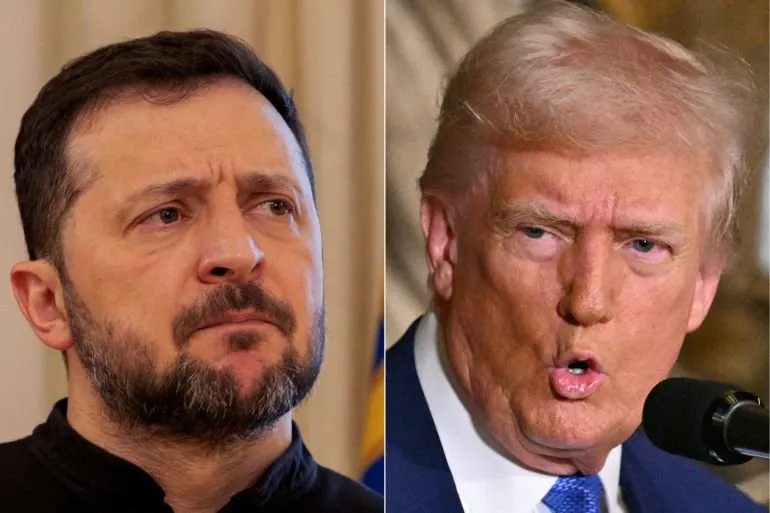
Trump’s Shocking Intervention In Russia-Ukraine War: Will His Diplomatic Efforts End The Bloodshed Or Spark Further Chaos?
- President Donald Trump has launched a blistering attack on Ukrainian President Volodymyr Zelensky, accusing him of prolonging the war and devastating global diesel markets
- Trump claims he is making major progress in negotiations to end the four-and-a-half-year conflict, but his efforts have been met with skepticism and criticism
- The war between Russia and Ukraine has resulted in thousands of deaths, widespread destruction, and a humanitarian crisis, with no end in sight
- As the conflict escalates, the international community is increasingly concerned about the potential consequences of a prolonged war, including the impact on global energy markets and regional stability
President Donald Trump’s dramatic intervention in the Russia-Ukraine war has sparked a mixture of surprise and skepticism, as he claims to be making major progress in negotiations to end the four-and-a-half-year conflict.
In a series of posts on Truth Social, Trump launched a blistering attack on Ukrainian President Volodymyr Zelensky, accusing him of prolonging the war and devastating global diesel markets.
The US president’s comments have been met with criticism and concern, as the international community struggles to understand the implications of his diplomatic efforts.

The war between Russia and Ukraine has resulted in thousands of deaths, widespread destruction, and a humanitarian crisis, with no end in sight. The conflict has also had a significant impact on global energy markets, with the price of diesel fuel skyrocketing in recent months.
Trump’s decision to block the implementation of new sanctions against Russia has been widely criticized, with many arguing that it will only embolden Vladimir Putin and hinder efforts to bring an end to the war.

Despite the criticism, Trump remains optimistic about the prospects of a diplomatic breakthrough, claiming that he is making progress in negotiations with Russian leaders.
The situation on the ground in Ukraine is dire, with the country’s territory shattered and its population decimated by years of fighting. The Ukrainian military has been forced to launch a series of desperate attacks against Russian targets, including oil refineries and infrastructure.
The Russian military has responded with brutal force, launching airstrikes against Ukrainian cities and towns. The conflict has also had a significant impact on the global economy, with trade and investment in the region plummeting.
As the war drags on, the international community is increasingly concerned about the potential consequences of a prolonged conflict, including the impact on global energy markets and regional stability.
The conflict has also raised questions about the role of the international community in resolving the crisis. The United States, European Union, and other major powers have imposed sanctions on Russia, but the effectiveness of these measures has been limited.
Diplomatic efforts to negotiate a ceasefire have been unsuccessful, and the conflict continues to escalate.
As the situation spirals out of control, it is clear that a new approach is needed to bring an end to the war and restore stability to the region.
This could involve increased economic pressure on Russia, as well as a more robust diplomatic effort to negotiate a ceasefire and promote a lasting peace.
Analysis: What This Means for Australia
The conflict in Ukraine has significant implications for Australia, particularly in terms of energy security and regional stability. As a major exporter of energy resources, Australia is heavily reliant on stable global markets to maintain its economic growth.
The conflict in Ukraine has the potential to disrupt global energy markets, leading to higher prices and reduced economic growth.
Furthermore, the conflict has the potential to draw in other regional powers, including China and the United States, which could lead to a wider conflict with significant implications for Australia’s national security.
Security analysts say that the conflict in Ukraine highlights the need for Australia to diversify its energy resources and reduce its reliance on imported fuels. This could involve investing in renewable energy sources, such as solar and wind power, as well as increasing domestic production of oil and gas.
Law enforcement insiders warn that the conflict also has the potential to lead to an increase in cyber attacks and other forms of hybrid warfare, which could have significant implications for Australia’s national security.
Industry observers believe that the conflict will also have a significant impact on global trade and investment, with the potential to lead to a decline in economic growth and increased poverty and inequality.
In conclusion, the conflict in Ukraine is a complex and multifaceted issue, with significant implications for Australia and the wider world.
As the situation continues to escalate, it is clear that a new approach is needed to bring an end to the war and restore stability to the region.
This will require a combination of diplomatic effort, economic pressure, and military support, as well as a commitment to promoting a lasting peace and rebuilding the affected communities.
By working together, the international community can help to bring an end to the conflict and promote a more stable and secure world.
As the conflict in Ukraine continues to unfold, it is essential for Australia to remain vigilant and proactive in its response.
This could involve increasing diplomatic efforts to promote a ceasefire and negotiate a lasting peace, as well as providing humanitarian assistance to those affected by the conflict.
By taking a leadership role in promoting peace and stability in the region, Australia can help to reduce the risks associated with the conflict and promote a more secure and prosperous world.
The Australian government should also consider increasing its investment in renewable energy sources and reducing its reliance on imported fuels, as well as strengthening its cyber security capabilities to protect against potential hybrid threats.
Ultimately, the conflict in Ukraine is a stark reminder of the importance of promoting peace and stability in the world. By working together, the international community can help to prevent conflicts and promote a more secure and prosperous world.
As a major player in the Asia-Pacific region, Australia has a critical role to play in promoting peace and stability, and it is essential that the government remains committed to this goal.
By taking a proactive and leadership role in responding to the conflict in Ukraine, Australia can help to promote a more stable and secure world, and reduce the risks associated with this complex and multifaceted issue.
The situation in Ukraine is a complex and dynamic issue, with new developments emerging every day.
As the conflict continues to escalate, it is essential for Australia to remain informed and engaged, and to be prepared to respond to any new challenges or opportunities that may arise.
By staying up to date with the latest news and developments, Australians can help to promote a better understanding of the conflict and its implications, and support efforts to bring an end to the war and restore stability to the region.
The Australian government should also consider providing more information and resources to the public, to help promote a better understanding of the conflict and its implications, and to support efforts to promote peace and stability in the region.
In terms of the impact on Australian communities and public safety, the conflict in Ukraine has the potential to lead to an increase in refugee flows and asylum seeker arrivals.
This could place a significant burden on Australian communities, particularly in terms of providing housing, healthcare, and other forms of support.
The conflict could also lead to an increase in cyber attacks and other forms of hybrid warfare, which could have significant implications for public safety and national security.
The Australian government should consider increasing its investment in community support services, as well as strengthening its cyber security capabilities, to help mitigate the risks associated with the conflict.
Furthermore, the conflict in Ukraine has significant implications for Australia’s economic and social consequences. The conflict has the potential to disrupt global trade and investment, leading to a decline in economic growth and increased poverty and inequality.
The conflict could also lead to an increase in energy prices, which could have significant implications for Australian businesses and households.
The Australian government should consider increasing its investment in renewable energy sources, as well as providing support to businesses and households affected by the conflict, to help mitigate the economic and social consequences of the conflict.
Overall, the conflict in Ukraine is a complex and multifaceted issue, with significant implications for Australia and the wider world.
By staying informed and engaged, and by promoting a better understanding of the conflict and its implications, Australians can help to support efforts to bring an end to the war and restore stability to the region.
The Australian government should also consider increasing its investment in community support services, cyber security capabilities, and renewable energy sources, to help mitigate the risks associated with the conflict and promote a more stable and secure world.
To learn more about the conflict in Ukraine and its implications for Australia, readers can visit the Australian Government Department of Foreign Affairs and Trade website, which provides up-to-date information and analysis on the conflict.
Readers can also visit the Ukraine conflict page, which provides a comprehensive overview of the conflict and its implications for Australia.
By staying informed and engaged, Australians can help to promote a better understanding of the conflict and its implications, and support efforts to bring an end to the war and restore stability to the region.