
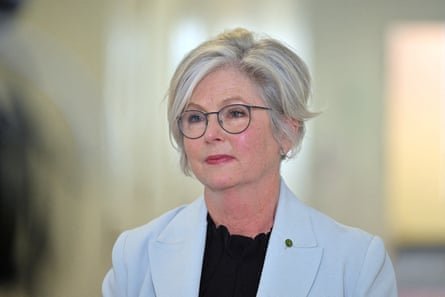
Australia Left Reeling As Beloved Federal MP Helen Haines Loses Both Legs In Alleged Targeted Attack Near Her Electorate Office
- Independent MP Helen Haines, 65, is fighting for her life after a horrific incident that has left her without both legs, sparking widespread outrage and calls for increased security for politicians
- The alleged targeted attack, which occurred near her electorate office in north-east Victoria, has sent shockwaves through the nation, with many condemning the violence and expressing support for Haines and her family
- As the community rallies around Haines, concerns are being raised about the safety of politicians and the potential consequences of this incident on Australia’s democratic system, with many calling for a more positive and constructive approach to politics
- The incident has also sparked a wave of tributes and donations to Save the Children, a charity close to Haines’ heart, as she begins her long and arduous road to recovery
The nation is in mourning as news of the alleged targeted attack on federal MP Helen Haines spreads, leaving many to wonder how such a heinous act could occur in a country that prides itself on its democratic values and peaceful society.
The incident, which took place near Haines’ electorate office in north-east Victoria, has resulted in the amputation of both her legs, a devastating outcome that has left her family, friends, and community reeling.
According to reports, Haines was struck by a car on Monday afternoon, and despite the best efforts of surgeons, both her legs had to be amputated due to the severity of her injuries.
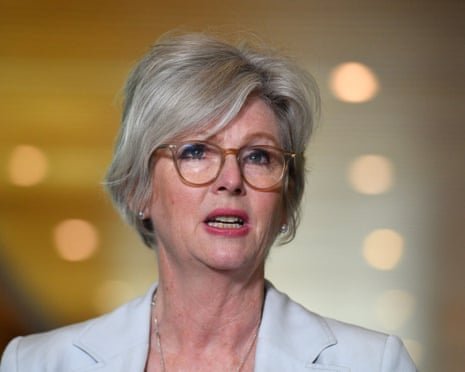
Her husband, Phil Haines, has provided an update on her condition, describing her as a “fighter” who will do her best to recover with the support and love of her family.
The couple has been married for nearly 40 years and has three children and two grandchildren, who are all rallying around Haines as she begins her long and challenging journey to recovery.
The alleged attack has sparked widespread outrage and condemnation, with many politicians and community leaders expressing their shock and anger at the incident. The governor general, Sam Mostyn, has praised Haines’ work as a local representative, highlighting her commitment to improving the standards of public discourse in Australia.
Mostyn has also called for a moment of reflection, urging the community to “choose to be better” in the face of such violence.
The incident has also prompted calls for changes to politicians’ safety, with security services, including the Australian Federal Police and ASIO, briefing MPs on the current landscape.
As the community comes to terms with the alleged attack, concerns are being raised about the potential consequences of this incident on Australia’s democratic system. The attack has sparked fears about the safety of politicians and the impact of violence on the country’s political landscape.
Security analysts say that the incident highlights the need for increased security measures to protect politicians and their families, particularly in the lead-up to the upcoming Victorian state election.
Law enforcement insiders warn that the attack may be a symptom of a broader problem, one that requires a comprehensive approach to addressing the root causes of violence and extremism in Australian society.
Analysis: What This Means for Australia is a critical question that needs to be addressed in the wake of this incident.
The alleged attack on Haines has significant implications for national security, law enforcement, and community safety. It also raises important questions about the role of social media and the impact of hate speech on Australian society.
As the nation grapples with the consequences of this incident, it is essential to consider the potential economic and social consequences, including the impact on community cohesion and social stability.
The incident may also have implications for Australia’s international relationships, particularly in the context of national security and counter-terrorism efforts.
Security experts believe that the alleged attack on Haines may be a wake-up call for Australian politicians, highlighting the need for increased vigilance and security measures to protect themselves and their families.
Industry observers note that the incident may also have implications for the way politicians engage with their communities, with a greater emphasis on safety and security in the lead-up to the Victorian state election.
As the community rallies around Haines, it is essential to consider the broader implications of this incident and the need for a comprehensive approach to addressing the root causes of violence and extremism in Australian society.
In the aftermath of the alleged attack, the community is coming together to support Haines and her family.
A special appeal has been launched by Save the Children, a charity that is close to Haines’ heart, and donations are pouring in from across the country.
The incident has also sparked a wave of tributes and messages of support, with many expressing their admiration for Haines’ courage and resilience in the face of adversity.
As Haines begins her long and challenging journey to recovery, it is essential to consider the potential consequences of this incident and the need for a comprehensive approach to addressing the root causes of violence and extremism in Australian society.
The alleged attack on Haines has also sparked a broader conversation about the role of politicians in Australian society and the need for increased safety and security measures to protect them.
The incident has raised important questions about the impact of social media on Australian politics and the potential consequences of hate speech and online harassment.
As the nation grapples with the consequences of this incident, it is essential to consider the potential implications for Australian democracy and the need for a more positive and constructive approach to politics.
The incident may also have implications for Australia’s international relationships, particularly in the context of national security and counter-terrorism efforts, and may require increased cooperation with international partners, such as Australian Bureau of Statistics and Australian Federal Police, to address the root causes of violence and extremism.