

Australia Mourns a True Giant of Speed as 1980 Formula One World Champion Alan Jones Dies at 80, Just Days After His Birthday, Following a ‘Short Illness’
- Alan Jones, one of only two Australians ever crowned Formula One world champion, has died aged 80, only three days after his birthday.
- His wife, Amanda Butler-Davis, confirmed the Melbourne-born racer passed away on November 5 after a brief illness, leaving behind six children.
- Jones once came so close to driving for Ferrari that a deal was offered, then withdrawn at the last moment. He went on to conquer the world with Williams instead.
- From a broke young hopeful in London to a 12-time grand prix winner and long-serving TV commentator, his story is one of Australian grit.
He was the larrikin who took on Europe’s motorsport aristocracy and won.
Alan Jones, the uncompromising Melbourne driver who claimed the 1980 Formula One world championship, has died at the age of 80. His death comes only days after he reached that milestone on Monday, and it has left the Australian sporting community reeling.
For a generation of fans, Jones was more than a racing driver.
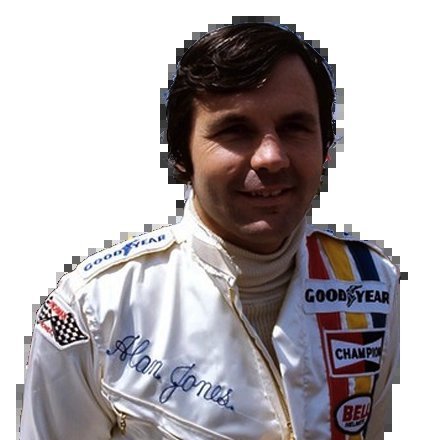
He was proof that a kid from the suburbs, with little money and a stubborn streak a mile wide, could beat the best on the planet at their own game.
His family confirmed the news in a statement issued on behalf of his wife, Amanda Butler-Davis. She said the champion had died on November 5 after a short illness.
The statement described Jones as a beloved husband and father who had devoted his whole life to motorsport. It said the legacy he built would endure through the many people he influenced.
The family also paid tribute to his achievements, his passion and what they called his unmistakable character, which left its mark on the sport at home and around the world.
Butler-Davis said Jones had always been grateful for the loyalty of his fans.
She thanked everyone who had shared in his journey for decades of friendship, love and support, and said he had been lucky to be surrounded by so many good people.
Jones is survived by his wife and his six children: Christian, Amber, Zara, Jack, Camilla and Emma.
His title in 1980 placed him alongside Sir Jack Brabham as the only Australians to have been crowned Formula One world champion.
Across his career he won 12 grands prix, and five of them came in that unforgettable championship year: Argentina, France, Britain, Canada and the United States.
Speed ran in the family. Born in Melbourne on November 2, 1946, Jones was the son of Stan Jones, a racer who won the Australian Grand Prix in 1959.
The son wanted the same life. But ambition does not pay the bills.
When he first travelled to Europe in the late 1960s, he simply could not afford to launch a career and was forced to come home.
He refused to quit. In 1970 he moved to London and began the long grind that broke so many hopefuls.
His breakthrough finally came in 1973, when a sponsored Formula Three drive with GRD gave him his chance. He won at Silverstone that year and finished runner-up in the British F3 championship.
His Formula One debut came in 1975 with Hesketh at the Spanish Grand Prix. That race is remembered with horror because a crash killed five spectators.
Hesketh then collapsed before the season was over, and Jones moved to Graham Hill’s outfit, where a fifth place at the Nürburgring was his best result.
A disappointing 1976 campaign with Surtees left his future uncertain. Then tragedy changed everything.
The death of Welsh driver Tom Pryce at the 1977 South African Grand Prix led the Shadow team to call on Jones.
He repaid them with a first career win in Austria. That victory drew the attention of Ferrari, which offered him a seat before backing out and signing Gilles Villeneuve instead.
Ferrari’s U-turn sent Jones to Williams, and Williams took him to the top of the world.
He first walked away from Formula One after the 1981 season, signing off with victory at the season-ending race at Caesars Palace in Las Vegas.
He returned briefly a few times afterwards before contesting his final grand prix in 1986.
He kept racing internationally for years and moved into broadcasting.
Jones was a fixture of Channel Nine’s Formula One coverage from 1987 to 2002, and later joined Network 10 when it held the rights in the early 2010s.
Analysis: What This Means for Australia
The loss of Jones is not a matter of security or policing. It is a blow to something harder to measure: Australia’s sporting identity and the soft power that comes with it.
Sporting heroes act as unofficial ambassadors. For decades, Jones’s name opened doors and won recognition for Australia in a sport long dominated by European manufacturers and money.
That kind of national profile brings real diplomatic and commercial value.
There is also an economic thread. Motorsport is big business, and events such as the Australian Grand Prix in Melbourne attract international visitors, broadcasters and sponsors.
Champions like Jones helped build the public appetite that sustains those events and the jobs that depend on them.
The social impact may matter most. Jones’s journey, from being too broke to race to becoming world champion, still resonates in a country wrestling with cost of living pressures.
The cost of entry into elite motorsport has risen sharply since his era. His story is a reminder of how much talent may be lost when money decides who gets a chance.
His death also raises questions about how Australia honours its sporting greats. Calls for lasting public recognition, through tributes at the Albert Park circuit or formal memorials, are likely to grow in the coming days.
Motorsport observers say Jones belonged to a generation of drivers who raced when the sport was at its most dangerous.
His career was shaped by tragedy, from the Spanish Grand Prix disaster to the death of Tom Pryce, which makes his success all the more remarkable.
Industry figures believe his blunt style as a commentator helped introduce Formula One to a wider Australian audience during the years when television coverage expanded the sport’s reach.
Many fans first learnt about the sport through his voice.
Sports historians argue that his championship laid the groundwork for later Australian success, including the rise of drivers such as Mark Webber, Daniel Ricciardo and now Oscar Piastri.
Each of them carried hopes first fuelled by Jones.
Supporters of Australian sport say his greatest legacy may be the belief he gave others. Fans are expected to share tributes through bodies such as Motorsport Australia and Formula 1 as the racing world pauses to remember him.
For a country that loves an underdog, Alan Jones was the ultimate. He was knocked back, broke and nearly forgotten, and he still finished first.