
‘Forgotten’ Generation: Teenagers Charged With Choking, Strangling and Threatening to Kill as Shocking Police Figures Lay Bare the Northern Territory’s Youth Domestic Violence Emergency
- More than 140 young people in the Northern Territory have faced 233 domestic violence charges in just six months, including choking, strangulation and threats to kill
- Two teenage girls from remote communities are among four women allegedly killed by male partners in the Territory this year
- Frontline workers report a surge in young women being blackmailed with intimate images as a tool of control
- The government’s flagship early intervention program does not operate in the remote communities where the danger is often greatest
A girl in Galiwin’ku should have turned 18 this year surrounded by family, music and cake.
Instead, her community gathered by candlelight to mourn her.
Her death, and that of another teenager hundreds of kilometres away, has become a grim symbol of a crisis that is now reaching ever younger Territorians.
Startling new police figures suggest the cycle of domestic violence in the Northern Territory is not only persisting, it is taking root among children.
Between March and September, Northern Territory Police laid 233 domestic violence-related charges against people under the age of 18. More than 140 individual youths were charged over that period.
Serious assault topped the list. Close behind were offences of choking, strangulation or suffocation, followed by threats to kill.
The past month alone paints a confronting picture. Twenty-two young people were charged with domestic violence-related assaults, three with choking or strangulation and two with threatening to take a life.
The charge sheet extends further still: distributing intimate images, recording intimate images without consent, endangering serious harm and sexual intercourse without consent.
The figures, obtained by the ABC, do not identify who the victims were or how old they were. That means the alleged offending may involve parents, siblings or other relatives, as well as boyfriends and girlfriends.
But for those working at the coalface, the numbers came as no shock at all.
Hannah George, chief executive of the Katherine Women’s Information and Legal Service (KWILS), which provides legal help to women and girls across the Big Rivers region, said her organisation had noticed more young women and girls coming forward over the past twelve months.
Roughly one in every eight of its clients is now under 25.
She pointed to a disturbing shift in how control is being exercised.
Smartphones and social media, she said, had fuelled a rise in non-physical abuse, with young women increasingly threatened with the release of intimate photos or videos if they did not comply.
It is a modern weapon layered on top of an old and deeply entrenched problem.
The Northern Territory has long recorded the worst rates of domestic and family violence in Australia. Data from the Australian Bureau of Statistics puts the Territory’s family and domestic violence offending rate at 2,124 offenders per 100,000 people.
New South Wales, the next highest jurisdiction, sits at 482, less than a quarter of the NT figure.
The burden has fallen overwhelmingly on Aboriginal women. In 2015, they accounted for close to 90 per cent of all domestic assault victims in the Territory.
This year the toll has been devastating. Four women have died allegedly at the hands of their male partners in the NT.
Two of them were children.
In July, a 17-year-old girl, who cannot be named for cultural reasons, was found dead inside a home on Elcho Island, about 500 kilometres east of Darwin.
Police allege she suffered blunt force injuries. A 34-year-old man has been charged with her murder, with police alleging the pair were in a domestic relationship.
Three months later, a 16-year-old girl from Alpurrurulam, a remote community near the Queensland border west of Mount Isa, died after presenting at the local health clinic following an alleged physical assault.
A 26-year-old man police believe was in a relationship with her has been charged with murder.
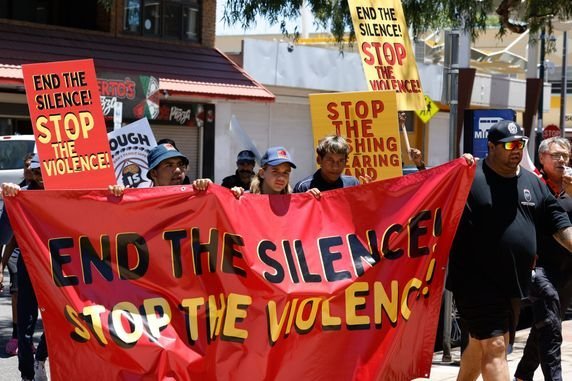
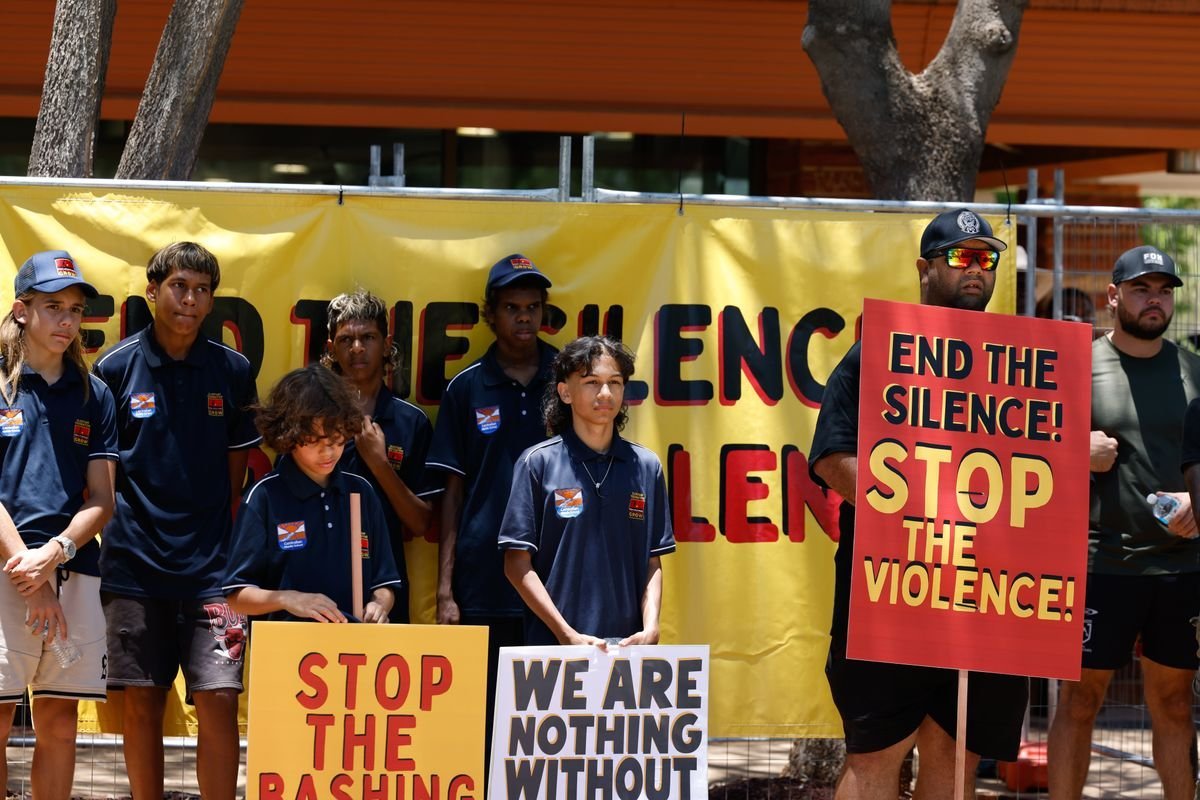
Both cases remain before the courts. In their aftermath, grieving relatives and community members made heartfelt pleas for the violence to end.
Analysis: What This Means for Australia
The Territory’s figures are not a regional curiosity. They are a warning about the future of community safety across the nation.
When teenagers are being charged with strangulation, an offence widely recognised as a red flag for future homicide, the window for intervention is closing fast.
Young people who use or endure violence in their formative years are at heightened risk of carrying those patterns into adulthood, feeding a cycle that ultimately lands in hospitals, courtrooms and youth justice facilities.
For remote communities, the stakes are even higher. Ms George questioned whether many girls in isolated areas even had a legal service, a health service or transport available when they needed to escape.
Donna Ah Chee, chief executive of the Aboriginal Medical Services Alliance Northern Territory, said health clinics were frequently carrying the weight of domestic violence support in small communities, often serving as one of the only places a young woman could turn.
Clinics can treat wounds and spot girls at risk, she said, but there must also be safe places to go and specialist help available before abuse escalates.
That gap is glaring.
The NT government’s Circuit Breaker program, a voluntary early intervention scheme funded under the NT Domestic, Family and Sexual Violence Reduction Strategy 2025-2028, commenced 439 cases in the 2025-26 financial year.
Yet it is not offered in remote communities at all.
The social and economic cost of failing to act is immense, from overstretched police and emergency departments to the lifelong trauma carried by survivors and their families.
Trish Connolly, newly appointed chief executive of the Northern Territory Council of Social Service, argued teenagers had been “forgotten” in Australia’s response.
She said the national domestic and family violence plan was largely designed around adult women and their children, leaving young people who experience abuse on their own without tailored help.
With crisis accommodation already unable to keep up with demand, Ms Connolly has called for more funding and for age-appropriate services built specifically for children and young people.
Social policy analysts say the Territory’s data should prompt a rethink of the national plan to end violence against women, warning that a framework built for adults risks missing an entire cohort of victims and perpetrators at the very moment change is most achievable.
Law enforcement insiders warn that arrests alone cannot fix the problem, noting that police are often responding after the damage is done, when the real opportunity lies in earlier intervention through schools, clinics and families.
Community advocates believe any lasting solution must be shaped and led by Aboriginal organisations and delivered on the ground in remote areas, not just in Darwin and Katherine.
Those working with young survivors say technology-facilitated abuse demands urgent attention too, with image-based threats now a routine part of the coercive control they encounter.
For the families of Galiwin’ku and Alpurrurulam, the debate over funding models and strategies comes far too late. For hundreds of other young Territorians, it may yet determine whether they ever reach adulthood safely.