
Terror on Hattersley Street as Two-Storey Building Caves In and Buries Three People Under Rubble in Sydney’s South, Raising Urgent Questions About the Safety of the Structures Around Us
- Three people were pinned beneath falling debris when part of a two-storey building suddenly gave way in Arncliffe on a Thursday morning.
- A woman in her twenties and two men in their thirties were pulled from the wreckage by firefighters, with one rushed to hospital.
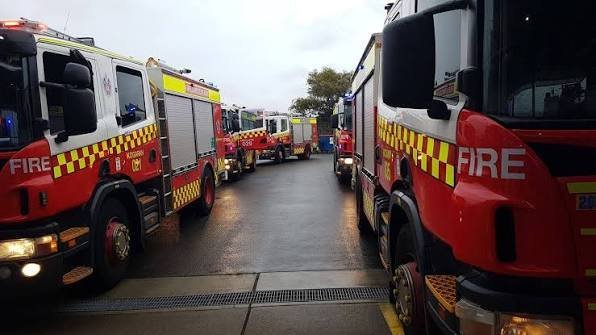
- A dozen firefighters across four trucks raced to the scene as residents watched the rescue unfold.
- The collapse has reignited fears about building safety across Sydney, where a string of high-profile structural failures has already shaken public confidence.
One moment it was an ordinary weekday morning in Sydney’s south. The next, walls and debris were crashing down on three people who had no warning and nowhere to run.
For the woman and two men caught in the collapse, the terror was brutally real. Trapped beneath rubble, unable to free themselves, they could only wait for help to arrive.
It came quickly.
But the frightening incident has left a suburban street shaken and a city once again asking a deeply uncomfortable question: how safe are the buildings we live and work in?
Emergency services were called to Hattersley Street in Arncliffe at around 9.15am on Thursday after a section of a two-storey building partially collapsed.
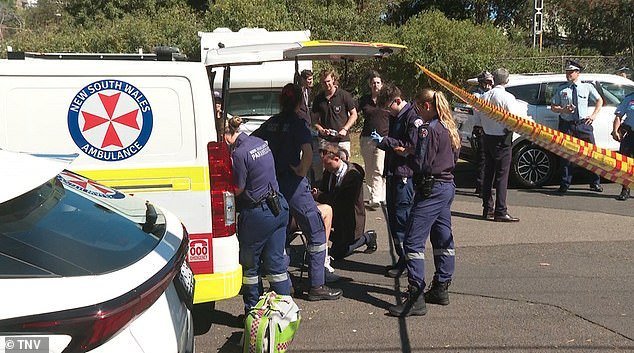
Crews from Fire and Rescue NSW arrived to find three people stuck under the debris. Firefighters moved swiftly, and all three were freed a short time later.
Four fire trucks carrying a combined 12 firefighters were deployed to the site, tasked not only with the rescue itself but also with making the area safe and clearing the wreckage left behind.
Paramedics from NSW Ambulance assessed the injured at the scene. The service confirmed a woman in her twenties and two men in their thirties had all suffered minor injuries.
One of the three was taken to hospital for further treatment.
The cause of the collapse has not been publicly confirmed, and authorities have not indicated what the building was being used for at the time or whether any work was underway on the site.
That the outcome was not far worse is being described by onlookers as a stroke of luck. A partial collapse of a two-storey structure carries enormous potential for catastrophe, and the speed of the response was crucial.
Arncliffe, sitting in the shadow of Sydney Airport and a short drive from the CBD, has transformed dramatically over the past decade. Older homes and commercial buildings now sit alongside rapid medium and high-density development, a pattern repeated right across the city’s inner south.
That mix of ageing structures and fast-paced construction is precisely the environment where building safety experts say vigilance matters most.
Sydney’s recent history offers a stark reminder of what is at stake. On Christmas Eve 2018, residents of the Opal Tower at Sydney Olympic Park were evacuated after cracking was discovered in the newly completed building.
Months later, Mascot Towers, not far from Arncliffe, was emptied after serious structural defects were found.
Those incidents triggered a sweeping overhaul of building regulation in NSW, including the appointment of a Building Commissioner and, more recently, the creation of a dedicated watchdog in Building Commission NSW.
Successive governments have promised tougher oversight and accountability for dodgy work.
Yet incidents like Thursday’s collapse show the problem is far from solved. Every time a structure fails, it chips away at the public’s trust in the system designed to protect them.
Analysis: What This Means for Australia
At its heart, this is a public safety story with national implications. Australians are being asked to accept more density, more construction and more renovation of older stock as governments race to tackle the housing crisis.
That push only works if people believe the buildings going up, and the ones already standing, are sound. A collapse in a busy Sydney suburb, even one that ends without loss of life, undermines that confidence at a critical moment.
For law enforcement and regulators, the questions are pointed. Investigators will need to establish whether this was a failure of maintenance, design, workmanship or something else entirely.
If any negligence is uncovered, the community will expect consequences.
For local communities, the impact is immediate and personal. Residents living near ageing buildings or busy construction sites are entitled to wonder whether the structures next door could give way without warning.
The economic stakes are significant too.
Building defects cost homeowners, insurers and strata schemes enormous sums every year, and incidents of this kind feed rising insurance premiums and anxiety across the property market.
There is also a strain on emergency services. Sending four trucks and 12 firefighters to a single incident ties up resources that may be urgently needed elsewhere across a growing city.
Building safety analysts say incidents of this nature should never be dismissed simply because the injuries were minor. They warn that the gap between a frightening scare and a fatal disaster can come down to seconds and centimetres.
Industry observers believe the pressure to build faster and cheaper is putting strain on inspection and compliance systems, particularly where older buildings are being altered or sit beside major works.
Emergency service insiders point to the swift rescue as evidence of how well-drilled crews are for urban collapse scenarios, but caution that prevention must remain the priority over response.
Consumer advocates have long argued that stronger enforcement, more frequent inspections and greater transparency about building condition are essential if residents are to feel safe in their own neighbourhoods.
Questions are also likely to be asked about whether existing powers are being used effectively, and whether councils and state agencies have the resources to monitor the vast number of structures across Greater Sydney.
For now, the three people pulled from the rubble on Hattersley Street are counting their blessings. Their injuries were minor, and help arrived when they needed it most.
But for the wider community, the sight of a building partially crumbling on a quiet suburban street is a jolting reminder that the walls around us are only as strong as the system that stands behind them.
As investigators begin piecing together what went wrong, Sydney will be watching closely for answers, and for assurance that the next collapse does not end in tragedy.