
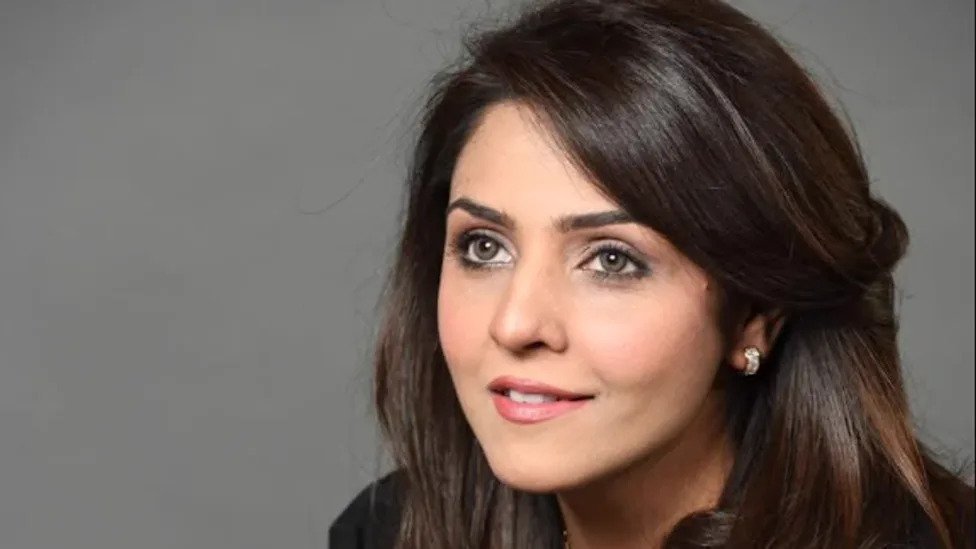
‘Women Must Be Able to Live Without Fear’: Pakistani TV Anchor Rabia Ahsan Shot Dead in Her Own Bedroom as Husband Is Arrested, a Killing That Echoes Australia’s Own Family Violence Emergency
- Popular 92 News presenter Rabia Ahsan, a 41-year-old mother of two, was found with two gunshot wounds inside her family home in Rawalpindi
- Her sister allegedly ran in from the garden after hearing a shot and found the journalist on the floor, with her husband standing over her holding a firearm
- The husband, a senior government official, told police the gun went off by accident, and investigators say he had no valid licence for the weapon
- The killing has prompted a demand for accountability from Pakistan’s First Lady and has renewed hard questions in Australia, where women are still killed by partners at a shocking rate
It was a quiet Sunday afternoon. Her mother and sister were outside in the garden.
Then a single gunshot cracked through the house.
Minutes later, one of Pakistan’s familiar television faces was dying on her bedroom floor.

Rabia Ahsan, 41, had spent her career telling millions of viewers about the world’s crises. Only hours before she was killed, she had uploaded a video to her YouTube channel analysing the United States mid-term elections.
By that evening, she had become the story herself.
Ahsan’s husband, Ahsan Tahir, is now in police custody. His wife’s family accuses him of killing her.
He insists it was a terrible accident.
The shooting happened at about 3pm on Sunday, November 8, at the family’s home in Rawalpindi, the garrison city next to the capital, Islamabad.
According to local media reports, Ahsan’s sister heard the shot and rushed inside. She allegedly found the presenter bleeding heavily on the floor, with Tahir standing in the room with a gun in his hand.
Ahsan had been hit twice. One bullet struck just below her neck and another hit the right side of her back, Arab News reported.
She was pronounced dead soon afterwards.
Tahir reportedly works as a deputy director at the Overseas Pakistanis Foundation, a government-linked body that serves the country’s huge diaspora. Investigators told local outlets that he did not hold a valid permit for the firearm.
Under questioning, he allegedly claimed the weapon had discharged by accident.
That account has not satisfied Ahsan’s family.
Her brother, Khurram Ahmed, lodged a formal complaint accusing his brother-in-law of murdering his sister, and that complaint triggered the homicide investigation now under way.
Police have not publicly said whether they believe the shooting was deliberate or accidental. No charges have been confirmed, and Tahir’s claim that it was an accident has not been tested in court.
Ahsan was a presenter on 92 News, one of Pakistan’s leading Urdu-language channels.
Her death has shaken the country’s media industry, which already ranks among the most dangerous in the world for journalists according to press freedom groups such as the Committee to Protect Journalists.
This case is different, however. Ahsan was not killed on a reporting assignment.
Her family alleges she was killed at home, the place that should have been the safest in her life.
Pakistan’s First Lady, Aseefa Bhutto-Zardari, quickly called for transparency in the investigation. She said incidents like this require serious attention and accountability, and that women must be free to live and work without fearing for their lives.
Her intervention matters.
Women’s rights advocates in Pakistan have long warned that killings inside the home are often treated as private family matters, and that cases can stall when the accused has status or official connections.
Analysis: What This Means for Australia
It would be easy for Australians to see this as a distant tragedy from another country. That would be a mistake.
The circumstances alleged here are painfully familiar: a woman killed at home, a partner present, and an explanation of an “accident” that her family rejects. Australia is still struggling with its own national emergency of domestic violence.
Figures from the Australian Institute of Criminology have repeatedly shown that, on average, a woman in Australia is killed by a current or former intimate partner roughly every week or two.
The federal government’s National Plan to End Violence against Women and Children 2022–2032 was created because successive governments accepted that the toll was intolerable.
There is also a direct community link. Australia is home to a large and growing Pakistani-Australian community, concentrated in Sydney and Melbourne.
Many of these families are watching this case closely through Urdu-language media, including 92 News.
Community workers have long warned that migrant women can face extra barriers to getting help, including language difficulties, visa insecurity, family pressure and fear of shame.
Cases like Ahsan’s can either push women in diaspora communities to speak out or make them more fearful.
The firearm detail also stands out. Investigators say the gun was unlicensed.
Since the 1996 National Firearms Agreement, Australia has had some of the strictest gun laws in the world.
Even so, police continue to warn that illegal and unregistered weapons are still in circulation, and that a gun in a home where there is coercive control sharply raises the risk that a woman will be killed.
For Australian authorities, the lesson is clear. The risk signs that precede intimate partner homicide are well documented, and acting on them early saves lives.
Family violence specialists say the period before a killing is rarely as sudden as it appears.
Researchers who study coercive control point to a recognisable pattern of escalation, which is why New South Wales and Queensland have moved to criminalise that behaviour.
Law enforcement insiders warn that the “accidental discharge” defence is one investigators treat with great care. Forensic evidence such as the number of wounds, their position and the angle of fire often becomes decisive.
Ballistics and forensic work are expected to be central to the Rawalpindi investigation.
Press freedom observers believe the outcome will be an important test for Pakistan. A transparent investigation would send a strong signal.
Any suggestion that official connections are shielding the accused would deepen distrust among women and journalists.
Community advocates in Australia say grief over cases like this should lead to action. That means better-funded, culturally specific support services and clear messages to women in migrant communities that help is available and confidential.
For now, two children have lost their mother. A family is demanding answers.
And the bedroom where Rabia Ahsan died has become the centre of a case that reaches well beyond Rawalpindi.
If you or someone you know is affected by family or domestic violence, call 1800RESPECT on 1800 737 732. In an emergency, call 000.