
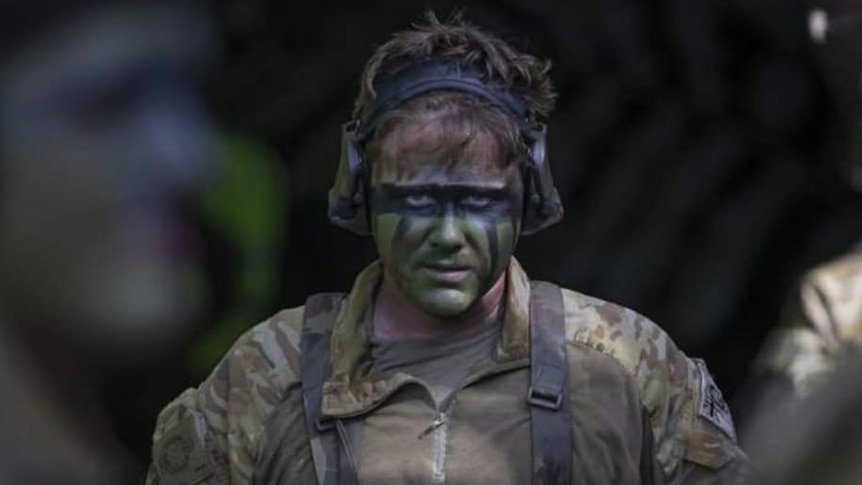
‘In His Final Moments He Went Back for the Wounded’: Young Melbourne Paramedic, 22, Killed on Ukraine’s Front Line as Russian Propaganda Networks Turn Australian Deaths Into Weapons of War
- Jeremie Robert Munso, just 22, graduated as a paramedic in Melbourne in February and was dead in Ukraine by late August after refusing to abandon injured comrades under enemy fire
- His body still lies unrecovered on the battlefield, and Australian officials are yet to formally confirm his death with Kyiv
- A second Australian combat medic, Shane ‘Mozzie’ Bagley, was killed around the same time, while a Queensland man who fought for Russia is missing and feared dead
- Experts warn Kremlin-aligned social media channels are identifying fallen foreign fighters and using their deaths to frighten others away
He could have run. His unit was taking fire and pulling back.
Instead, Jeremie Robert Munso stayed beside the wounded.
The 22-year-old Australian, a freshly qualified paramedic who had swapped Melbourne’s suburbs for the killing fields of eastern Europe only months earlier, suffered catastrophic injuries to his legs in that decision.
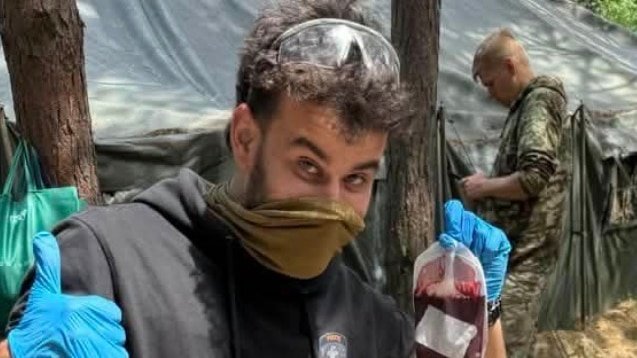
He did not survive. Months later, his remains have still not been brought home.
His family has now confirmed what they had feared: the young medic was killed on August 27 while serving with Med Team Alpha, a unit within Ukraine’s International Legion, the force that recruits trained foreigners to fight against Russia’s invasion.
According to relatives, the team was forced to relocate under hostile fire. Mr Munso chose to remain with injured members of the group, sustained severe leg wounds, and later died.
The precise circumstances remain unclear.
The family says it has verified his death independently. The Department of Foreign Affairs and Trade says it is still working with Ukrainian authorities to formally confirm it.
His mother, who asked not to be named, described a son driven by purpose rather than glory. She said he led quietly, gave generously, carried humour and kindness wherever he went, and never chased recognition.
In his last moments, she said, he was doing what came naturally to him: going back for those who were hurt.
Mr Munso’s road to the front was deliberate. Before qualifying as a paramedic, he served in the Australian Army Reserve.
In correspondence with Ukraine’s military, he told recruiters he expected to complete his Bachelor of Paramedicine in February 2026 and hoped to arrive soon after, describing Russia’s war as an “illegal and immoral” invasion he wanted to help resist.
Money, his family insists, was never the lure.
While the International Legion advertises monthly wages of up to $14,600 for those undertaking assault missions, relatives say Mr Munso received only a modest sum to cover incidental costs.
He was not the only Australian medic from the same unit to fall. Shane Bagley, known to comrades as ‘Mozzie’, died at roughly the same time while working as a combat medic with Ukraine’s 1st Foreign Legion Squadron.
DFAT says it is supporting his family.
The deaths cast fresh light on a largely invisible exodus. Nobody in Canberra can say how many Australians have joined Ukraine’s foreign units since the full-scale invasion began in February 2022.
Ukrainian officials have previously suggested up to 16,000 foreigners from more than 72 countries have served.
And the traffic runs both ways. Queensland security guard Daryl ‘Dundee’ Fladung is now missing and feared dead after travelling to fight for Russia.
He was reportedly recruited while gaming at home in outback Queensland, and disappeared just ten days after announcing online that he had reached the front line.
Australia’s official travel advice for Ukraine remains at its most severe level: do not travel.
Analysis: What This Means for Australia
The deaths of Mr Munso and Mr Bagley are personal tragedies. But taken together with the Fladung case, they expose a growing national security headache that Australian authorities appear poorly equipped to measure, let alone manage.
Australians are being drawn onto opposing sides of the same war, some recruited through online advertising, others through gaming platforms.
The government does not know how many have gone, who they are, or how many will return carrying combat trauma, battlefield experience, or ideological ties to foreign states.
For national security planners, that blind spot matters.
Returning fighters can need extensive mental health support, and those who served Moscow raise uncomfortable questions about influence and recruitment networks operating quietly inside Australian homes.
Then there is the information war. The fallen are no longer simply mourned; they are harvested.
Last week, accounts across Instagram, X and Telegram began circulating posts about Mr Munso’s death and the deaths of other foreigners, part of a pattern of Russian-aligned channels hunting down the identities of international volunteers.
For grieving families in Melbourne and beyond, that means a loved one’s death can become propaganda before officials have even confirmed it.
Consular strain is another consequence.
With bodies left on the battlefield and confirmation processes slow, DFAT faces mounting pressure from families desperate for answers in a war zone where Australia has no ability to intervene directly.
The broader Russia-Ukraine war is increasingly landing on Australian doorsteps.
Russia expert Associate Professor Matthew Sussex, of the Australian National University, says the Kremlin deliberately relies on unofficial accounts because audiences trust them more than overt state outlets such as Russia Today.
He describes a deliberately constructed ecosystem stretching from Telegram to X and Facebook.
Dr Sussex says the identifications are sometimes guesswork and sometimes accurate, but accuracy is beside the point. The information is passed down a chain to others who spin it into a blunt warning: come and fight for Ukraine and you will die.
Security analysts say this tactic is designed to sap the morale of Western volunteers and drain recruitment for Kyiv’s foreign units without a single official Russian statement being issued.
Law enforcement insiders warn the Fladung case shows recruitment is no longer confined to obvious channels, with online gaming communities emerging as a pathway that is difficult for authorities to monitor.
Defence observers believe that as long as the war grinds on and recruitment continues online, more Australian families will face the same agonising wait for confirmation, and the same cruel spectacle of seeing their loss weaponised by strangers.
For Jeremie Munso’s family, the wait is not over. Their son died keeping a promise to help others.
They are still waiting for him to come home.