
Australia’s Baby Bust: Fertility Rate Hits Historic Low as Couples Say ‘It’s Not Worth It’ Amid Crushing Cost of Living and Housing Crisis
- Australia’s fertility rate has plummeted to a record low of 1.48, with couples having fewer babies due to the crushing cost of living, housing crisis, and climate change.
- The nation’s population has hit 28 million, but without immigration, the economy would have been in recession for the past two years, according to finance expert David Koch.
- ANU demographer Dr Liz Allen warns that the low fertility rate is a “human catastrophe” that will have severe consequences for the country’s future, including a lack of young workers to care for the elderly.
- Experts say the government’s inability to address the housing crisis, climate change, and other pressing issues is forcing couples to put off having children, with many saying “it’s not worth it”.
Australia’s population may have just hit a milestone 28 million, but beneath the surface, a worrying trend is emerging. The nation’s fertility rate has slumped to a historic low, with couples having fewer babies than ever before.
The reasons are complex, but one thing is clear: the cost of living, housing crisis, and climate change are taking a devastating toll on families.
At 1.48, Australia’s fertility rate is well below the replacement rate of 2.1, meaning that couples are not even replacing themselves, let alone growing the population.
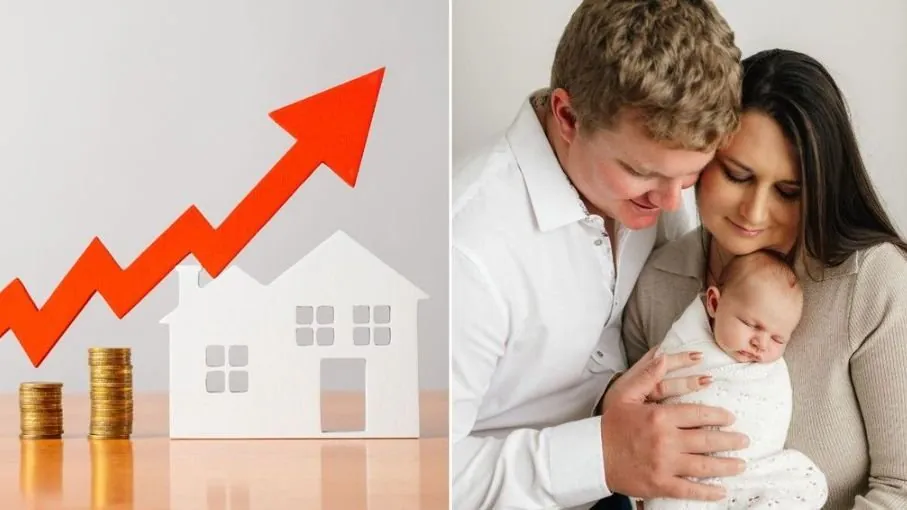
It’s a stark contrast to the baby boom of the early 2000s, when the government’s baby bonus scheme encouraged couples to have more children. But those days are long gone, and the consequences are only just beginning to manifest.
So, what’s driving this trend? According to Dr Liz Allen, a demographer at the Australian National University, it’s a perfect storm of factors.
“We simply are in a situation where now is just too hostile for people to consider bringing children into the world,” she says.
The cost of living, housing crisis, energy crisis, childcare crisis, and climate crisis are all taking their toll on families, making it impossible for many to see having children as a viable option.
But the implications of this trend go far beyond individual families. A low fertility rate has severe consequences for the country’s future, including a lack of young workers to care for the elderly.
“You need a population growth, a level of it, that keeps the economy growing,” says finance expert David Koch. Without immigration, the Australian economy would have been in recession for the past two years, he warns.
Analysis: What This Means for Australia
The low fertility rate is a wake-up call for Australia’s politicians, who have been struggling to address the country’s pressing issues.
The housing crisis, climate change, and cost of living are all critical factors in the decision to have children, and yet, the government seems unable to agree on solutions.
As Dr Allen warns, “Social cohesion is most definitely fraying” and the consequences of inaction will be severe.
Security analysts say that a declining population will put pressure on the country’s social security system, as there will be fewer workers to support the elderly.
Law enforcement insiders warn that a shrinking population will also lead to a shortage of police officers and other essential services.
Industry observers believe that the low fertility rate will also have a devastating impact on the economy, as there will be fewer consumers and workers to drive growth.
As the nation grapples with the implications of its low fertility rate, one thing is clear: it’s time for a national conversation about the future of Australia.
With so much global upheaval, it’s more important than ever that we consider the kind of country we want to build. Perhaps it’s time to rethink our priorities and put families at the forefront of policy-making.