
‘Erased from Their Own Land’: Njaki Njaki People Demand Government Intervention as Historic Native Title Agreement Fails to Deliver
- Njaki Njaki people claim they’re being shut out of consultations on major projects on their traditional land in Western Australia’s Wheatbelt region.
- The group says their cultural authority is being ignored by the Ballardong Aboriginal Corporation, which is supposed to represent them.
- Millions of dollars are being pumped into new projects, but the Njaki Njaki people say they’re being denied financial benefits and opportunities.
- Former BAC chairperson Tracey de Grussa has come forward, corroborating the Njaki Njaki group’s claims of “non-acknowledgement” by the corporation.
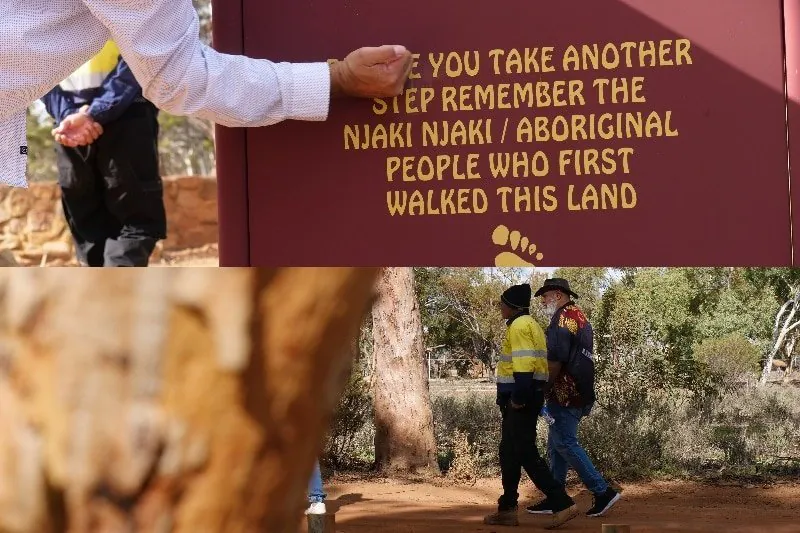
The Njaki Njaki people, traditional owners of a large portion of the eastern Wheatbelt in Western Australia, are speaking out against the Ballardong Aboriginal Corporation (BAC) for allegedly ignoring their cultural authority and shutting them out of consultations on major projects.
The group claims that despite being the rightful owners of the land, they’re being denied financial benefits and opportunities in training and employment that are meant to flow to traditional owners from the developments.
At the heart of the issue is the South West Native Title Settlement, a historic agreement between the state government and the Noongar Nation of the South West.
While touted as the most comprehensive native title agreement in Australian history, the Njaki Njaki people say it has enabled regional Aboriginal corporations to be dominated by one of the multiple groups they each represent.
In this case, the BAC is accused of prioritizing the interests of other groups over those of the Njaki Njaki people.
The Njaki Njaki group’s concerns are not just about being left out of the decision-making process; they’re also about the very real consequences of being ignored.
With hundreds of millions of dollars being invested in new and ongoing projects in the region, including the Collgar wind farm, upgrades to the Goldfields Pipeline, the Merredin Big Battery, and the Kondinin wind farm, the group says they’re being denied opportunities that could benefit their community.
Analysis: What This Means for AustraliaThe Njaki Njaki people’s struggle highlights a broader issue with the native title system in Australia.
While the South West Native Title Settlement was intended to provide a framework for recognizing the traditional owners of the South West region, it appears to have created a power imbalance that favors larger, more dominant groups.
This has significant implications for the rights and interests of smaller dialect groups like the Njaki Njaki people, who are already vulnerable to marginalization. Law enforcement and governance experts say that the situation is a classic example of how a well-intentioned policy can have unintended consequences.
“The native title system is meant to empower traditional owners, but in cases like this, it can actually perpetuate existing power dynamics,” says one expert.
“It’s essential that we take a closer look at how these agreements are being implemented and ensure that all groups have a seat at the table.”
The Njaki Njaki people’s demands for government intervention and fair representation are not just about their own interests; they’re also about setting a precedent for other Indigenous groups who may be facing similar challenges.
As the Australian government continues to grapple with the complexities of Indigenous recognition and reconciliation, the Njaki Njaki people’s story serves as a timely reminder of the need for greater accountability and transparency in the native title system.
Security analysts point out that the situation also has national security implications, as the marginalization of Indigenous groups can create social and economic tensions that can be exploited by extremist groups.
“It’s essential that we address these issues proactively, rather than waiting for them to boil over into conflict,” says one analyst.
In light of these concerns, the Njaki Njaki people are calling for a more inclusive and representative system that acknowledges the diversity of Indigenous cultures and languages.
Their struggle serves as a powerful reminder of the need for greater recognition and respect for Indigenous rights and interests in Australia.
The Njaki Njaki people, traditional owners of a large portion of the eastern Wheatbelt in Western Australia, are speaking out against the Ballardong Aboriginal Corporation (BAC) for allegedly ignoring their cultural authority and shutting them out of consultations on major projects. The group claims that despite being the rightful owners of the land, they’re being denied financial benefits and opportunities in training and employment that are meant to flow to traditional owners from the developments.
At the heart of the issue is the South West Native Title Settlement, a historic agreement between the state government and the Noongar Nation of the South West. While touted as the most comprehensive native title agreement in Australian history, the Njaki Njaki people say it has enabled regional Aboriginal corporations to be dominated by one of the multiple groups they each represent. In this case, the BAC is accused of prioritizing the interests of other groups over those of the Njaki Njaki people.
The Njaki Njaki group’s concerns are not just about being left out of the decision-making process; they’re also about the very real consequences of being ignored. With hundreds of millions of dollars being invested in new and ongoing projects in the region, including the Collgar wind farm, upgrades to the Goldfields Pipeline, the Merredin Big Battery, and the Kondinin wind farm, the group says they’re being denied opportunities that could benefit their community.
The Njaki Njaki people’s struggle highlights a broader issue with the native title system in Australia. While the South West Native Title Settlement was intended to provide a framework for recognizing the traditional owners of the South West region, it appears to have created a power imbalance that favors larger, more dominant groups. This has significant implications for the rights and interests of smaller dialect groups like the Njaki Njaki people, who are already vulnerable to marginalization.
Law enforcement and governance experts say that the situation is a classic example of how a well-intentioned policy can have unintended consequences. “The native title system is meant to empower traditional owners, but in cases like this, it can actually perpetuate existing power dynamics,” says one expert. “It’s essential that we take a closer look at how these agreements are being implemented and ensure that all groups have a seat at the table.”
The Njaki Njaki people’s demands for government intervention and fair representation are not just about their own interests; they’re also about setting a precedent for other Indigenous groups who may be facing similar challenges. As the Australian government continues to grapple with the complexities of Indigenous recognition and reconciliation, the Njaki Njaki people’s story serves as a timely reminder of the need for greater accountability and transparency in the native title system.
Security analysts point out that the situation also has national security implications, as the marginalization of Indigenous groups can create social and economic tensions that can be exploited by extremist groups. “It’s essential that we address these issues proactively, rather than waiting for them to boil over into conflict,” says one analyst.
In light of these concerns, the Njaki Njaki people are calling for a more inclusive and representative system that acknowledges the diversity of Indigenous cultures and languages. Their struggle serves as a powerful reminder of the need for greater recognition and respect for Indigenous rights and interests in Australia.