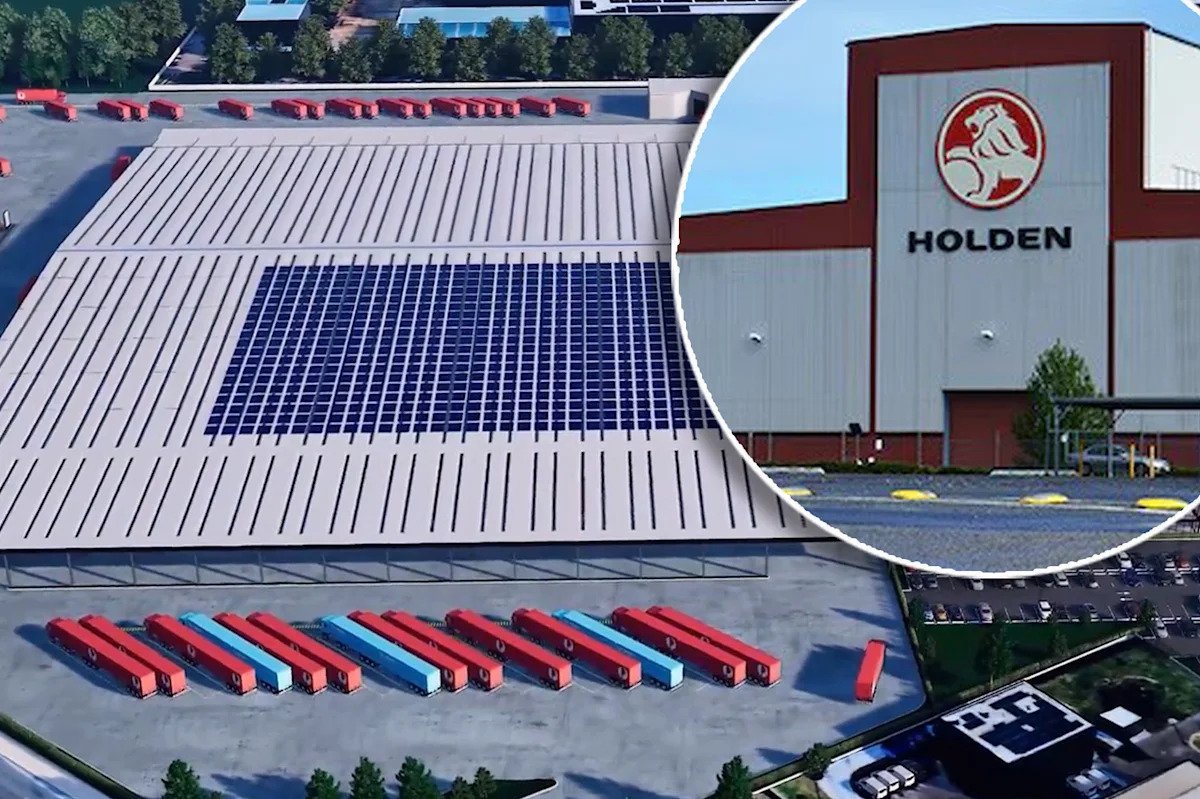
Revved Up for the Future: $500 Million Australia Post Parcel Super Hub to Rise from the Ashes of Holden’s Former Elizabeth Factory
- Australia Post is transforming the iconic Holden factory in Elizabeth, South Australia, into a massive parcel processing hub, capable of handling up to 400,000 parcels per day.
- The $500 million project is set to replace the former car factory, which once churned out over seven million vehicles, including the legendary Holden Kingswood and Commodore.
- As online shopping booms, Australia Post is shifting gears to meet the demand, investing in state-of-the-art facilities to keep up with the parcel tsunami.
- The redevelopment is part of a broader trend, with other former Australian vehicle manufacturing sites being repurposed for modern uses, such as data centres.
In a groundbreaking ceremony, the former Holden factory in Elizabeth, South Australia, marked the beginning of its transformation into a $500 million Australia Post parcel super hub.
The 83,000m2 facility, scheduled to open in late 2028, will be capable of handling up to 400,000 parcels per day – double the capacity of Australia Post’s existing Adelaide Airport Parcel Facility.
This massive undertaking is a testament to the changing landscape of Australian industry and the rise of e-commerce. The project’s significance extends beyond the parcel processing hub itself.
It represents a broader shift in Australia’s economic landscape, as the country transitions away from traditional manufacturing and towards more modern, service-oriented industries.
As South Australian Acting Deputy Premier Nick Champion noted, “We’re spending more time shopping online, and as a result, there’s this huge volume of parcels now coming through Australia Post’s system, and they need modern warehousing, modern parcel delivery, and the facilities to do it.”




The redevelopment of the Holden factory is not an isolated event.
It follows similar transformations of other former Australian vehicle manufacturing sites. The former Holden Special Vehicles (HSV) site at Clayton, in Melbourne’s south-east, was demolished in 2025 to make way for a data centre.
Similarly, part of the former Ford Australia assembly plant at Broadmeadows is set to become the site of a data centre operated by Singapore-based Zerra DC.
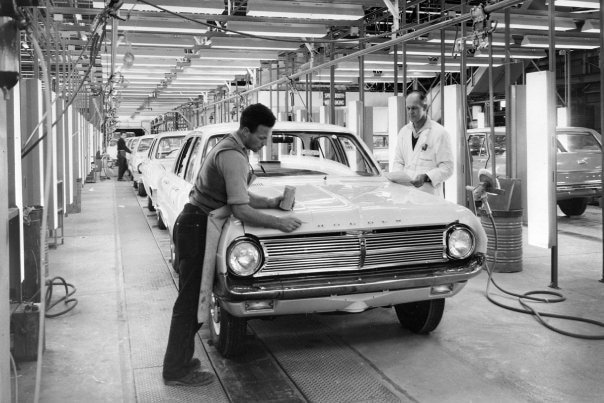
These transformations reflect the changing needs of the Australian economy and the need for modern, adaptable infrastructure. The Holden factory, which opened in 1960, has a rich history.
Over the following 52 years, it built over seven million vehicles, including iconic models such as the Kingswood, Torana, Monaro, and Commodore. The plant also built Toyota-badged vehicles under the Button Plan, the Hawke Government’s industry rationalisation strategy introduced in 1985.
As part of this rationalisation, Holden closed its Acacia Ridge plant in Queensland in 1985, followed by its Dandenong, Victoria factory in 1994, leaving Elizabeth as the last of the company’s seven Australian assembly plants.
Analysis: What This Means for Australia
The transformation of the Holden factory into a parcel super hub has significant implications for Australia’s economy and its people.
As online shopping continues to grow, the demand for efficient and reliable parcel delivery services will only increase.
Australia Post’s investment in modern facilities and technology will help to meet this demand, supporting the growth of e-commerce and the creation of new jobs.
However, the redevelopment also raises questions about the future of Australian manufacturing and the impact of globalisation on local industries.
As traditional manufacturing sites are repurposed for modern uses, it is essential that Australia invests in the skills and infrastructure needed to support new industries and create jobs for the future.
Security analysts say that the increased demand for parcel delivery services also raises concerns about the potential for cyber threats and data breaches. As Australia Post handles an increasing volume of parcels, it will be essential to invest in robust cybersecurity measures to protect sensitive customer data.
Law enforcement insiders warn that the growth of e-commerce also presents opportunities for organised crime, particularly in the areas of parcel theft and identity fraud.
As Australia Post expands its services, it will be essential to work closely with law enforcement agencies to prevent and prosecute these types of crimes. Industry observers believe that the transformation of the Holden factory is a positive step towards creating a more modern and adaptable economy.
However, they also note that it is essential to support workers who may be displaced by the shift away from traditional manufacturing. Governments and businesses must work together to provide training and education programs that help workers develop the skills needed to thrive in new industries.
By investing in modern facilities and technology, Australia Post is helping to drive the growth of e-commerce and support the creation of new jobs.
However, it is essential that this growth is balanced with investments in cybersecurity, law enforcement, and worker retraining programs to ensure that the benefits of this growth are shared by all Australians.
In a groundbreaking ceremony, the former Holden factory in Elizabeth, South Australia, marked the beginning of its transformation into a $500 million Australia Post parcel super hub. The 83,000m2 facility, scheduled to open in late 2028, will be capable of handling up to 400,000 parcels per day – double the capacity of Australia Post’s existing Adelaide Airport Parcel Facility. This massive undertaking is a testament to the changing landscape of Australian industry and the rise of e-commerce.
The project’s significance extends beyond the parcel processing hub itself. It represents a broader shift in Australia’s economic landscape, as the country transitions away from traditional manufacturing and towards more modern, service-oriented industries. As South Australian Acting Deputy Premier Nick Champion noted, “We’re spending more time shopping online, and as a result, there’s this huge volume of parcels now coming through Australia Post’s system, and they need modern warehousing, modern parcel delivery, and the facilities to do it.”
The redevelopment of the Holden factory is not an isolated event. It follows similar transformations of other former Australian vehicle manufacturing sites. The former Holden Special Vehicles (HSV) site at Clayton, in Melbourne’s south-east, was demolished in 2025 to make way for a data centre. Similarly, part of the former Ford Australia assembly plant at Broadmeadows is set to become the site of a data centre operated by Singapore-based Zerra DC. These transformations reflect the changing needs of the Australian economy and the need for modern, adaptable infrastructure.
The Holden factory, which opened in 1960, has a rich history. Over the following 52 years, it built over seven million vehicles, including iconic models such as the Kingswood, Torana, Monaro, and Commodore. The plant also built Toyota-badged vehicles under the Button Plan, the Hawke Government’s industry rationalisation strategy introduced in 1985. As part of this rationalisation, Holden closed its Acacia Ridge plant in Queensland in 1985, followed by its Dandenong, Victoria factory in 1994, leaving Elizabeth as the last of the company’s seven Australian assembly plants.
Analysis: What This Means for Australia
The transformation of the Holden factory into a parcel super hub has significant implications for Australia’s economy and its people. As online shopping continues to grow, the demand for efficient and reliable parcel delivery services will only increase. Australia Post’s investment in modern facilities and technology will help to meet this demand, supporting the growth of e-commerce and the creation of new jobs.
However, the redevelopment also raises questions about the future of Australian manufacturing and the impact of globalisation on local industries. As traditional manufacturing sites are repurposed for modern uses, it is essential that Australia invests in the skills and infrastructure needed to support new industries and create jobs for the future.
Security analysts say that the increased demand for parcel delivery services also raises concerns about the potential for cyber threats and data breaches. As Australia Post handles an increasing volume of parcels, it will be essential to invest in robust cybersecurity measures to protect sensitive customer data.
Law enforcement insiders warn that the growth of e-commerce also presents opportunities for organised crime, particularly in the areas of parcel theft and identity fraud. As Australia Post expands its services, it will be essential to work closely with law enforcement agencies to prevent and prosecute these types of crimes.
Industry observers believe that the transformation of the Holden factory is a positive step towards creating a more modern and adaptable economy. However, they also note that it is essential to support workers who may be displaced by the shift away from traditional manufacturing. Governments and businesses must work together to provide training and education programs that help workers develop the skills needed to thrive in new industries.
By investing in modern facilities and technology, Australia Post is helping to drive the growth of e-commerce and support the creation of new jobs. However, it is essential that this growth is balanced with investments in cybersecurity, law enforcement, and worker retraining programs to ensure that the benefits of this growth are shared by all Australians.