Victoria’s Energy Crisis: The $7.6 Billion Power Struggle That Will Decide the State’s Future
- Victoria’s energy supply hangs in the balance as the state’s major parties clash over plans to replace the soon-to-be-closed Yallourn coal-fired power plant.
- The Labor government’s $7.6 billion VNI West transmission line project is under threat from the Coalition, who vow to scrap it if elected.
- Experts warn that the plan to rely on gas to fill the energy gap is “fanciful” and could lead to blackouts and soaring power bills.
- The energy crisis has sparked a heated debate, with the renewable energy sector accusing the Coalition of “reckless” decision-making.
As Victoria heads to the polls in November, the state’s energy supply is shaping up to be a decisive factor in the election.
The closure of the Yallourn coal-fired power plant in 2028 has sparked a heated debate over how to replace the 14.8 per cent of the state’s power it provides.
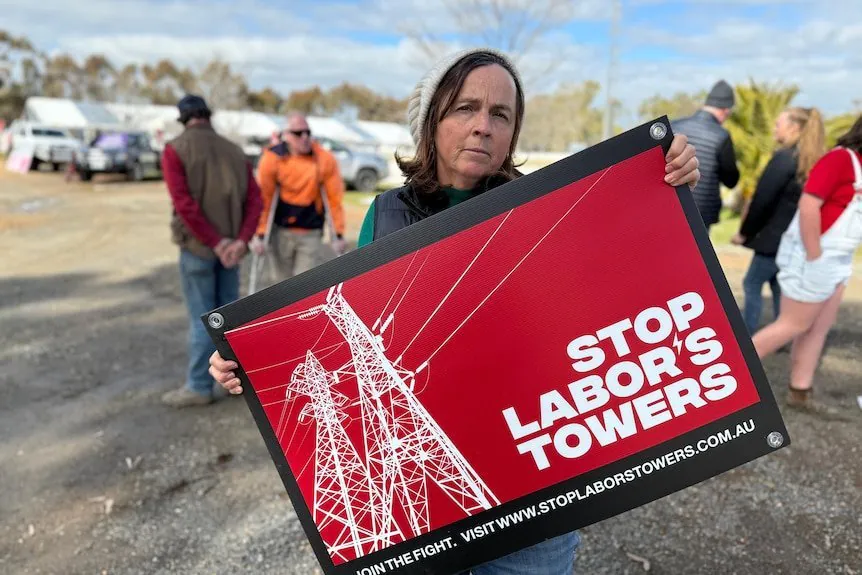
The Labor government has signed a deal for a $7.6 billion transmission line, VNI West, to connect Victoria with NSW and bring online more renewable energy projects.
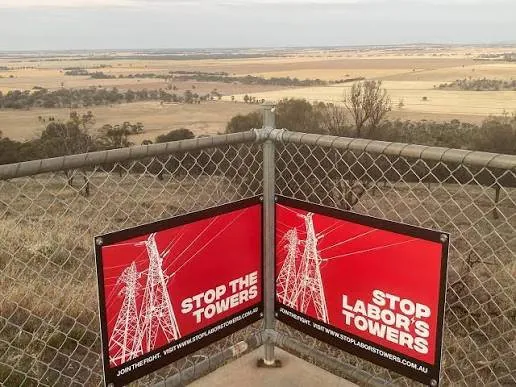
However, the Coalition has vowed to scrap the project, citing concerns over its cost and impact on regional communities.
The decision has been met with fierce criticism from the renewable energy sector, with Energy Minister Jaclyn Symes accusing the Coalition of “guaranteeing blackouts and pushing up power bills.” The sector argues that VNI West is critical to delivering cheap power and keeping the lights on as the state’s aging coal-fired generators retire.

However, the Coalition claims that the project has “lost its social licence” and that it wants to explore alternative options, including greater use of gas to provide Victoria’s energy needs.
But experts say the plan to rely on gas is “fanciful” and could lead to a shortage of supplies.
The Bass Strait gas fields, which have long supplied Victoria, are running dry, and the state’s network of gas pipelines would need to be expanded at significant cost.
“Where’s the gas in the system?” asks Gavin Dufty, national director of energy at St Vincent de Paul. “The Victorian gas transmission system needs to be upgraded.
But also, you need to be able to have gas – the molecules – to stick in the thing. And we don’t have the molecules either.”
The Coalition’s plan to hold an auction for industry to propose new generation has also been met with skepticism.
The party says it will be “technologically agnostic,” but experts warn that the process could favor gas-fired generation, which is more expensive than other options.
“Victoria is already at some risk, not definite, that in the next few years we may very well find we’re running short of gas,” says Grattan Institute energy expert Tony Wood.
Analysis: What This Means for Australia
The energy crisis in Victoria has significant implications for the state’s economy and security.
The closure of Yallourn and the potential scrapping of VNI West could lead to a shortage of energy supplies, resulting in blackouts and soaring power bills.
This could have a devastating impact on businesses and households, particularly in regional areas.
The debate also highlights the need for a clear and coherent national energy policy, one that balances the need for reliable and affordable energy with the need to reduce carbon emissions.
Security analysts say that the energy crisis in Victoria is a wake-up call for the country. “The fact that Victoria is facing an energy crisis is a reminder that our energy security is fragile,” says one analyst.
“We need to take a long-term view and invest in renewable energy and energy storage to ensure that we have a reliable and sustainable energy supply.”
Law enforcement insiders also warn that the energy crisis could have significant implications for public safety. “A shortage of energy supplies could lead to a range of problems, from power outages to increased crime,” says one insider.
“We need to take a proactive approach to addressing the energy crisis and ensure that our communities are safe and secure.”
Industry observers believe that the energy crisis in Victoria is a symptom of a broader problem. “The fact that we are facing an energy crisis is a reminder that our energy market is broken,” says one observer.
“We need to take a fundamental look at how we generate and distribute energy in this country and make some significant changes to ensure that we have a reliable and sustainable energy supply.”