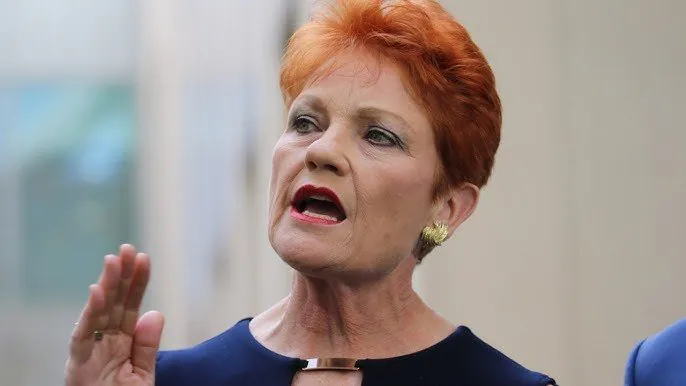
One Nation’s Migration U-Turn: Pauline Hanson’s Party Embroiled in Internal Conflict Over Immigration Targets
- One Nation’s migration policy in disarray as leader Pauline Hanson contradicts MP David Farley’s comments on ABC Insiders
- Farley suggests One Nation’s migration target would be around 230,000, but Hanson insists it’s 130,000
- Internal conflict sparks concerns over One Nation’s credibility on migration, a key election issue
- Major parties and business groups weigh in on the debate, warning of a “race to the bottom” on migration
The migration debate has taken a dramatic turn with One Nation’s leader Pauline Hanson publicly contradicting her own MP, David Farley, over the party’s immigration targets.
The internal conflict has sparked concerns over One Nation’s credibility on the issue, which has become a key battleground in the lead-up to the election.
Farley told ABC Insiders that One Nation’s migration target would be around 230,000, which he claimed was “not too different” to the government’s target of 225,000 by 2028.
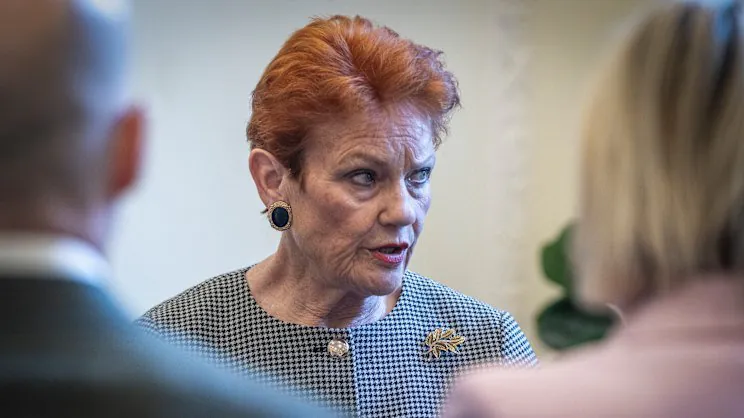
However, Hanson quickly refuted his comments on social media, stating that the party’s policy was to cut net overseas migration to 130,000, “less than half” the government’s current level.
The discrepancy has raised eyebrows, with many questioning One Nation’s true stance on migration. The party has long campaigned on a platform of slashing migration, but Farley’s comments suggest a more nuanced approach.


Hanson’s swift rebuttal has only added to the confusion, leaving voters wondering what One Nation’s actual policy is.
The migration debate has become increasingly heated in recent weeks, with the Coalition and Labor also weighing in on the issue. The government has forecast migration returning to around 225,000 by 2028, but has repeatedly overshot its own forecasts.
Labor, meanwhile, is planning an overhaul of temporary visas in a bid to slash arrivals.
Business groups have warned of a “race to the bottom” on migration, with the Australian Industry Group urging stability in the migration system. The group’s chief executive, Innes Willox, said reducing skilled migration would put further pressure on housing delivery, major infrastructure projects, and business investment.
Security analysts say the migration debate has significant implications for national security, with the potential for a surge in asylum seeker arrivals if the system is not managed effectively.
“The government needs to get a handle on migration to prevent a repeat of the chaos we saw during the Rudd-Gillard era,” one analyst warned.
Analysis: What This Means for Australia
The migration debate has far-reaching consequences for Australia’s economy, social cohesion, and national security. With the election looming, the major parties must provide clear and consistent policies on migration to reassure voters.
One Nation’s internal conflict has only added to the uncertainty, leaving many wondering what the party’s true intentions are.
Law enforcement insiders warn that a mismanaged migration system can lead to increased crime and social unrest.
“The government needs to get it right on migration to prevent a surge in asylum seeker arrivals and the associated social and economic costs,” one insider said.
Industry observers believe that a stable and effective migration system is essential for addressing workforce shortages and driving economic growth. “Reducing skilled migration at a time of persistent workforce shortages would be a disaster for Australian businesses,” one observer warned.
As the debate rages on, one thing is clear: Australia’s migration policy needs a comprehensive overhaul to ensure the country’s economic, social, and national security interests are protected.