
Racist Halloween Costume Sparks Outrage: How a Major Retailer’s Diversity Fail Exposes a Deeper Problem in Corporate Australia
- Target Australia sparks outrage with a racist children’s Halloween costume that resembles a minstrel character
- Customers slam the retailer for its lack of diversity and cultural sensitivity, with many calling for greater accountability
- The controversy raises questions about the impact of rolling back diversity and inclusion initiatives on corporate decision-making
- Experts warn that the incident is a wake-up call for Australian companies to prioritize diversity and inclusion to avoid similar mistakes
The latest controversy to engulf Target Australia has left many questioning the retailer’s commitment to diversity and inclusion. A children’s Halloween costume, advertised using an image of a black child, has sparked outrage among customers who claim it resembles a racist caricature.
The ‘Circus Clown Halloween Costume’, which retailed for $25, was criticized for its striking similarity to minstrel characters, such as Jim Crow, which were used to mock and degrade African Americans in the 19th century.
The backlash was swift and severe, with thousands of social media users slamming Target for its lack of cultural sensitivity and diversity. Many called for greater accountability, questioning how the costume made it through the company’s approval processes without being flagged as problematic.
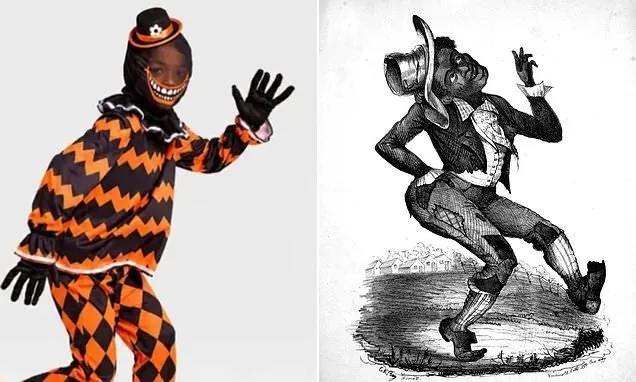
The incident has raised serious concerns about the impact of rolling back diversity and inclusion initiatives on corporate decision-making.
Minstrel shows, which originated in 1830s New York, were performances where white people would wear blackface to mock and degrade enslaved African people. The practice is widely regarded as a racist and hurtful relic of the past, and its imagery is still deeply offensive today.




The fact that Target Australia failed to recognize the costume’s resemblance to these racist caricatures has left many wondering about the company’s commitment to diversity and inclusion.
The incident has also sparked a wider debate about the importance of diversity and inclusion in corporate Australia. Experts warn that companies that fail to prioritize these values risk making similar mistakes, which can have serious consequences for their reputation and bottom line.
As one commentator noted, “This is exactly why you need a diverse team in the room!”
Analysis: What This Means for Australia
The controversy surrounding Target Australia’s racist Halloween costume has significant implications for corporate Australia. It highlights the need for companies to prioritize diversity and inclusion, not just as a moral imperative, but as a business necessity.
In today’s globalized and increasingly diverse marketplace, companies that fail to recognize and respect different cultures and perspectives risk being left behind.
Security analysts say that the incident is a wake-up call for Australian companies to review their diversity and inclusion policies and practices. “This is a classic case of a company failing to consider the potential consequences of its actions,” one analyst noted.
“It’s a reminder that diversity and inclusion are not just HR issues, but critical business risks that need to be managed.” Law enforcement insiders warn that companies that fail to prioritize diversity and inclusion risk damaging their reputation and losing the trust of their customers.
Industry observers believe that the incident is a symptom of a deeper problem in corporate Australia. “This is what happens when DEI is not honored because somebody should have been looking at that,” one commentator noted.
“You rolled back diversity, so who’s in the room, now, to say ‘hey, this is wrong?'” The incident has sparked calls for greater accountability and transparency in corporate decision-making, particularly when it comes to diversity and inclusion.
As the controversy surrounding Target Australia’s racist Halloween costume continues to unfold, one thing is clear: companies that fail to prioritize diversity and inclusion risk facing serious consequences.
It’s time for corporate Australia to take a hard look at its values and practices and ask itself: what does it mean to be a responsible and inclusive business in the 21st century?