Tragedy Strikes Wisconsin Skies: Six Lives Lost in Devastating Plane Crash as Icy Storm Proves Deadly
- A small plane carrying six people, including a child, has crashed in a wooded area near Mirror Lake State Park, Wisconsin, resulting in the loss of all lives on board
- The pilot’s desperate attempt to navigate through a treacherous thunderstorm, with ice building up on the wings, ended in catastrophe, leaving a trail of devastation and unanswered questions
- As the investigation unfolds, experts warn of the dangers of ice build-up on aircraft, a major aviation hazard that can prove fatal, even with a thin layer of ice, highlighting the need for increased vigilance and safety measures
- The crash has sent shockwaves through the local community, with authorities working to identify the victims and provide support to their loved ones, as the nation mourns the loss of innocent lives
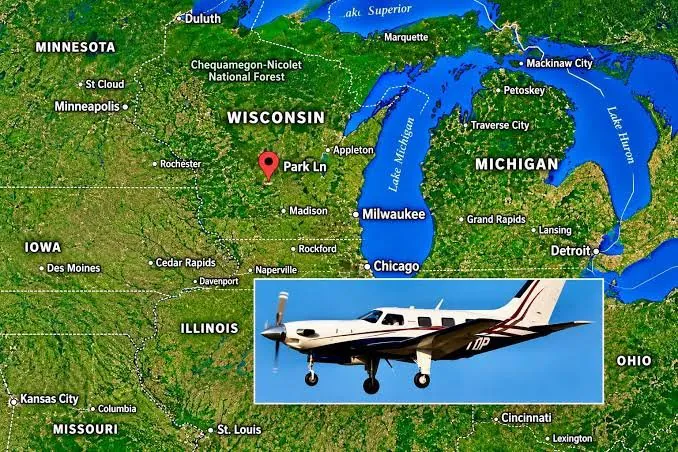
The small, single-engine plane, a Piper PA-46 Malibu, was travelling from Kenosha to Menomonie when it encountered the treacherous thunderstorm, which would ultimately prove to be its downfall.
The pilot, in a desperate bid to save the aircraft, reported the ice build-up on the wings to air traffic control and requested permission to descend, a move that would ultimately prove futile.
As the plane flew at an altitude of 7315m, the pilot’s voice was laced with a sense of urgency, a sense of desperation that would soon turn to tragedy.
The National Transportation Safety Board (NTSB) has launched an investigation into the crash, which occurred about 16km west of the popular tourist destination of Wisconsin Dells.
The Sauk County Sheriff’s Department received multiple reports of a downed aircraft, and emergency services rushed to the scene, only to find that it was too late.




The plane had crashed in a wooded area near Mirror Lake State Park, resulting in the loss of all six lives on board.
The victims, five adults and one child, have not been named, as authorities work to notify their next of kin and provide support to their loved ones.
As the investigation continues, experts are warning of the dangers of ice build-up on aircraft, a major aviation hazard that can prove fatal. Even a thin layer of ice can make it difficult for a plane to remain airborne, and the consequences can be catastrophic.
The NTSB will be working to determine the exact cause of the crash, but initial reports suggest that the ice build-up on the wings was a major contributing factor.
The plane’s descent, approved by air traffic control, ended in tragedy, as the aircraft began a right descending turn that increased in rate until communications and data tracking were lost.
The crash has raised questions about the safety of air travel, particularly in treacherous weather conditions.
The NTSB will be working to determine whether the pilot followed proper procedures and whether the aircraft was equipped with the necessary safety features to navigate the storm.
The investigation will also examine the role of air traffic control and whether they provided adequate support to the pilot in the lead-up to the crash.
As the nation mourns the loss of innocent lives, the need for increased vigilance and safety measures in the aviation industry has never been more pressing.
Security analysts say that the crash highlights the importance of robust safety protocols and emergency procedures in the aviation industry. The ability to respond quickly and effectively to emergency situations can mean the difference between life and death.
In this case, the pilot’s desperate attempt to navigate the storm ultimately ended in tragedy, but it also highlights the need for increased investment in safety measures and emergency training.
The crash is a sobering reminder of the risks associated with air travel and the need for constant vigilance to ensure the safety of all passengers.
Analysis: What This Means for Australia
The crash has significant implications for Australia, particularly in terms of national security and law enforcement.
The ability to respond quickly and effectively to emergency situations is critical, and the crash highlights the need for increased investment in safety measures and emergency training.
The Australian aviation industry must take heed of the lessons learned from this tragedy and work to implement robust safety protocols and emergency procedures to prevent similar incidents from occurring in the future.
The crash also raises questions about the role of air traffic control and the need for increased support for pilots navigating treacherous weather conditions.
Law enforcement insiders warn that the crash highlights the importance of cooperation between agencies and the need for a unified response to emergency situations. The ability to share information and resources quickly and effectively can mean the difference between life and death.
In this case, the response to the crash was swift, but it also highlights the need for increased investment in emergency services and disaster response.
The crash is a sobering reminder of the risks associated with air travel and the need for constant vigilance to ensure the safety of all passengers.
Industry observers believe that the crash will have significant implications for the aviation industry, particularly in terms of safety protocols and emergency procedures.
The ability to respond quickly and effectively to emergency situations is critical, and the crash highlights the need for increased investment in safety measures and emergency training.
The Australian aviation industry must take heed of the lessons learned from this tragedy and work to implement robust safety protocols and emergency procedures to prevent similar incidents from occurring in the future.
As the investigation continues, one thing is clear: the need for increased vigilance and safety measures in the aviation industry has never been more pressing.
The crash has also raised questions about the economic and social consequences of such a tragedy.
The loss of six lives is a devastating blow to the families and loved ones of the victims, and the impact will be felt for years to come.
The crash also highlights the need for increased support for emergency services and disaster response, as well as the need for increased investment in safety measures and emergency training.
The Australian government must take heed of the lessons learned from this tragedy and work to implement robust safety protocols and emergency procedures to prevent similar incidents from occurring in the future.
In the aftermath of the crash, the Australian public is left to ponder the what-ifs and the maybes. What if the pilot had been able to navigate the storm safely?
Maybe the crash could have been prevented.
But as the investigation continues, one thing is clear: the need for increased vigilance and safety measures in the aviation industry has never been more pressing.
The crash is a sobering reminder of the risks associated with air travel, and the need for constant vigilance to ensure the safety of all passengers.
As the nation mourns the loss of innocent lives, the Australian aviation industry must take heed of the lessons learned from this tragedy and work to implement robust safety protocols and emergency procedures to prevent similar incidents from occurring in the future.
For more information on the crash and the investigation, please visit the National Transportation Safety Board website. The aviation industry is also working to implement new safety protocols and emergency procedures to prevent similar incidents from occurring in the future.
As the investigation continues, the Australian public will be watching with bated breath, hoping that the lessons learned from this tragedy will lead to a safer and more secure aviation industry.