
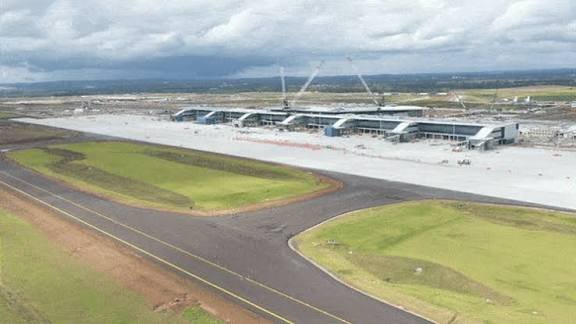
Australia’s Aviation Landscape Set To Change Forever As Western Sydney International Airport Takes Off, But Can It Dethrone Melbourne’s Avalon As The Nation’s Leading Secondary Airport?
- The much-anticipated Western Sydney International Airport is set to launch its first commercial flight, marking a new era in Australian aviation and raising questions about the future of secondary airports.
- With seven airlines already signed up to operate flights out of Western Sydney, the airport is poised to relieve congestion at Kingsford Smith and offer Sydneysiders more competition for flights, but can it overtake Melbourne’s Avalon as the nation’s leading secondary airport?
- As the two airports engage in a battle for supremacy, experts warn that Western Sydney will have to show there is sufficient passenger demand and connecting flights to keep airlines using its runways, while Avalon focuses on its unique advantages, including its logistics operations and freight handling capabilities.
- The success of Western Sydney International Airport will have significant implications for Australia’s aviation industry, with potential consequences for national security, law enforcement, and community safety, as well as economic and social consequences for the surrounding regions.
The launch of Western Sydney International Airport marks a significant milestone in Australian aviation, with the potential to transform the way people travel and do business in the region.
As the airport prepares to take off, the question on everyone’s mind is whether it can dethrone Melbourne’s Avalon as the nation’s leading secondary airport. With its state-of-the-art terminals and 24-hour operations, Western Sydney is certainly well-equipped to give Avalon a run for its money.
But Avalon is not going down without a fight. Despite its relatively small size and limited passenger numbers, the airport has a unique set of advantages that set it apart from its Sydney counterpart.
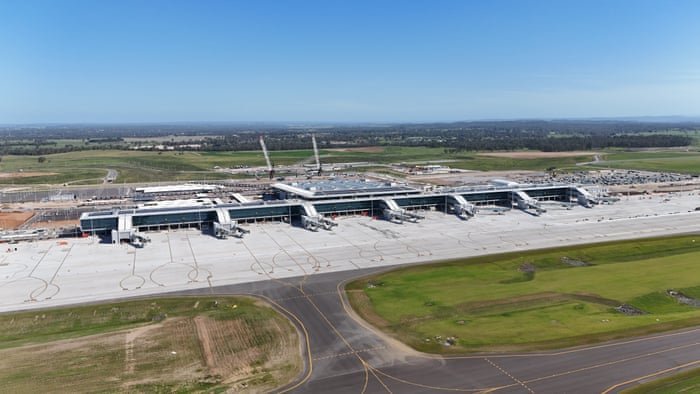
As Ari Suss, Avalon’s chief executive, points out, the airport has a strong focus on logistics and freight handling, with a large industrial precinct and a range of high-profile tenants, including the Cotton On Group and Lockheed Martin.
This, combined with its strategic location and 24-hour operations, makes Avalon an attractive option for businesses and travelers looking for a convenient and efficient alternative to Melbourne’s main airport at Tullamarine.
So, what sets Western Sydney International Airport apart from Avalon?
For starters, the airport has a much larger capacity, with plans to serve up to 10 million passengers annually and eventually up to 80 million by 2060.
This, combined with its 24-hour operations and lack of movement limits, makes it an attractive option for airlines and passengers looking for a convenient and efficient travel experience.
Additionally, Western Sydney has a number of high-profile airlines signed up to operate flights out of the airport, including Singapore Airlines, Air New Zealand, and Qatar Airways, which will provide passengers with a range of options for domestic and international travel.
However, as Associate Prof Chrystal Zhang, an aviation expert at RMIT University, points out, Western Sydney will have to show there is sufficient passenger demand and connecting flights to keep airlines using its runways.
This will be an ongoing challenge for the airport, particularly in the early years, as it seeks to establish itself as a major player in the Australian aviation industry.
Furthermore, the airport’s success will also depend on its ability to provide a high level of service and convenience to passengers, which will require significant investment in infrastructure and technology.
Analysis: What This Means for Australia is that the success of Western Sydney International Airport will have significant implications for the nation’s aviation industry, with potential consequences for national security, law enforcement, and community safety.
As the airport grows and develops, it will be important to ensure that it is equipped to handle the increased demand and potential risks associated with large-scale air travel.
This will require close collaboration between the airport, airlines, and government agencies to ensure that the highest standards of safety and security are maintained.
Security analysts say that the launch of Western Sydney International Airport will require a significant increase in security measures, including the deployment of additional personnel and technology to monitor and respond to potential threats.
This will be particularly important in the early years, as the airport establishes itself and becomes a more attractive target for potential security risks.
Law enforcement insiders warn that the airport’s 24-hour operations and lack of movement limits will also require increased vigilance and cooperation between agencies to prevent and respond to potential security incidents.
Industry observers believe that the success of Western Sydney International Airport will also have significant economic and social consequences for the surrounding regions. As the airport grows and develops, it is likely to attract new businesses and investment to the area, creating jobs and stimulating economic growth.
However, it will also be important to ensure that the airport’s growth is managed in a sustainable and responsible way, with consideration for the potential environmental and social impacts on the local community.
As Western Sydney International Airport takes off, it is clear that the Australian aviation industry is on the cusp of a significant transformation.
With its state-of-the-art terminals, 24-hour operations, and lack of movement limits, the airport is poised to become a major player in the industry, with potential consequences for national security, law enforcement, and community safety.
As the airport grows and develops, it will be important to ensure that it is equipped to handle the increased demand and potential risks associated with large-scale air travel, and that its growth is managed in a sustainable and responsible way.
Experts say that the airport’s success will also depend on its ability to provide a high level of service and convenience to passengers, which will require significant investment in infrastructure and technology.
This will include the deployment of advanced security systems, efficient check-in and boarding processes, and high-quality amenities and services.
By providing a world-class travel experience, Western Sydney International Airport can establish itself as a major hub for air travel in Australia, and a key player in the nation’s aviation industry.
In conclusion, the launch of Western Sydney International Airport marks a significant milestone in Australian aviation, with the potential to transform the way people travel and do business in the region.
As the airport grows and develops, it will be important to ensure that it is equipped to handle the increased demand and potential risks associated with large-scale air travel, and that its growth is managed in a sustainable and responsible way.
By providing a high level of service and convenience to passengers, and working closely with government agencies and industry partners, Western Sydney International Airport can establish itself as a major player in the Australian aviation industry, and a key hub for air travel in the region.
For more information on the Western Sydney International Airport, please visit the Western Sydney International Airport website. To learn more about the Australian aviation industry, please visit the Australian aviation industry page.
For information on travel and tourism in Australia, please visit the Australian Tourism Commission website.
The success of Western Sydney International Airport will also have significant implications for the nation’s economy, with potential consequences for employment, investment, and trade. As the airport grows and develops, it is likely to attract new businesses and investment to the area, creating jobs and stimulating economic growth.
This will be particularly important for the western Sydney region, which has been identified as a key area for economic growth and development.
However, the airport’s growth will also require significant investment in infrastructure and services, including transportation links, accommodation, and amenities.
This will be a challenge for the airport and the surrounding region, as it seeks to balance the needs of passengers, airlines, and the local community.
By working closely with government agencies, industry partners, and the local community, Western Sydney International Airport can ensure that its growth is managed in a sustainable and responsible way, and that it provides a high level of service and convenience to passengers.
In the end, the success of Western Sydney International Airport will depend on its ability to provide a world-class travel experience, while also managing the potential risks and challenges associated with large-scale air travel.
By providing a high level of service and convenience to passengers, and working closely with government agencies and industry partners, the airport can establish itself as a major player in the Australian aviation industry, and a key hub for air travel in the region.