
Australia’s Weather Forecast Chaos: How Millions of Moths Are Causing Rainfall Misreads Across the Southeast
- Huge swarms of Bogong moths are being mistaken for rain clouds by Bureau of Meteorology radars, causing false forecasts and confusion among residents
- Sightings of the endangered insect are six times higher than previous seasons, with over 12,000 verified sightings recorded on the Zoos Victoria Moth Tracker website
- The Bureau of Meteorology has confirmed that its radar technology can pick up non-meteorological matter, including insects, which can appear as light, widespread rain on radar maps
- The moth migration is expected to continue for several months, leaving residents to question the accuracy of weather forecasts and dress accordingly
The usually reliable weather forecasts for the southeast of Australia have been thrown into chaos by an unexpected culprit: millions of moths.
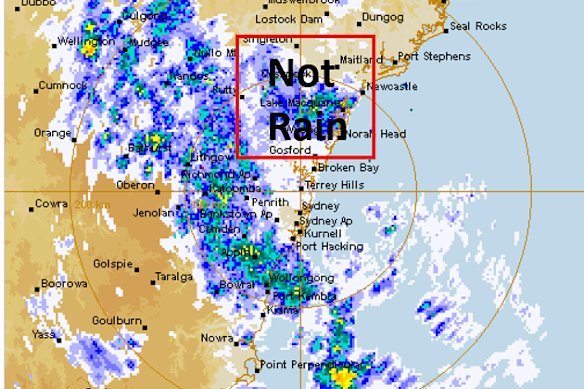
The annual migration of Bogong moths has seen huge swarms of the insects flying below the radar, quite literally, and being clocked as rain clouds by the Bureau of Meteorology’s radar technology.
This phenomenon has resulted in false forecasts, with residents being told to expect light rain, only to be greeted by clear skies and sunshine.
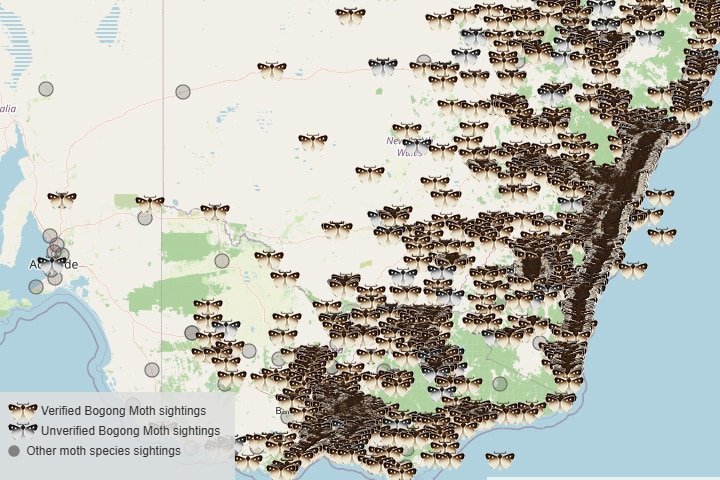
The moths, which are an endangered species, are being detected by the radar as they fly in massive swarms, creating a “rain-like” effect on the radar maps.
According to Dr Marissa Parrott, a senior conservation biologist at Zoos Victoria, the sightings of the moths are around six times higher than previous seasons, with over 12,000 verified sightings recorded on the Zoos Victoria Moth Tracker website.
The Bureau of Meteorology has confirmed that its radar technology can pick up non-meteorological matter, including insects, which can appear as light, widespread rain on radar maps.
This is because the radar technology works by sending radio waves out from a rotating dish that works like an antenna, and when these pulses hit water particles or other objects, they bounce back to the radar, creating an “echo” effect.
However, in the case of the moths, the echoes are being misinterpreted as rain, leading to the false forecasts.
The moth migration is not just a curiosity, but also an important event for the ecosystem. The Bogong moths play a crucial role in the food chain, serving as a food source for various animals, including birds, bats, and reptiles.
The migration is also an important indicator of the health of the environment, with changes in the moth population potentially signaling broader ecosystem issues.
As Dr Parrott notes, “It’s just wonderful to see the numbers coming back to where they should be, and everyone enjoying a visit from an endangered species.”
So, why is this happening now? The answer lies in the combination of the moth migration and the limitations of the Bureau of Meteorology’s radar technology.
The older radars, such as those in Wollongong and Newcastle, operate with single-polarisation capabilities, which means they are unable to distinguish between echoes from insects and rain.
In contrast, the more modern radars, such as those in Terrey Hills and Yeoval, have dual-polarisation capability, which allows them to filter out the insect echoes and provide more accurate forecasts.
As the moth migration continues, residents can expect to see more false forecasts, at least in the short term. However, the Bureau of Meteorology is working to improve its radar technology and provide more accurate forecasts.
In the meantime, residents are advised to take a closer look at the skies before dressing for the day, as the moths continue to fly and the false forecasts continue to roll in.
Security analysts say that this phenomenon highlights the importance of investing in modern radar technology, which can provide more accurate and reliable forecasts, especially in areas prone to severe weather events.
Analysis: What This Means for Australia is that the country’s weather forecasting system is not as robust as it could be.
The fact that millions of moths can cause chaos in the forecasting system highlights the need for continued investment in radar technology and meteorological research.
Law enforcement insiders warn that this phenomenon could have significant implications for public safety, particularly in areas where accurate weather forecasts are critical for emergency response planning.
Industry observers believe that this event could also have economic consequences, particularly for industries such as agriculture and aviation, which rely heavily on accurate weather forecasts.
As the situation continues to unfold, experts are weighing in on the potential consequences of this phenomenon.
According to some, the false forecasts could have significant implications for the economy, particularly in industries such as tourism and agriculture, which rely heavily on accurate weather forecasts.
Others warn that the phenomenon could also have social consequences, particularly in areas where the moths are causing significant disruptions to daily life.
weather forecasting is a critical component of Australia’s infrastructure, and the recent chaos caused by the moths highlights the need for continued investment in this area.
Security analysts say that the phenomenon also highlights the importance of national security and the need for continued investment in radar technology and meteorological research.
The fact that millions of moths can cause chaos in the forecasting system highlights the need for a more robust and reliable system, particularly in areas prone to severe weather events.
Australian Bureau of Meteorology is working to improve its radar technology and provide more accurate forecasts, but more needs to be done to address the underlying issues.
As the moth migration continues, residents can expect to see more false forecasts, and it is up to the authorities to ensure that the forecasting system is improved to provide more accurate and reliable forecasts.
In conclusion, the recent chaos caused by the moths in the weather forecasting system highlights the need for continued investment in radar technology and meteorological research.
The phenomenon has significant implications for public safety, economy, and social consequences, and it is up to the authorities to ensure that the forecasting system is improved to provide more accurate and reliable forecasts.
As the situation continues to unfold, experts will be watching closely to see how the authorities respond to this challenge and what steps are taken to improve the forecasting system.