
‘Way Too Long to Wait’: Man Dies After 78-Minute Wait for an Ambulance That Had to Travel 140km, as Tasmania’s West Coast Station Sat Empty
- A man in his 60s with chest pain and breathing difficulties was dead by the time paramedics reached him near Zeehan, almost 80 minutes after he called Triple Zero.
- The town’s own ambulance had no crew that day because a leave gap in the roster was never filled, and neighbouring crews were busy on other jobs.
- The nearest available ambulance was dispatched from Burnie, about 140 kilometres away.
- It is the second ambulance-related death to face investigation in Tasmania in less than a fortnight, yet the Health Minister says she was not aware of similar incidents.
He did what everyone is told to do. He felt the crushing warning signs, picked up the phone and dialled Triple Zero.
Then he waited. For more than an hour.
When paramedics finally reached him on Tasmania’s rugged west coast, it was too late. The man, believed to be in his 60s, was already dead.
His death has reopened a painful question for regional Australians: if you live in the wrong postcode, can you still count on an ambulance arriving when your life depends on it?
The emergency call came on Saturday from the Zeehan area, a small former mining town in the state’s remote west. The caller reported chest pains and trouble breathing, symptoms that paramedics treat as a possible heart attack until proven otherwise.
Under the triage system, the call would have been classed as ‘priority one’, the most urgent category, which means a crew is sent as fast as possible.
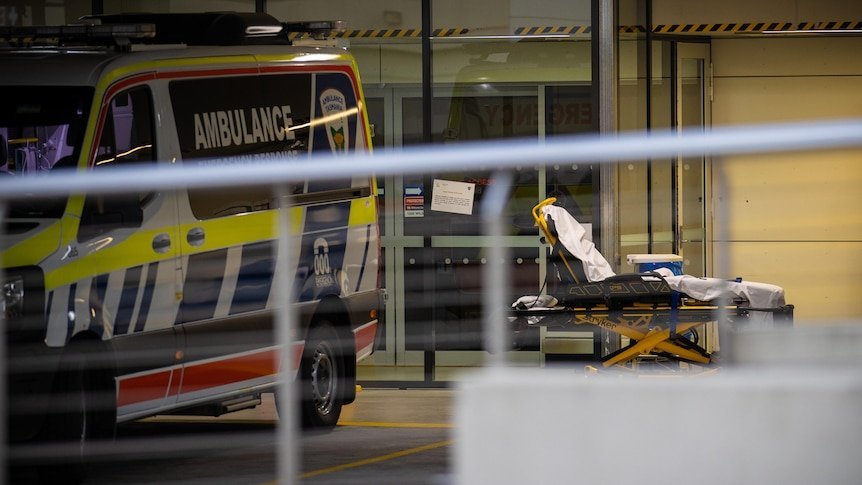
But there was nobody to send from Zeehan.
The local station was unstaffed that day after a rostered shift, left open by staff leave, was never filled. Crews in nearby Strahan and Queenstown, the next line of defence, were already attending other calls.
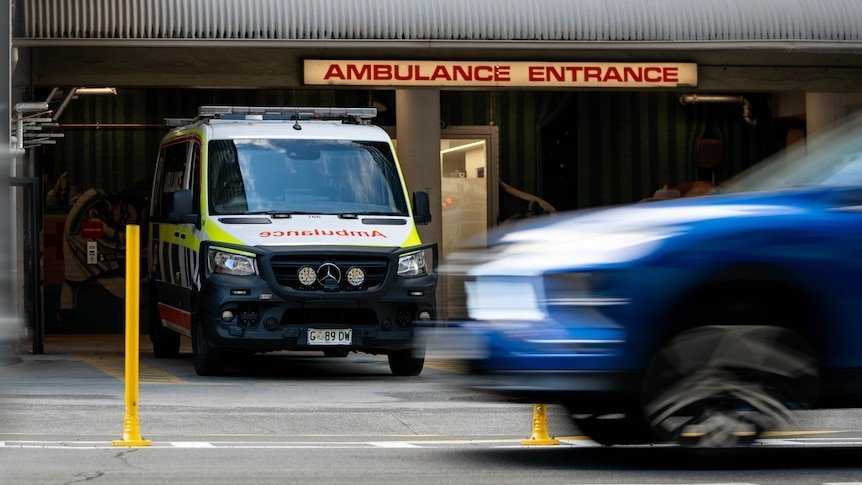
That left dispatchers looking north. An ambulance was sent from Burnie, roughly 140 kilometres away, on winding roads through some of the most isolated country in the state.
It arrived about 78 minutes after the Triple Zero call. The patient had died.
Robbie Moore, state secretary of the Health and Community Services Union, said a staffed Zeehan crew would have reached the man considerably sooner.
He said 78 minutes was far too long for someone with chest pain, describing it as a genuine emergency and likely a cardiac event. Survival odds are best, he noted, when an ambulance arrives within about 10 minutes, and a chain of circumstances meant that simply did not happen.
Mr Moore has called for more permanent paramedics to be posted in the region.
The Tasmanian Department of Health offered its sincere sympathy to the man’s family, friends and loved ones.
A spokesperson said efforts had been made to cover the empty shift through normal backfilling arrangements, including overtime and volunteers. The department acknowledged it is still trying to recruit more paramedics to the area but said the region’s remoteness makes that difficult.
A comprehensive investigation will examine what happened and identify any immediate actions needed.
The tragedy comes less than two weeks after authorities began investigating another death, this time in Hobart, where a man’s family had to drive him to hospital themselves because no ambulance was available.
Two deaths. Two investigations.
One capital city, one remote outpost. The pattern suggests a problem that is not confined to geography.
Tasmania’s west coast has always lived with distance.
Towns like Zeehan, Queenstown and Strahan grew up around mining and tourism, separated by mountains, rainforest and long stretches of road where mobile coverage can be patchy and the nearest major hospital is hours away.
In such places a single staffed ambulance is not a convenience. It is the safety net.
When it is missing, whole communities are exposed.
The state’s ambulance service, like many across the country, has spent years under pressure from hospital ramping, rising demand from an ageing population and difficulty attracting staff to rural postings.
Backfilling with overtime and volunteers can plug holes on a good day. On a bad day, as Saturday showed, the holes stay open.
Analysis: What This Means for Australia
This is not just a Tasmanian story. It is a warning about the fragility of emergency care across regional and remote Australia, where millions rely on thinly stretched services.
When one station goes dark, the effect spreads. Neighbouring crews are pulled further from their own towns, leaving those communities vulnerable too.
A single unfilled shift can quietly strip cover from an entire region.
For public safety, that domino effect is the real danger. Residents in remote areas generally accept longer response times than city dwellers.
What they cannot accept is a system with no backup when the backup is busy.
There are social and economic stakes as well. Regional towns struggle to keep families, workers and retirees if basic emergency care feels unreliable.
The regional healthcare crisis feeds directly into population decline, workforce shortages and the long-term viability of country communities.
Politically, the fallout is building.
Labor MP Ella Haddad described it as absolutely unthinkable that another person had died, blaming cuts to the health budget, and said the case highlighted a dire need for investment in regional healthcare.
Health Minister Bridget Archer, speaking on the morning the news broke, said any death was a tragedy and that her thoughts were with the family and friends affected.
She also said she was not aware of any similar incidents involving ambulance delays, a remark likely to draw scrutiny given the Hobart case is still under investigation.
Health workforce analysts say the episode exposes how much rural ambulance cover depends on a handful of individuals. When one paramedic takes leave in a small town, there is often no deep pool of staff to step in.
Emergency medicine observers warn that cardiac cases are where delays matter most.
Every minute without treatment such as defibrillation or medication sharply cuts the chance of survival, and an hour-plus wait leaves very little room for hope.
Industry insiders believe recruitment incentives alone will not solve the problem.
They point to permanent rural postings, better housing support and guaranteed relief staff as the measures most likely to keep regional stations crewed around the clock.
Union representatives, meanwhile, argue that relying on overtime and volunteers is a sign of a system running on goodwill rather than planning, and say the investigation must look beyond one shift to the staffing model itself.
For now, a family is grieving, and a small west coast town is left asking how its ambulance could be sitting idle on the very day one of its own needed it most.
The investigation’s findings will be watched closely, not only in Tasmania but in every corner of the country where help is a long drive away.