
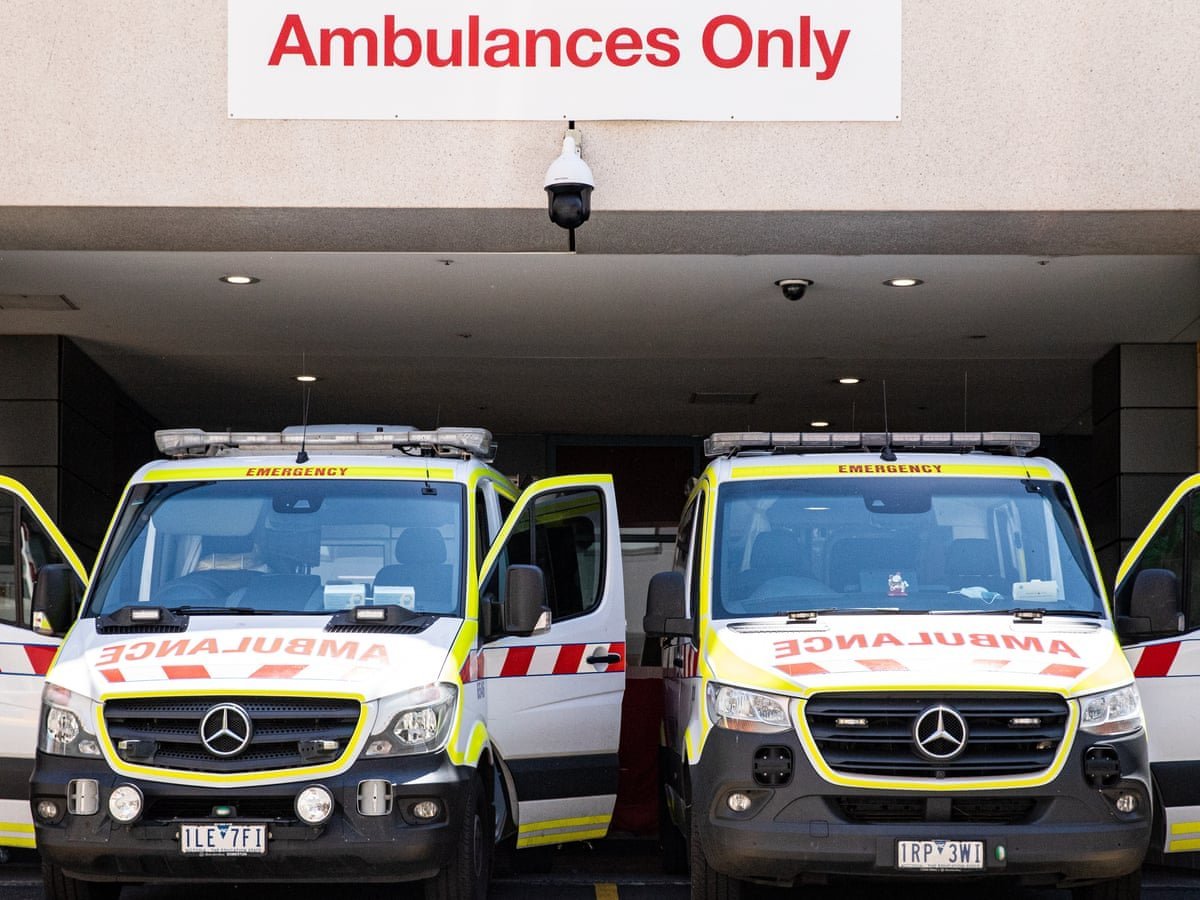
‘The System Is Broken’: Heart Patient Dies After 78-Minute Wait for Ambulance as Tasmanian Town’s Station Sits Empty, the Second Delayed-Response Death in Just Two Weeks
- A man struggling to breathe with chest pains died in remote Zeehan after the town’s only ambulance post was left empty because a period of leave was never covered.
- Crews in neighbouring Queenstown and Strahan were tied up on other jobs, so paramedics were sent from Burnie. They arrived 78 minutes after the Triple Zero call, and the patient was already dead.
- Barely a fortnight earlier, a Hobart family waited so long for help that they drove their loved one to hospital themselves. He went into cardiac arrest and did not survive.
- Despite the tragedies, the state government is pressing ahead with plans to strip $700 million from the health budget.
He did everything right.
When the pain tightened across his chest and his breathing began to fail, the man in Zeehan dialled Triple Zero. His call was flagged as a top-priority emergency, the kind that demands an ambulance immediately.
But in this small mining town on Tasmania’s rugged west coast, there was nobody to send.
More than an hour and a quarter later, paramedics finally pulled up. By then, the man was dead.
His death on Saturday is the second in roughly two weeks in which a Tasmanian waited too long for an ambulance. It has unleashed a wave of fury at a health system that critics say is no longer just struggling.
They say it has collapsed.
The Zeehan station would normally have a single paramedic rostered on during the day and on call overnight, backed by local volunteers. On Saturday, that position sat vacant because leave had not been filled.
The closest alternatives, in Queenstown and Strahan, were already committed to other patients. A crew from Burnie, on the north-west coast, was eventually dispatched to make the long drive south.
The clock reached 78 minutes before they arrived.
Tasmania’s Health Department said it had tried to plug the gap through backfilling, including offering overtime and drawing on volunteers. None of it worked.
The department admitted it was still trying to attract more paramedics to the region, but conceded that the west coast’s isolation made recruitment a persistent challenge.
The Zeehan death follows a separate tragedy in Hobart. A family there called Triple Zero twice in the space of 25 minutes as a relative’s health worsened.
Their first call was triaged as non-urgent. When they rang back, the case was upgraded to priority 1.
Even then, another 25 minutes passed before an ambulance could be assigned, because none were free.
According to a paramedics’ union, crews were either out on other jobs or stuck ramped outside the Royal Hobart Hospital, whose emergency department was full.
Desperate, the family put the man in their own car and drove him in. He was in cardiac arrest by the time they reached hospital, and he later died.
The two cases had different causes. One was an empty rural station and the other a gridlocked city hospital.
But both ended in the same way, and both are now being examined by the Health Department in search of urgent fixes.
The warning signs were there long before these deaths.
At a budget estimates hearing in June, Health Department secretary Dale Webster revealed that about 11 per cent of paramedic shifts had gone unfilled since July of the previous year.
That is roughly one in every nine shifts left without a paramedic.
Ambulance Tasmania runs 51 stations statewide. Some are staffed entirely by career paramedics, while others lean partly or wholly on volunteers.
In small towns like Zeehan, a single absence can leave a whole community without cover.
Meanwhile, the government has asked the Health Department to find $700 million in savings, a figure that has alarmed doctors, nurses and paramedics alike.
Greens health spokesperson Cecily Rosol declared the system was no longer at breaking point, but “broken”. She said medical professionals had warned for years that lives would be lost, had offered the Liberals solutions, and had been ignored.
Labor leader Josh Willie said the health system was in crisis and could not absorb further cuts. He pointed to clear staffing shortfalls in regional areas, where paramedics simply are not available when emergencies strike.
Analysis: What This Means for Australia
The deaths in Zeehan and Hobart are a Tasmanian tragedy, but the forces behind them are national.
Across Australia, ambulance ramping and regional healthcare shortages have become chronic. Rural and remote communities face longer distances, thinner rosters and fewer specialists, and they increasingly carry the risk when stretched systems fail.
For public safety, the lesson is stark. A Triple Zero call is supposed to guarantee help.
When it guarantees only a long wait, trust in emergency services erodes, and families start making dangerous decisions on their own, as the Hobart family was forced to do.
There are economic consequences too. Regional towns that cannot promise basic emergency care struggle to keep residents, attract workers or support industries such as mining and tourism.
A shrinking population then makes it even harder to staff local services, feeding a vicious cycle.
And as governments nationwide grapple with cost of living pressures and tighter budgets, Tasmania’s push to find $700 million in health savings will be watched closely as a test of how far cuts can go before frontline care breaks down.
Premier Jeremy Rockliff said the investigations would identify any issues needing attention and stressed that health workers always did their best, particularly in emergencies.
He pointed to the government’s transfer of care policy, which he said had saved 30,000 hours of ambulance time previously lost waiting at hospitals. He said the government remained open to further change, whether through more resources, new ways to support regional crews or refinements to the policy.
That response is unlikely to satisfy critics. Last week, the Australian Medical Association called for an independent commission of inquiry to find lasting solutions to what it labelled a “perpetual crisis”.
Health Minister Bridget Archer rejected the idea, arguing it would cost more than $30 million without helping a single patient.
Health policy observers say the clash captures the central dilemma. Governments fear expensive reviews that delay action, while medical groups argue that piecemeal fixes have failed to address deep, structural problems.
Emergency services insiders warn that rural stations relying on one paramedic are inherently fragile. Without a funded pool of relief staff, they say, every sick day or holiday becomes a gamble with someone’s life.
Workforce analysts believe incentives such as housing support, retention bonuses and rotating placements will be essential if remote areas like the west coast are ever to be staffed reliably.
For now, two families are grieving, two investigations are under way, and the residents of towns like Zeehan are left with an uneasy question.
If they dial Triple Zero tomorrow, will anyone come in time?