
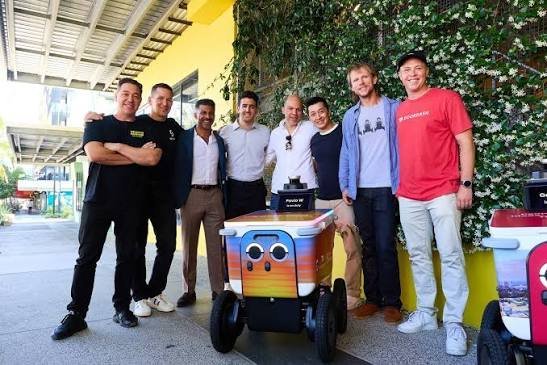
‘We Did Not Time This’: Delivery Robot Gets Stuck in a Garden Bed on Live TV as Australia’s First Robot Takeaway Trial Rolls Onto Gold Coast Streets, Raising Big Questions About the Future of Delivery Work
- A 100-kilogram autonomous delivery robot appeared to wedge itself in a garden bed during a live 7NEWS cross, just as the reporter was citing the machine’s 99.8 per cent success rate
- Gold Coast diners are now the first Australians who can choose to have takeaway delivered by a four-wheeled robot through DoorDash and Serve Robotics
- Organisers say the robots will complement human drivers, not replace them, but the trial is a test of how automation could reshape Australia’s gig economy
- If the trial succeeds, the robots could spread across the Gold Coast, with technicians on standby and a contact number on every machine
It was meant to be a triumphant showcase of the future of food delivery. Instead, Australia watched a robot get stuck in the shrubbery.
Millions of Australians order takeaway every week. Most never think about the person who brings it.
Now, on the Gold Coast, the person may not be a person at all.
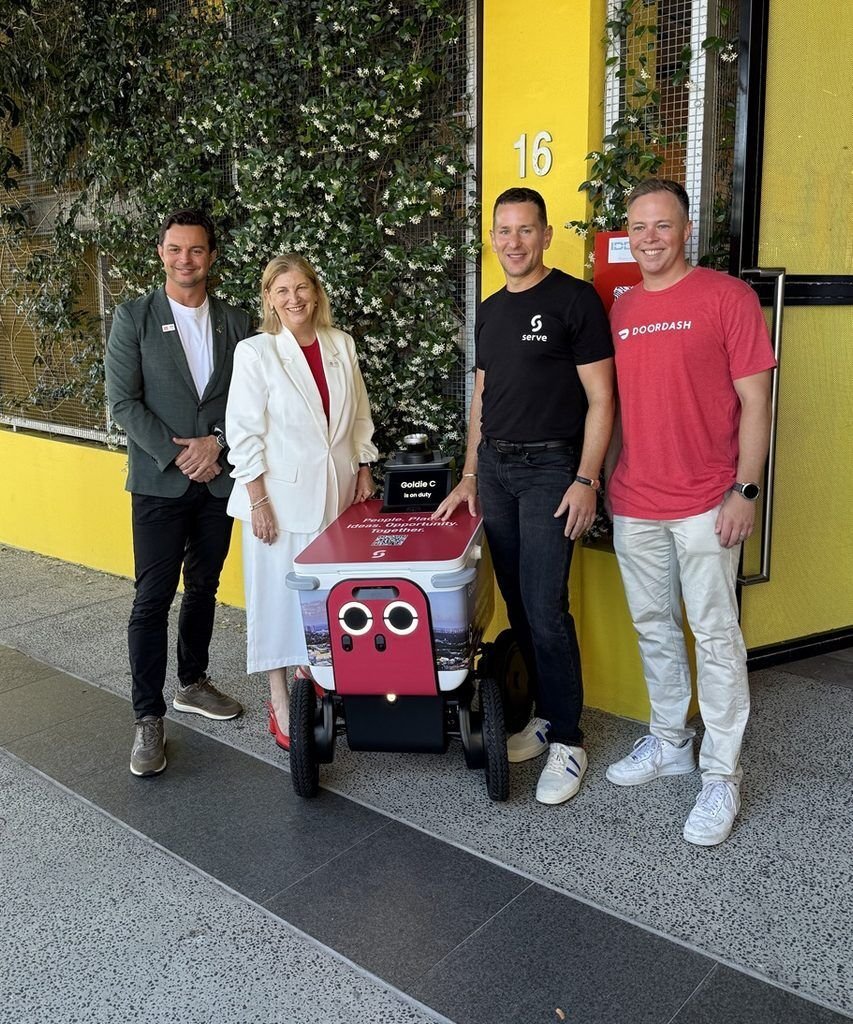
And the very first public glimpse of that future came with an awkward stumble broadcast live into living rooms across the country.
The scene played out during the launch of the nation’s first robot takeaway delivery trial, a partnership between American delivery giant DoorDash and autonomous robotics company Serve Robotics.
7NEWS reporter Declan Milton was in the middle of telling viewers that the machines boasted a success rate of 99.8 per cent, according to the company, when the robot beside him appeared to veer off course and come to a halt in a garden bed.
Milton handled the moment with good humour, explaining that the machine had hit a technical glitch, that this was exactly why support crews were on site, and assuring viewers the timing was entirely unplanned.
The four-wheeled machines weigh roughly 100 kilograms and trundle along footpaths at walking pace. Each carries insulated compartments designed to keep meals hot or cold until they reach the customer’s door.
Diners ordering through DoorDash can opt in to robot delivery. Nobody will receive a robot-delivered meal unless they have chosen it.
The trial focuses on short-distance runs.
Technical support teams remain on standby throughout the trial period to deal with any malfunctions, and every robot displays a phone number so curious or concerned members of the public can get in touch.
When their shifts end, the robots head home to Serve’s operations depot at Griffith University.
Among the first businesses to sign on is local eatery Gnocchi Gnocchi Brothers. Co-founder Ben Cleary-Corradini told 7NEWS he expects customers to warm to the idea, describing the experience as a novel and fun one.
Serve Robotics’ Ryan Dillon pitched the machines as offering customers and merchants a different way of doing business, adding that the robots also bring a sense of wonder to the neighbourhoods they roll through.
The trial is expected to run over the coming weeks and months. If it proves successful, the service could expand across the wider Gold Coast.
The arrival of delivery robots in Australia did not happen in a vacuum.
Food delivery has exploded over the past decade, supercharged by pandemic lockdowns that turned apps into lifelines.
The sector now depends on a vast army of contract riders and drivers, many of them students and migrants, working through platforms rather than for traditional employers.
That model has been under sustained scrutiny in Australia, with long-running debates over pay, safety and conditions in the gig economy. At the same time, platforms face relentless pressure to cut costs and speed up delivery times as households grapple with the cost of living.
Serve Robotics has already deployed its sidewalk machines in parts of the United States, and the Gold Coast trial marks a significant step onto Australian soil.
The Gold Coast, with its tourist-heavy precincts, university campus and growing population, offers an ideal proving ground.
Analysis: What This Means for Australia
The garden bed mishap will be remembered as a funny moment. But beneath the laughter sits a serious question about who, or what, will be doing Australia’s delivery work in years to come.
Organisers have been emphatic that the robots are designed to work alongside human drivers, not push them out. They point to new jobs being created in robotics, from technicians to operations staff.
For now, that claim holds up. The trial covers short trips only, robots move at walking pace, and humans remain on standby.
Yet the economics of automation are hard to ignore. A machine does not need a break, a pay rise or insurance against injury.
If the technology matures, the incentive for platforms to scale up will be enormous.
That has implications for thousands of Australians who rely on delivery work to pay rent.
It also poses a challenge for policymakers and regulators, who must now consider how heavy autonomous machines share footpaths with pedestrians, prams, wheelchairs and the elderly.
A 100-kilogram robot stuck in a garden bed is harmless. One that misjudges a crowded footpath or a kerb ramp is a different matter.
The live glitch, however minor, is a reminder that even a 99.8 per cent success rate leaves room for failures in real-world streets.
Councils, state authorities and road safety advocates will be watching closely. So will local businesses, which stand to gain cheaper delivery options if the model succeeds.
There is also a social dimension. Supporters argue robots could bring novelty and even a little joy to suburban streets.
Critics may see them as yet another step towards a contactless, automated society where human interaction is engineered out of everyday transactions.
Industry observers believe the Gold Coast trial will serve as a bellwether for the rest of the country. If customers opt in in significant numbers, other cities are likely to follow.
Labour market analysts say the real test is not whether the robots work, but what happens to the workers around them once they do. They warn that promises about complementing rather than replacing workers tend to be revisited once technology becomes cheaper and more reliable.
Urban planning experts suggest footpath access rules may need updating to account for autonomous machines, particularly in busy entertainment and beachside precincts.
Technology commentators, meanwhile, say early glitches are inevitable in any real-world trial and that the presence of on-site crews shows the operators anticipated teething problems.
Still, few product launches dream of being upstaged by a garden bed on live television.
For Gold Coast diners, the choice is simple: tick the box and wait for the robot, or stick with a human driver. For the rest of Australia, the bigger choice about how far to let automation roll into daily life is only just beginning.