
Sydney Music Scene Reels as Beloved Camperdown Pub The Lady Hampshire Goes Dark ‘Indefinitely’ After Violent Storm Damage, With Site Quietly Sold and Receivers Appointed
- One of Sydney’s best-known grassroots live music pubs, The Lady Hampshire in Camperdown, has shut its doors with no reopening date after being battered by recent storms.
- Property records show the site was sold in early September, and a Colliers listing confirms that receivers have been appointed.
- Bands and DJs are cancelling gigs and saying public farewells, with one act calling it yet another venue lost to the city.
- The closure has renewed alarm about how many small stages Sydney’s live music economy can afford to lose.
For years it was the kind of place where you could hear a band before anyone else had. A sticky-floored, loud and fiercely loved corner of Sydney’s inner west.
Now the stage at The Lady Hampshire is silent, and nobody can say whether it will ever come back to life.
The Camperdown pub, a fixture of the city’s independent music circuit, has closed indefinitely.
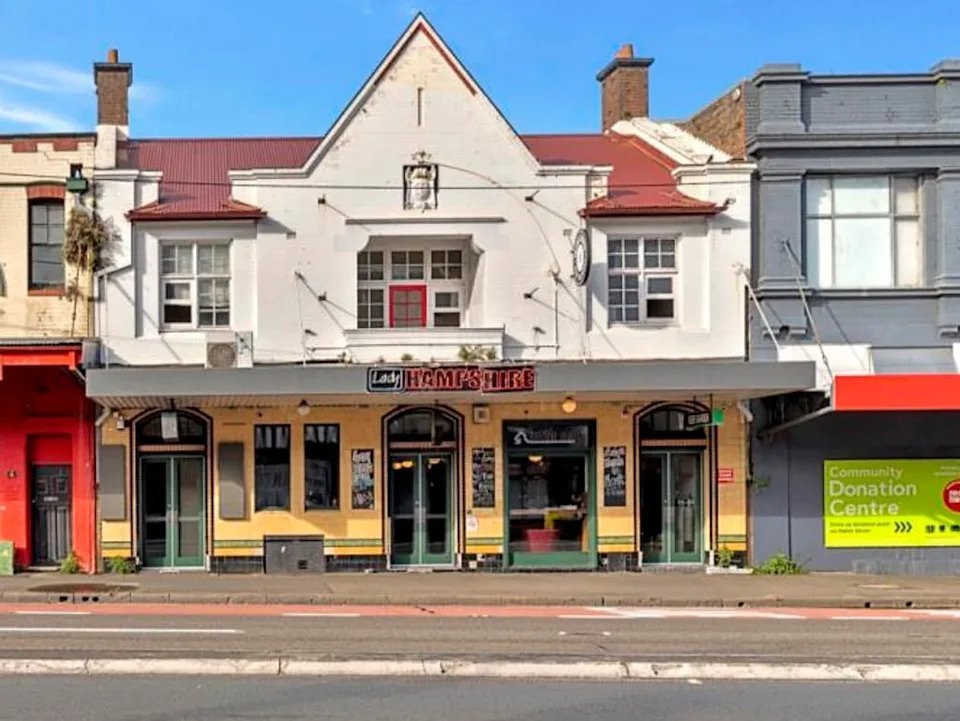
A run of savage storm damage, a quiet property sale and the appointment of receivers have combined to leave one of Sydney’s most cherished small venues in limbo.
For the musicians, promoters and punters who treated it as a second home, the uncertainty is gutting. For a city that has spent the past decade trying to rebuild its battered nightlife, it is another warning sign.
The trouble became public in early October, when the venue’s management told followers it would be shut while staff dealt with the aftermath of the storms that tore through Sydney.
In a brief message posted on October 9, shared across its Facebook and Instagram accounts, the venue said it would stay closed for the weekend while the team assessed the damage and tried to repair it.
It thanked patrons for their patience.
That was the last word from the pub itself.
A fortnight later, the doors remain shut. Upcoming shows have been pushed back or moved to other venues, and the management’s silence has fuelled growing speculation that the closure may be permanent.
Those fears deepened when a real estate agent confirmed the property had changed hands at the start of September, weeks before the storms struck. A listing from commercial agency Colliers now marks the site as sold and states that receivers have been appointed.
What that means for the business operating inside the building is still unclear. Whether a new owner plans to keep the pub running, redevelop it or do something else entirely has not been made public.
In the meantime, the people who relied on the venue have started breaking the news themselves.
Sydney band Manhole told fans on Facebook that their December 5 show at the pub had been scrapped because the venue had closed indefinitely. The group said it was sad to watch yet another stage disappear.
They added that the loss stung all the more because The Lady Hampshire was the nearest local to their own studio.
DJ Meem delivered a similar message.
In an online post, the DJ said an upcoming event would no longer go ahead at the venue, pointing to the storm damage and the sale and noting that its future was now unknown.
The post described the pub as the home of The Back to Fund BBQ and thanked everyone who had made the past three years there so memorable.
It read like a farewell.
NewsWire has contacted the pub for comment.
The Lady Hampshire’s predicament is not happening in isolation. Sydney’s live music scene has spent much of the past decade fighting for survival.
The controversial lockout laws, introduced in 2014 across parts of the CBD and Kings Cross, were widely blamed for crushing late-night trade and pushing venues out of business.
Although the restrictions were eventually rolled back, many in the industry say the scars never fully healed.
The years since have brought fresh blows. Pandemic shutdowns emptied venues for months at a time.
Soaring rents, insurance premiums and energy bills have squeezed operators already working on razor-thin margins. Noise complaints from new neighbours in gentrifying suburbs have also forced some venues to cut back.
The inner west, home to Camperdown, Newtown and Enmore, has long been the beating heart of Sydney’s original music culture. Each closure there carries extra weight because these rooms are where emerging artists learn their trade.
Analysis: What This Means for Australia
The loss of a single pub may look like a local story. It is not.
Small and mid-sized venues are the backbone of Australia’s live music industry. Bands typically build a following in rooms like The Lady Hampshire long before they move up to bigger stages, festivals and international tours.
Remove that bottom rung and the whole ladder becomes harder to climb.
The economic ripple effect is real. Every cancelled gig means lost income for musicians, sound engineers, bar staff, security workers and promoters.
Nearby businesses, from late-night food outlets to rideshare drivers, also lose the foot traffic a busy venue brings.
The storms add another layer.
Extreme weather is increasingly testing ageing heritage buildings, and many small operators cannot easily absorb major repair bills, especially when ownership of the property is changing hands.
The combination of extreme weather damage and financial pressure could prove fatal for more venues in coming years.
There is a social cost too. Local pubs with stages are community anchors, places where subcultures gather, fundraisers are held and young people find their people.
Grassroots events like a regular community barbecue night do not easily relocate.
The closure also tests the NSW Government’s repeated promises to revive Sydney’s night-time economy. Reforms in recent years have aimed to cut red tape, protect venues from noise complaints and encourage a more vibrant after-dark city.
But policy cannot stop a property sale or fix a storm-damaged roof.
Industry observers believe the sector remains deeply fragile despite recent reform efforts. They say the real threat to small venues is no longer just regulation, but the economics of property ownership in Australia’s most expensive city.
Music advocates warn that when a venue site is sold, operators are often at the mercy of new owners whose plans may have nothing to do with live entertainment.
Groups such as the Live Music Office have long argued for stronger protections for cultural spaces.
Hospitality insiders say the appointment of receivers suggests significant financial complexity behind the scenes. In such cases, decisions about a property’s future can take months, leaving staff and performers in the dark.
Others in the scene are blunter.
Losing an established room in the inner west, they argue, is like losing a training ground that took years to build and cannot simply be replaced.
For now, the fans of The Lady Hampshire can only wait. Its stage is dark, its calendar is emptying and its owners are saying nothing.
Sydney may be about to lose another piece of its musical soul.