
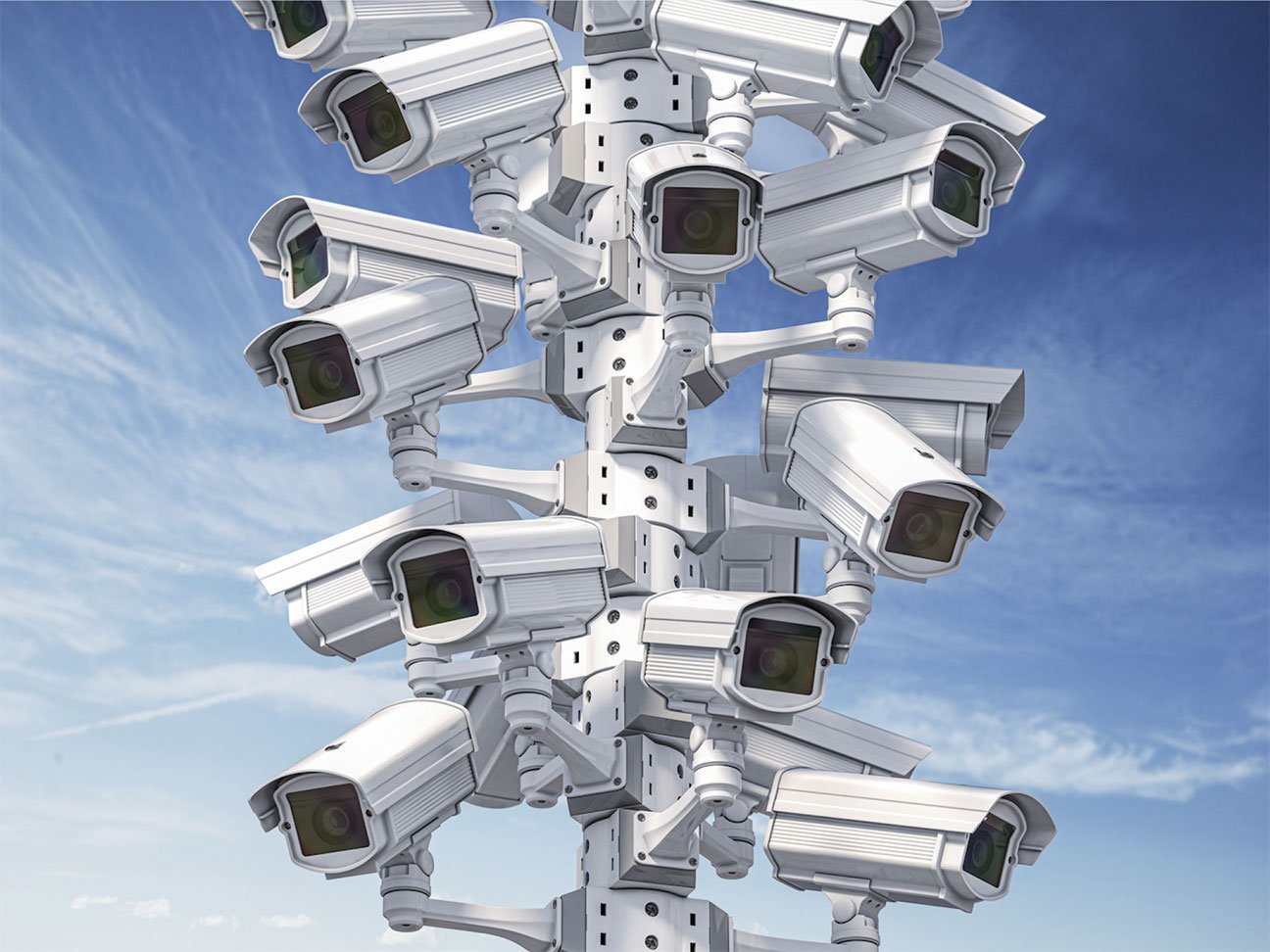
Big Brother Is Coming to the CBD: Sydney Unveils Plan for AI-Powered ‘Smart’ Cameras to Scan Streets for Suspicious Crowds, Abandoned Bags and Rogue Drivers as Privacy Fears Erupt
- The City of Sydney wants to arm its network of more than 100 street cameras with artificial intelligence capable of flagging unusual behaviour in real time across the CBD and inner suburbs
- A similar trial in Western Australia saw 79 wanted people taken off the streets in just three months, along with eight false alarms
- Council insists facial recognition is off the table, but descriptions of what people look like could still be passed on to help police track persons of interest
- The plan will go to public consultation first, setting up a fierce debate over how far Australians are willing to let machines watch them
Every step you take through Sydney’s busiest streets could soon be watched by something that never blinks, never tires and never looks away.
The City of Sydney has floated a sweeping overhaul of its public surveillance system that would hand artificial intelligence the job of combing through live footage for signs of trouble.
Supporters call it a long-overdue leap forward for public safety. Critics fear it is the thin end of a very large wedge.
Either way, the proposal marks a turning point for one of the country’s most closely watched urban centres.
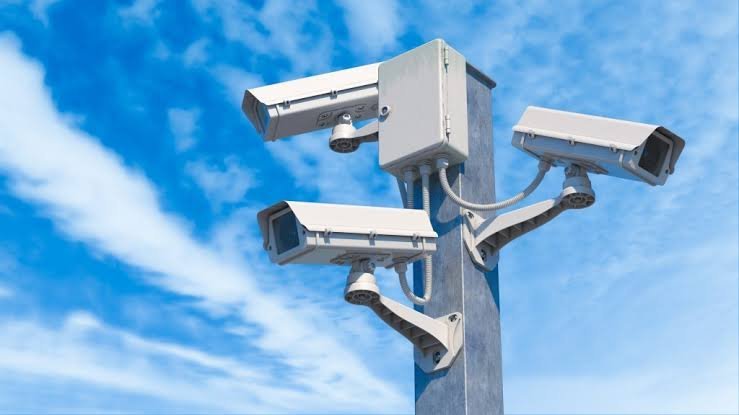
Under the scheme, the council’s existing web of more than 100 cameras, already trained on footpaths, intersections and public squares across the city centre and inner-city suburbs, would be upgraded with software designed to spot anomalies the human eye might miss.
That includes crowds suddenly forming in one place, vehicles heading the wrong way down a street, and bags or packages left unattended.
When the system detects something out of the ordinary, it would raise an alert. Crucially, the council says a human operator would then step in to check what is actually happening before any action is taken.
People, not algorithms, would remain in charge of the cameras.
The City has also drawn a firm line on one of the most controversial tools in modern policing. Facial recognition, it says, will not be part of the package.
But there is a catch.
The technology could still be used to assist police by working from descriptions of a person’s appearance, meaning someone matching the clothing or physical details of a person of interest could be picked out of the crowd.
Council has stressed that privacy protections would be built into the system. The public will be invited to have its say before any final decision is locked in.
The push does not come out of nowhere.
Across the country, authorities have been quietly testing how far AI can go in helping overstretched police and security teams keep pace with crowded, fast-moving cities.
The most striking example comes from Western Australia, where a comparable trial delivered results that will be hard for advocates to ignore. In its first three months, the system helped locate and detain 79 people who were wanted by authorities.
It was not flawless. Eight false alarms were recorded during the same period, a figure that sceptics will seize upon as proof that even smart machines get it wrong.
The debate also lands at a time of heightened sensitivity around surveillance technology.
Australians have grown increasingly wary after a string of controversies over retailers using facial recognition in stores, which drew scrutiny from the Office of the Australian Information Commissioner and sparked a national conversation about consent and data collection.
Sydney’s decision to rule out facial recognition appears designed to sidestep that minefield. Whether it is enough to win over a wary public is another matter entirely.
Analysis: What This Means for Australia
What happens in Sydney rarely stays in Sydney.
As the nation’s largest city and its financial heartland, any move by the City to embrace AI surveillance is likely to be watched closely by councils, state governments and police forces from Brisbane to Perth.
From a national security perspective, the ability to automatically flag an abandoned bag or an unusual gathering in a dense CBD is not a trivial capability.
Crowded public spaces have long been identified as vulnerable targets, and faster detection could buy precious minutes in an emergency.
For law enforcement, the appeal is obvious. Human operators cannot watch a hundred screens at once with equal focus.
Software that sifts the noise and surfaces only what matters could make every camera far more useful, and potentially help officers from the NSW Police Force respond more quickly to incidents and locate wanted individuals.
For communities, however, the stakes are more personal. Residents, workers and visitors who pass through the inner city every day may find themselves under a level of automated scrutiny they never agreed to.
Questions about who sees the alerts, how long footage is kept and what happens to descriptions shared with police will dominate the consultation.
There are social consequences too.
If the system’s definition of “suspicious” is poorly calibrated, there is a risk that certain groups, such as rough sleepers, young people gathering after dark or protesters, could be flagged more often than others.
That could erode trust in both the council and police at a time when public safety and civil liberties are already hot-button issues.
And the economic angle cannot be ignored. A CBD perceived as safer may encourage more foot traffic, nightlife and investment.
A CBD perceived as a surveillance zone could do the opposite.
Security analysts say the decision to keep humans in the loop is the single most important safeguard in the proposal, warning that fully automated systems are where the real danger lies.
Law enforcement insiders point to the Western Australian figures as evidence that the technology can deliver tangible results, though some caution that a three-month snapshot is not enough to judge long-term reliability or the true cost of false alerts.
Privacy observers believe the line between “descriptions of appearance” and facial recognition may be thinner than council suggests, and are expected to push hard for clear limits on how such data is used, stored and shared.
Technology industry watchers say Sydney’s approach could become a template for other Australian cities, but only if it is backed by transparent rules, independent oversight and regular public reporting on how often the system gets it right and wrong.
For now, the cameras are already watching.
The question facing Sydneysiders is whether they want those cameras to start thinking for themselves, and the answer could shape the future of surveillance in Australia for years to come.