
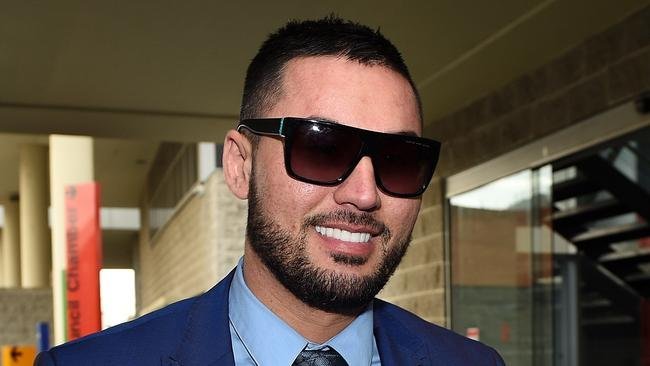
‘You’re Playing With Fire’: Disgraced Former Deputy Mayor Salim Mehajer Refused Bail Over Alleged Theft of $41,000 Wedding Jewellery and Threats to ‘Bash’ a Woman, Just Months After Walking Free From Jail
- Salim Mehajer, 40, spent a night in a police cell after officers arrested him outside a cafe at Wentworth Point in Sydney’s west
- Police allege he took $41,000 worth of jewellery meant as a gift before his second wedding, after promising a relative would keep it safe
- Court documents allege he threatened to ‘bash’ the woman after she contacted his father about the missing items
- The arrest comes barely months after his release in July 2025 from a five-year prison stint, and while he remains on parole
He arrived at his first wedding by helicopter. On Wednesday afternoon, he left a Sydney cafe in the back of a police car.
Salim Mehajer, the former Auburn deputy mayor whose lavish displays once made him a household name, is facing a new set of serious criminal allegations. The charges reignite uncomfortable questions about how the justice system monitors high-profile offenders after release, and about the safety of the women around them.
The 40-year-old was refused bail and held overnight. He was due to face Parramatta Local Court on Thursday.
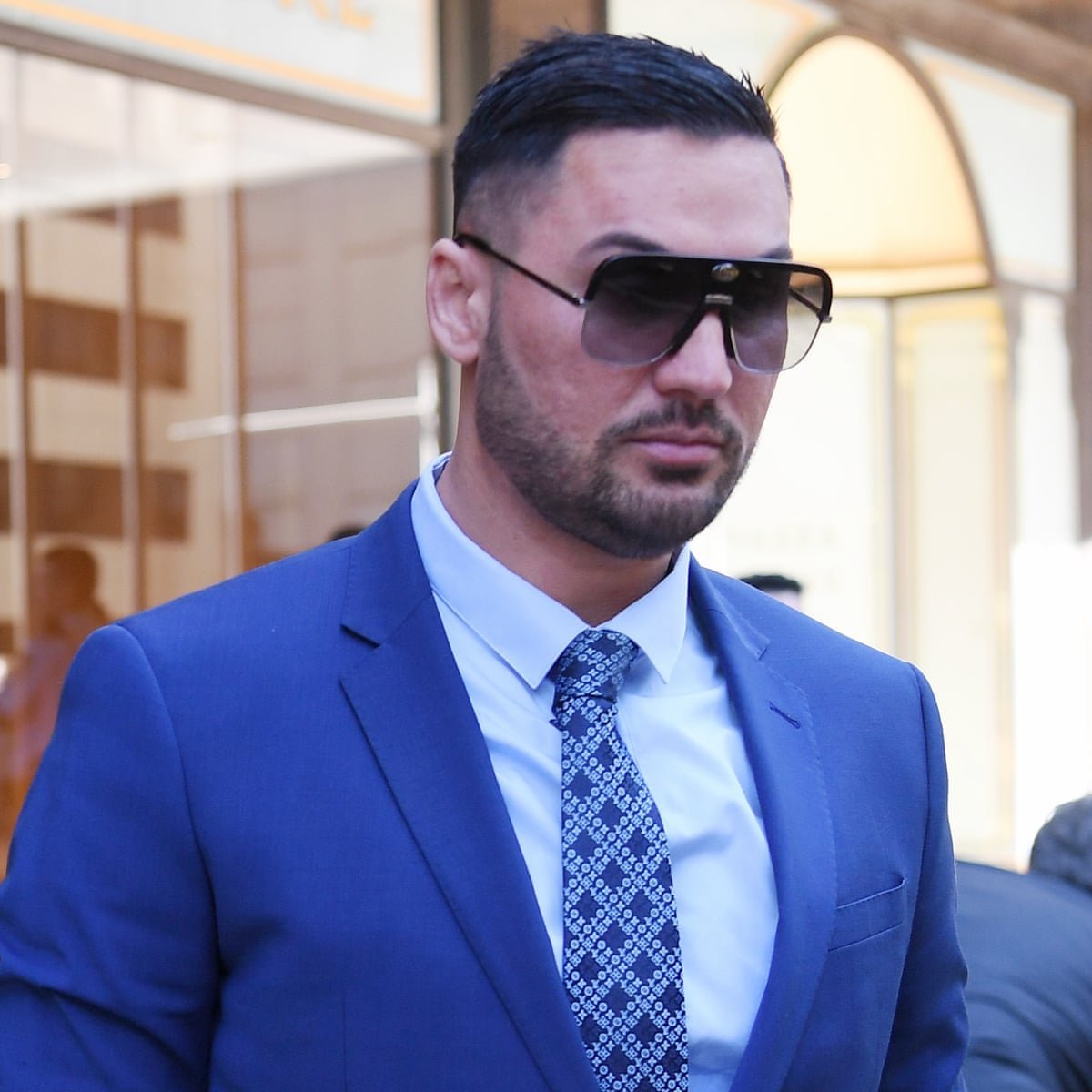
Officers detained Mehajer near a cafe at Wentworth Point, a waterfront suburb in Sydney’s west.
He was later charged with three offences: common assault, domestic violence-related; stalking or intimidating with intent to cause fear of physical harm, also domestic violence-related; and larceny of property valued above $15,000.
The NSW Police Force said detectives began investigating an alleged domestic violence incident last month.
The theft charge centres on jewellery worth about $41,000.
Police will allege the woman handed the pieces to Mehajer as a gift ahead of his second wedding, after he assured her a family member would look after them until the big day.
According to court documents reported by ABC News, the woman later phoned Mehajer’s father to ask what had happened to the jewellery. That call, police allege, triggered a furious response.
Mehajer allegedly rang her, demanding to know where she had obtained his father’s number and why she had dragged his family into the matter, calling her a ‘sl**’.
The documents allege he then warned that if she did not keep his family out of it, he would ‘bash’ her. He allegedly told her she was ‘playing with fire’ and did not know who she was dealing with.
None of the allegations have been tested in court, and Mehajer is entitled to the presumption of innocence.
For many Australians, the name Mehajer is forever tied to one extraordinary day in 2015.
That year, the then-property developer married Aysha Learmonth in a ceremony reported to have cost around $1 million. The groom descended by helicopter.
A convoy of luxury cars followed. Doves were released.
But the spectacle came at a cost to his neighbours.
A street in Lidcombe was shut down for the celebration, and Mehajer reportedly circulated bogus notices warning residents their cars would be towed if they obstructed proceedings.
Images of the closed street and his former home went around the world.
The glamour did not last.
Mehajer was eventually jailed for lying to a court, and served consecutive sentences for a series of other crimes, including domestic violence against a former partner.
His years inside took him through Silverwater’s maximum-security jail. While being moved from Cooma, he also spent a week in Goulburn’s Supermax, one of the harshest facilities in the country.
He walked free in July 2025 after roughly five years behind bars and remains on parole for that sentence. Earlier this year, the NSW Supreme Court dismissed his bid to overturn his conviction and sentence.
Since his release he had largely stayed out of public view, surfacing mainly through court appearances and posts on a private Instagram account.
On that account he told followers he was writing a memoir, cautioning former associates that ‘not many have made it out unscathed’, and promising to release extracts before publication.
Analysis: What This Means for Australia
Mehajer’s case is a celebrity saga, but the issues it raises reach well beyond one man.
For law enforcement, the allegations go to the heart of a long-running national debate: how effectively are parolees with a history of domestic violence supervised once they leave custody?
The period after release is widely regarded as a high-risk window. Every new allegation against a parolee puts pressure on corrective services and the parole system to show they are watching closely enough.
The decision to refuse bail also reflects a tougher climate.
New South Wales has tightened its approach to domestic violence accused in recent years, after a series of tragedies prompted public outrage and changes to bail laws.
Courts are now expected to weigh the safety of alleged victims heavily when deciding who goes home and who stays in custody.
The community impact is just as significant. Domestic and family violence remains one of the most pressing public safety crises in the country.
It takes many forms: physical violence, verbal threats, intimidation and financial control. Allegations involving both threats and the taking of valuable property touch on the coercive behaviour that advocates have spent years urging authorities to take seriously.
There is a social dimension too. Mehajer built his public profile on conspicuous wealth.
When such figures face court, the cases attract enormous attention.
That attention can help raise awareness of domestic violence, but it can also make it harder for complainants to come forward if they fear public exposure.
Legal observers say the case will be watched closely for what it reveals about the interaction between fresh charges and existing parole conditions. Any new criminal allegation against a parolee can prompt a review by the relevant parole authority, independent of how the new charges are resolved.
Law enforcement insiders warn that verbal threats should never be dismissed as idle talk.
In their experience, intimidation is often one part of a broader pattern of control, and it is precisely the conduct the stalking and intimidation laws are designed to catch early.
Domestic violence advocates say the willingness of a complainant to go to police matters enormously. They stress that the courage required to report alleged abuse, particularly against someone with a public profile, should not be underestimated.
Industry observers note the irony of the timing.
A man who promised a tell-all memoir about those who crossed his path is now facing a courtroom chapter of his own, and this time the outcome will be decided by a magistrate, not a publisher.
The matter is expected to return to court at a later date.
If you or someone you know is affected by sexual assault, domestic or family violence, support is available from 1800RESPECT on 1800 737 732.