
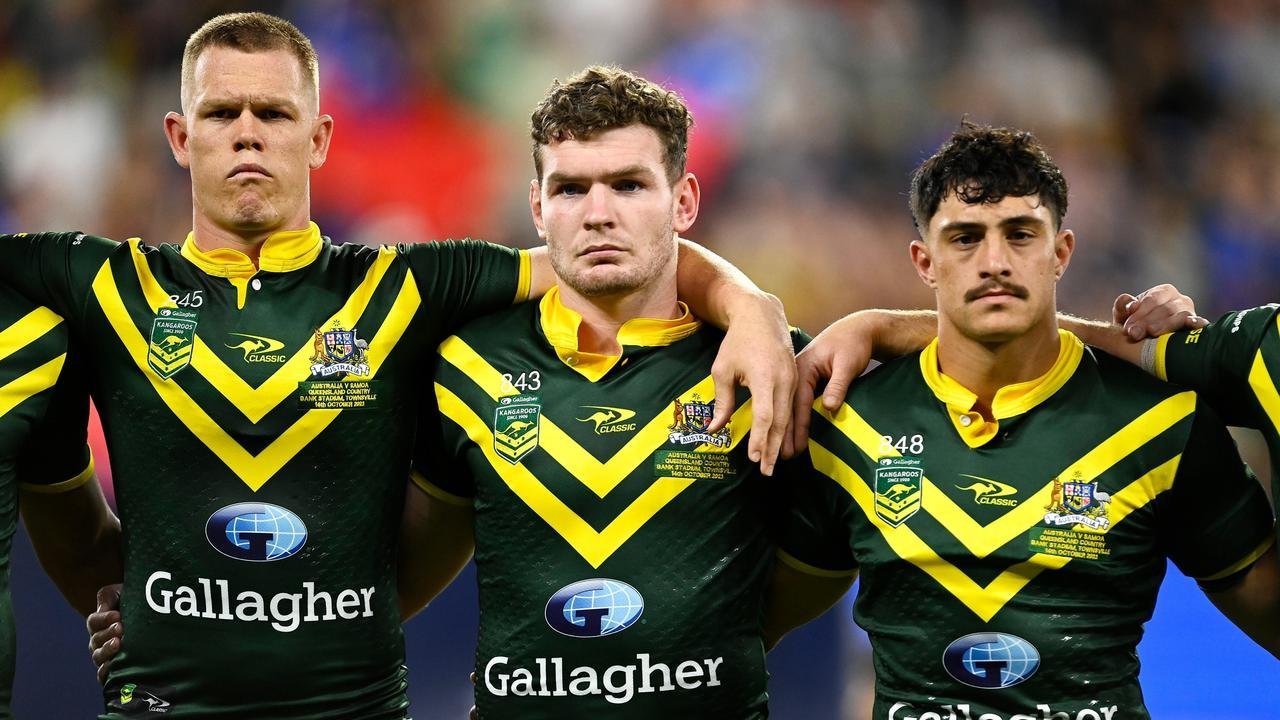
‘I’m a Proud Wiradjuri Boy’: Kangaroos Star Kotoni Staggs Breaks His Silence on the Anthem Snub Igniting a National Culture War on the Eve of a World Cup Semifinal
- Brisbane Broncos centre Kotoni Staggs says he stays silent during Advance Australia Fair to honour his elders and the suffering of his ancestors, not out of disrespect for the green and gold.
- Staggs and several Kangaroos teammates have been savaged by critics throughout the Rugby League World Cup for refusing to sing the national anthem.
- Broncos captain Pat Carrigan has publicly backed his teammate, saying the row exposes a much bigger conversation Australia still needs to have about its own history.
- The controversy is boiling over just days before Australia meets Samoa in a high-stakes semifinal at the Sydney Football Stadium.
The music swells. The cameras pan along the line of green and gold.
And as tens of thousands of voices rise around him, Kotoni Staggs keeps his mouth firmly shut.
That silence has turned one of rugby league’s most electrifying centres into the unwilling face of a bitter national argument.
Now, for the first time, he has explained exactly why.
The Brisbane Broncos star, who has pulled on the Kangaroos jersey nine times since his Test debut in 2023, insists his refusal to sing Advance Australia Fair is a deeply personal act of respect for his Indigenous elders, his grandparents and the generations who came before him.
He describes himself as a proud Wiradjuri man, and says his silence should never be mistaken for ingratitude. Staggs told reporters he still loves wearing the jersey, and admitted that when the anthem plays he looks around at his teammates and feels emotional.
But for him, he said, the choice not to sing carries an entirely different meaning.
He explained that conversations with elders back home, and learning what his family endured in the past, shaped his stance. It is, he said, simply something he lives by, causes no harm, and takes nothing away from the jersey he represents.
Staggs also made a point of stressing that he considers himself a proud Australian.
His comments come as Mal Meninga’s former charges prepare for a blockbuster Rugby League World Cup semifinal against Samoa at the Sydney Football Stadium on Sunday, with Staggs and a number of fellow Kangaroos having copped sustained criticism for staying silent during pre-game anthems throughout the tournament.
Standing squarely in his corner is Broncos teammate Pat Carrigan.
The hard-running forward argued that athletes should have the freedom to stand up for what they believe in, and said the scrutiny on players as role models points to a far larger discussion that Australian society needs to have away from the football field, including about why the players feel the way they do and about the nation’s past.
Carrigan insisted that every member of the squad is proud to wear the green and gold, and that love of country should not be measured solely by whether a player sings.
He said sport offered a rare platform for players to voice opinions, and potentially help the country reflect on how it can keep coming together.
This is not a new flashpoint. Far from it.
Indigenous stars have stood silently during the anthem for years, and the debate has erupted repeatedly at the elite level.
South Sydney and Canberra fullback Latrell Mitchell has long faced fierce backlash for the same choice, while Cody Walker’s 2019 declaration that he would not sing at State of Origin sent shockwaves through the code.
Former Kangaroos coach Mal Meninga, one of the most revered figures in the sport’s history, previously defended players who took a firm position on the issue.
The anthem itself has been the subject of change.
In 2021 the federal government altered the second line, replacing ‘young and free’ with ‘one and free’ in recognition of the continent’s more than 60,000 years of First Nations history.
For many critics of the song, it was a welcome but limited gesture.
Meanwhile, the Jillaroos have taken a visibly different approach to the same tension.
Coach Jess Skinner, a proud Barkindji and Māori woman, has championed her side walking out alongside the Australian, Aboriginal and Torres Strait Islander flags at the World Cup.
Skinner said each of the three flags carries its own significance and reflects a diverse nation made up of many cultures.
She noted her squad and staff come from a wide range of backgrounds and celebrate that diversity, adding that anyone who takes the time to learn what those flags represent can’t help but feel passionate about being Australian.
Analysis: What This Means for Australia
Strip away the outrage and the talkback fury, and the Staggs row reveals a country still wrestling with the unfinished business of its own story.
The fallout from the failed 2023 Voice referendum continues to linger in Indigenous affairs, and sporting moments like this have become proxy battlegrounds for unresolved arguments about recognition, history and belonging.
For First Nations communities, particularly young Aboriginal and Torres Strait Islander fans in regional towns, watching an elite athlete calmly explain his reasons offers powerful validation.
For others, the silence lands as an insult to a national symbol.
That divide matters.
Rugby league remains one of the few institutions that genuinely unites working-class Australia across cultural lines, and the National Rugby League has invested heavily in Indigenous programs, Indigenous Round and community development.
If the anthem fight hardens into tribalism, the code risks alienating either a loyal traditional fan base or the Indigenous players and supporters who form its very backbone.
There are commercial stakes too. Sponsors, broadcasters and governments all have an interest in the World Cup being a celebration rather than a cauldron of culture wars.
Social researchers say the persistent heat surrounding these moments reflects broader anxieties about national identity in a rapidly diversifying country.
Sports industry observers believe the NRL has largely chosen to respect individual player choice, recognising that forcing participation would likely cause far more damage than allowing personal expression.
Community leaders working in reconciliation argue that the players’ willingness to explain themselves, rather than simply staying silent off the field as well, opens doors to understanding that political debates have often slammed shut.
Others in the game warn that the timing is far from ideal, with players forced to field questions about politics while preparing for a knockout clash against a fired-up Samoan outfit.
Commentators across the spectrum agree on one thing: this debate will not end on Sunday night.
Whatever the scoreboard says in Sydney, Kotoni Staggs has made it clear his voice will remain silent when the anthem plays, and that his pride in the jersey, and in where he comes from, will be as loud as ever.