
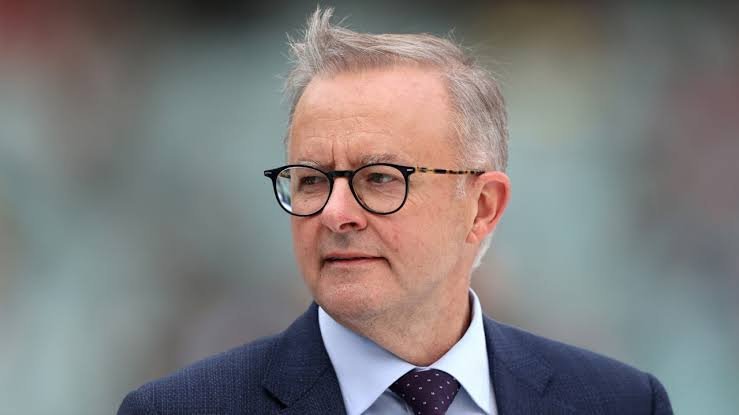
Albanese Flies Into Caribbean Power Struggle as Rates Bite at Home: PM Courts Commonwealth Leaders for UN Security Council Seat While China and Trump Battle for the Region
- Anthony Albanese is heading to Antigua and Barbuda for the Commonwealth summit, leaving his ministers to face the backlash from a widely expected interest rate rise on Tuesday.
- The Prime Minister will use the gathering of 56 nations to push Australia’s bid for a coveted seat on the United Nations Security Council in 2029-30.
- Beijing has already funded Antigua’s port, airport and the cricket stadium hosting the summit, while Washington has just announced a $484 million push into the Caribbean.
- British backpackers, slavery reparations and Australia’s newly expanded coal mine all threaten to complicate the trip.
Millions of Australian mortgage holders are bracing for another blow to their budgets. Their Prime Minister will be on the other side of the world.
Anthony Albanese is bound for the Caribbean, where a sun-drenched island nation is about to become an unlikely front line in the contest for global influence.
The stakes for Australia are far higher than the palm trees suggest.
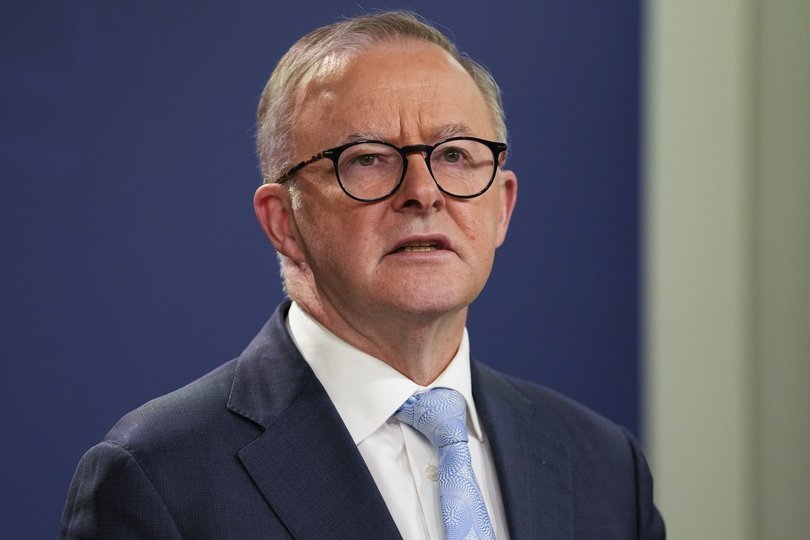
At the 28th Commonwealth Heads of Government Meeting (CHOGM) in Antigua and Barbuda, Mr Albanese will lobby leaders face to face as Canberra campaigns for a two-year term on the United Nations Security Council, starting in 2029.
The timing has handed his opponents ready-made ammunition.
Coalition figures have accused the Prime Minister of “jetting off” while families struggle with the cost of living crisis, with an interest rate rise from the Reserve Bank of Australia widely anticipated on Tuesday.
Mr Albanese insists the invitation came personally from King Charles.
He has framed the summit as a chance to tackle common problems with some of Australia’s closest partners, naming climate change, ocean protection, trade and investment, and the rapid rise of artificial intelligence.
He was equally clear that the Security Council campaign is a central purpose of the trip.
On the sidelines he will sit down with British Prime Minister Andy Burnham and Canadian Prime Minister Mark Carney, and is expected to meet several leaders from the Pacific and Africa.
Mr Albanese and Mr Burnham exchanged only a brief greeting at the UN General Assembly in September.
Their first formal meeting is expected to cover AI, fuel security as war rages in the Middle East, and a thorny problem closer to home: the surge in British backpackers.
The backpacker issue has its roots in the 2021 free trade agreement struck under Scott Morrison.
That deal removed the requirement for young Britons to work in rural and regional areas to extend their visas, and UK working holiday numbers almost doubled as a result.
Arrivals now sit at about 80,000 a year.
Labor has quietly ordered a “go slow” on processing, but Mr Albanese has promised that Britons will not be forced into regional work under his looming migration overhaul, heading off what could have become an ugly diplomatic row with London.
The government has also brought in a visa lottery, capping second-year visas at 45,000 and third-year visas at 5,000.
Critics argue the Morrison-era arrangement has deepened labour shortages on farms and in country towns, while helping keep net overseas migration stubbornly high.
CHOGM matters now because it is one of the few major international forums where neither the United States nor China has a seat at the table.
Their shadows will still fall across it.
Over the past 20 years Beijing has poured billions of dollars into the Caribbean. In Antigua alone, Chinese money helped build the main port, the airport and the very cricket ground where the summit will open.
Washington has noticed.
Last week the Trump administration announced more than US$340 million (A$484 million) for 15 Caribbean nations, aimed at digital infrastructure, health care and regional security.
Commonwealth Secretary-General Shirley Botchwey has set an urgent tone.
In a speech before the summit, she argued the bloc’s enormous potential remains untapped, pointing to combined economies worth close to $30 trillion and calling for much deeper trade cooperation and social mobility.
She warned the world has entered “a new era of fracture”, demanding “bold and urgent change” and declaring that business as usual in international affairs is no longer good enough.
Analysis: What This Means for Australia
Australia’s campaign for a Security Council seat is ultimately a contest for votes, and the Commonwealth’s 56 members make up a significant share of the UN General Assembly.
Small island states in the Caribbean and the Pacific carry the same vote as major powers.
That is why Beijing’s spending spree matters to Canberra.
Australia has spent years scrambling to counter Chinese influence in its own Pacific neighbourhood, and the Caribbean shows how infrastructure money can shape loyalties far from home.
The national security implications are real.
A Security Council seat would give Australia a direct voice on sanctions, peacekeeping and responses to conflict at a time of war in the Middle East and growing strategic rivalry in the Indo-Pacific.
The summit also falls just ahead of a punishing November, when COP31, APEC, the G20 and the East Asia Summit all take place. Groundwork laid in Antigua could pay off in those rooms.
At home, the backpacker decision will be felt in regional communities.
Farmers who depended on British workers to bring in harvests face continuing shortages, while city renters contend with migration-driven demand in a tight housing crisis.
Climate is the weak spot. Rising seas pose an existential threat to low-lying Caribbean nations whose economies rely on tourism and who are exposed to ever-fiercer natural disasters.
Australia has just approved a major coal mine expansion, and its climate credentials will face hard questions at pre-COP talks in Fiji.
Mining billionaire Andrew “Twiggy” Forrest will offer a contrasting image, planning to sail into Antigua’s harbour aboard the Fortescue Green Pioneer, billed as the world’s first dual-fuel ship able to run on green ammonia.
The history of empire will also weigh on proceedings.
At the 2024 summit in Samoa, leaders acknowledged shared experiences of colonisation, dispossession of Indigenous peoples and slavery, and agreed to hold “inclusive conversations” about their lasting harms.
Mr Albanese has called blackbirding, under which tens of thousands of Pacific Islanders were coerced or kidnapped into indentured labour, a sorry chapter in Australia’s past, while stressing that his focus is on the future.
The Burnham government, like Keir Starmer’s before it, has ruled out paying reparations, but Caribbean and African leaders are determined to keep reparatory justice on the agenda.
Foreign policy analysts say the Prime Minister’s presence sends a clear message to smaller nations that Australia takes their votes, and their concerns, seriously. They warn that absence from such forums can be read as indifference, an opening rivals are quick to exploit.
Political observers believe the domestic optics remain risky.
Being photographed in the Caribbean on the day households absorb another rate hike is a gift to the Opposition, and the government will need to show tangible results.
Climate policy experts suggest Australia’s coal approvals will sit uncomfortably beside its diplomatic courtship of nations facing rising seas, a tension that could cost goodwill when Security Council votes are cast.
The summit opens on Sunday with a leaders’ cricket match at the Viv Richards Stadium in St John’s, named after the Antiguan batting great who serves as the summit’s official envoy.
Mr Albanese will be in the stands rather than at the crease. The real contest begins once the match is over.