
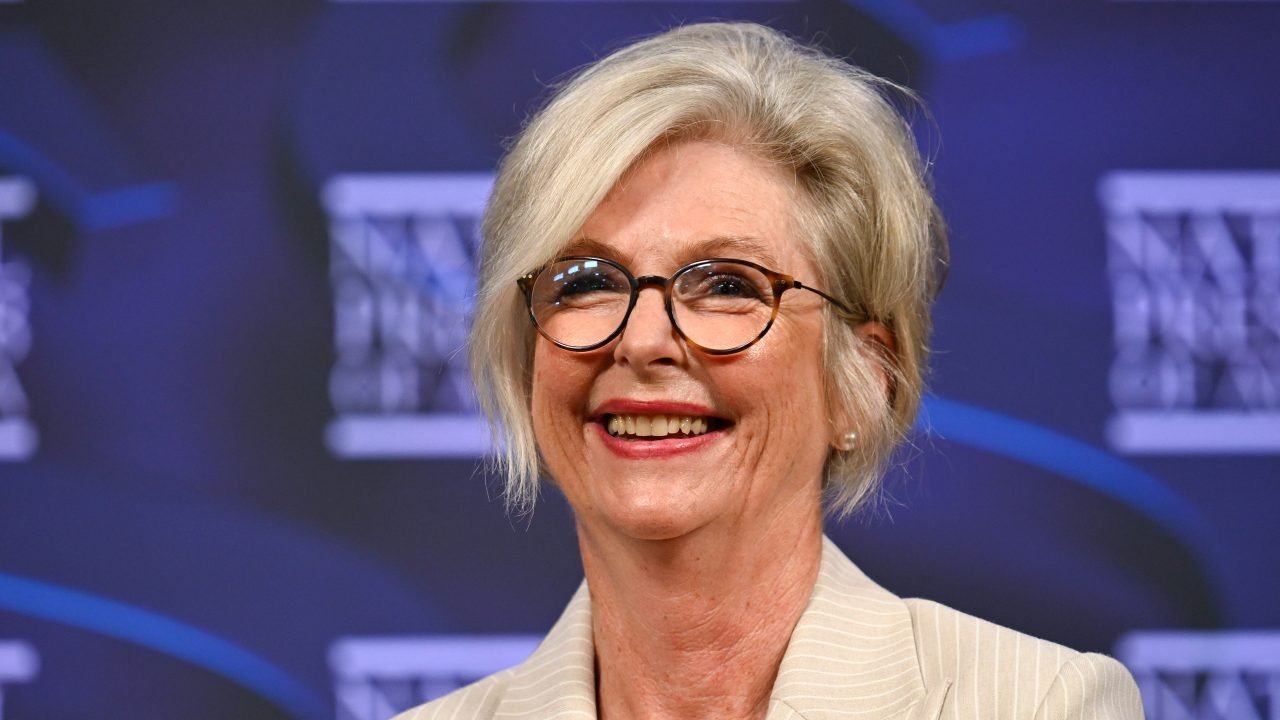
‘A Fighter With a Huge Heart’: Independent MP Helen Haines, Who Lost Both Legs After Being Struck Outside Her Electorate Office, Now Stable as Alleged Attack Raises Urgent Questions About the Safety of Australia’s Politicians
- Federal independent MP Helen Haines, 65, is now in a stable condition at Melbourne’s Alfred Hospital, weeks after she was allegedly struck and pinned between two cars in Wangaratta.
- Both of the veteran politician’s legs had to be amputated after the horrific incident on October 19, just moments after she had returned from a community event.
- A 43-year-old man faces three charges, including the federal offence of causing harm to a Commonwealth public official, and remains behind bars until his next court date in February.
- The incident has sparked a national reckoning over the abuse directed at elected representatives, with MPs across the country revealing what they face in their own communities.
She went to work as she always had. She came back from meeting her constituents, parked outside her office and opened the boot of her car.
Within seconds, Helen Haines’ life had changed forever.
More than two weeks on, the independent federal MP for Indi has finally reached a milestone her family, colleagues and an entire region in Victoria’s north-east had been desperately praying for.
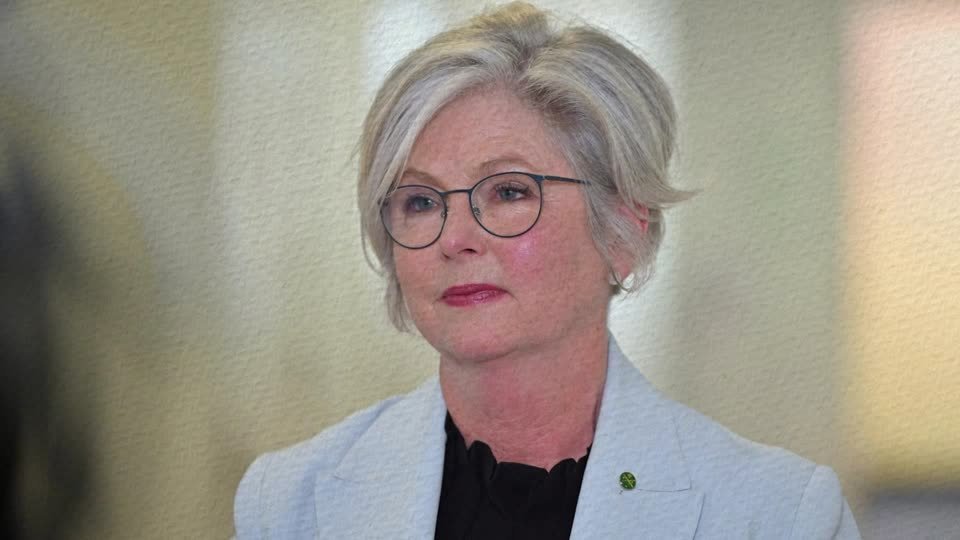
Her condition is now officially listed as stable.
It is a rare glimmer of good news in a story that has shaken Australian politics to its core.
The Alfred Hospital in Melbourne confirmed the update in a brief statement, marking another step forward for the 65-year-old. She had been downgraded from critical to “serious but stable” on October 23, four days after the incident that left her fighting for her life.
The hospital also made clear that Ms Haines’ family would not be speaking to the media, as they continue to keep vigil by her side.
The alleged attack unfolded in Wangaratta on Sunday, October 19.
Ms Haines had driven back from an event in Mansfield and was unloading items from her car outside her electorate office when she was hit by a vehicle and crushed between two cars.
She was airlifted to Melbourne with critical injuries. Surgeons were ultimately forced to amputate both of her legs.
Brendan Nugent, 43, has since been charged with dangerous driving causing serious injury and intentionally causing serious injury.
He also faces a federal charge of causing harm to a Commonwealth public official, an offence that carries particular weight because of who the alleged victim is and the office she holds.
Mr Nugent appeared briefly before a court in the days following the incident and was remanded in custody. The court was told he had mental health concerns and lives with a rare neurological condition.
He has not entered a plea, the allegations have not been tested, and he is due to face court again in February.
Back in Wangaratta, the community response was immediate and overwhelming.
Bouquets piled up outside Ms Haines’ office, forming a carpet of colour along the footpath where she was hurt. Locals stopped to leave handwritten notes.
Colleagues in Canberra, from every side of politics, spoke of a woman defined by her warmth and her relentless advocacy for regional Australia.
At the family’s request, well-wishers channelled their grief into generosity. Hundreds of thousands of dollars have flowed to the charity Save the Children Australia.
Her husband, Phil, who has shared four decades of his life with her, described her as a fighter with a “huge heart” and a formidable mind.
He said the family was hopeful that, with time, she would recover.
Ms Haines is no ordinary backbencher.
A former midwife and rural health researcher, she succeeded fellow independent Cathy McGowan in the seat of Indi in 2019, cementing one of the most remarkable grassroots political movements in the country.
She has since become a powerful voice on integrity in government, playing a central role in the push that led to the creation of the National Anti-Corruption Commission.
That reputation is precisely why the incident landed with such force in Canberra. For many, it felt like an assault on the very idea of accessible, local representation.
Analysis: What This Means for Australia
Whatever a court ultimately finds about the circumstances of October 19, the incident has exposed an uncomfortable truth: Australia’s elected officials are extraordinarily exposed.
Unlike ministers, most federal MPs have no personal protection detail. Their electorate offices sit on suburban strips and country main streets, deliberately open so that constituents can walk in off the street.
Their addresses are public. Their schedules are often advertised.
That openness has long been a point of national pride. It is also a vulnerability.
The Australian Federal Police has in recent years publicly flagged a rise in threats made against parliamentarians, and the federal charge laid in this case underlines that harm to public officials is treated as a matter of national significance rather than a purely local crime.
The implications ripple far beyond Parliament House. If representatives feel unsafe meeting the people they serve, the quality of Australian democracy suffers.
Fewer candidates may step forward, particularly women and those from regional communities who cannot afford private security.
The timing has sharpened the debate.
With the Victorian state election set for November 28, several MPs have opened up about the threats, harassment and abuse they encounter in their own electorates, from vile online messages to confrontations in person.
Governor-General Sam Mostyn, appearing alongside Phil Haines in the days after the incident, urged Australians to learn to “disagree well”, calling on the nation to exercise its “muscle of decency”.
Her words struck a chord.
They also raised a harder question: whether goodwill alone is enough, or whether governments must now spend serious money on hardening electorate offices and protecting the people inside them.
Security analysts say the case will almost certainly prompt a review of how parliamentary security is resourced outside Canberra, noting that the risk profile for local MPs has shifted dramatically over the past decade.
Law enforcement insiders warn that balancing access with protection is notoriously difficult, pointing to the United Kingdom, where the killings of MPs Jo Cox in 2016 and Sir David Amess in 2021 forced sweeping changes to how British politicians meet their constituents.
Political observers believe the episode could reshape campaign culture, with candidates in the upcoming Victorian poll already reconsidering how and where they engage with voters.
Mental health advocates, meanwhile, caution that the information aired in court so far is a reminder that the full picture is not yet known, and that the justice system must be allowed to run its course without speculation.
For now, the focus in Wangaratta remains squarely on one woman in a Melbourne hospital bed.
The flowers outside her office have begun to wilt. The messages of hope have not.