
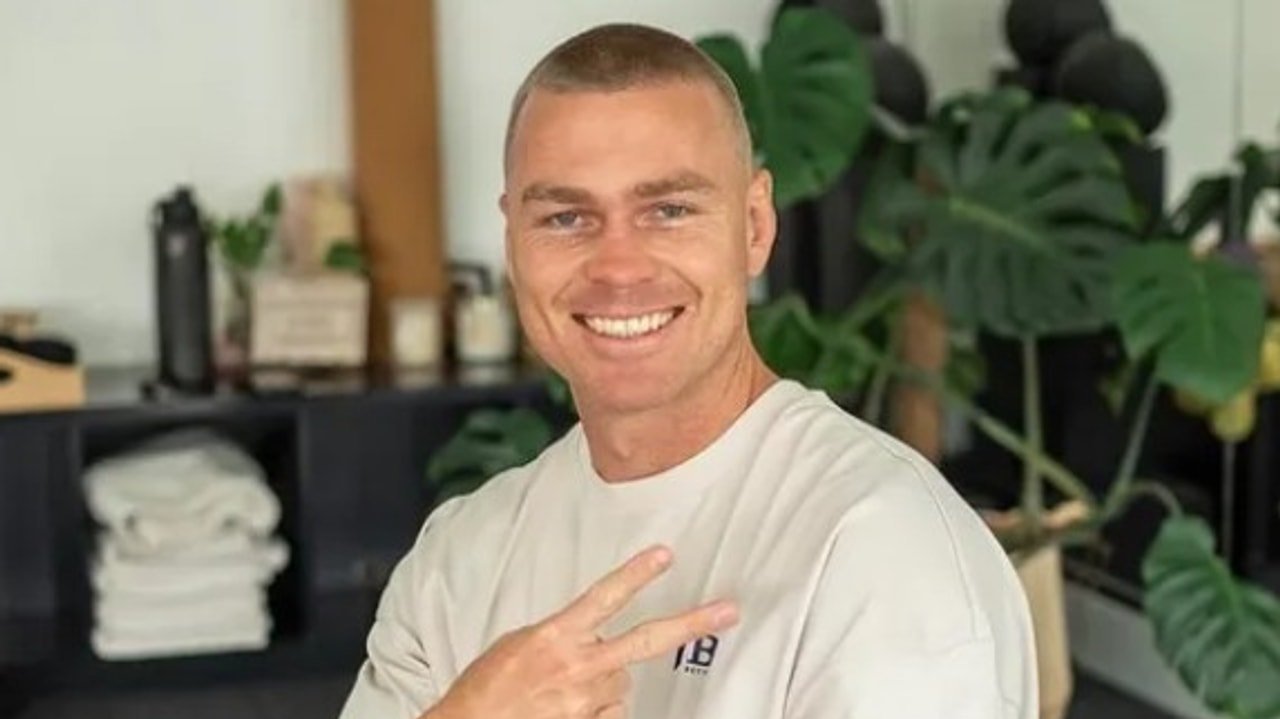
‘A True Champion Taken Too Early’: Former Australian Boxing Champion Josh Frederiksen, 36, Killed in Horror Skydiving Crash Moments From Landing as Fighting Community Reels
- Former Australian light heavyweight champion Josh Frederiksen has died aged 36 after a skydive at Toogoolawah, northwest of Brisbane, went catastrophically wrong in the final seconds
- His parachute deployed and worked as designed, but turbulence near the ground sent him slamming into the earth
- The barber, breath coach and boxing mentor was airlifted to hospital with chest, pelvic and abdominal injuries and died later that night
- A heartbroken mentor says he never once heard anyone speak badly of the fighter, as a fundraiser is launched for his grieving family
He had survived twenty bruising professional bouts, stood toe-to-toe with hardened opponents and walked away with a national title.
But in the end, it was a few violent seconds of rough air above a quiet Queensland paddock that claimed the life of Josh Frederiksen.
The 36-year-old former Australian light heavyweight champion has died after a sports parachute jump turned deadly on Wednesday, leaving family, friends and an entire fighting fraternity struggling to comprehend how a man so full of life could be gone so suddenly.
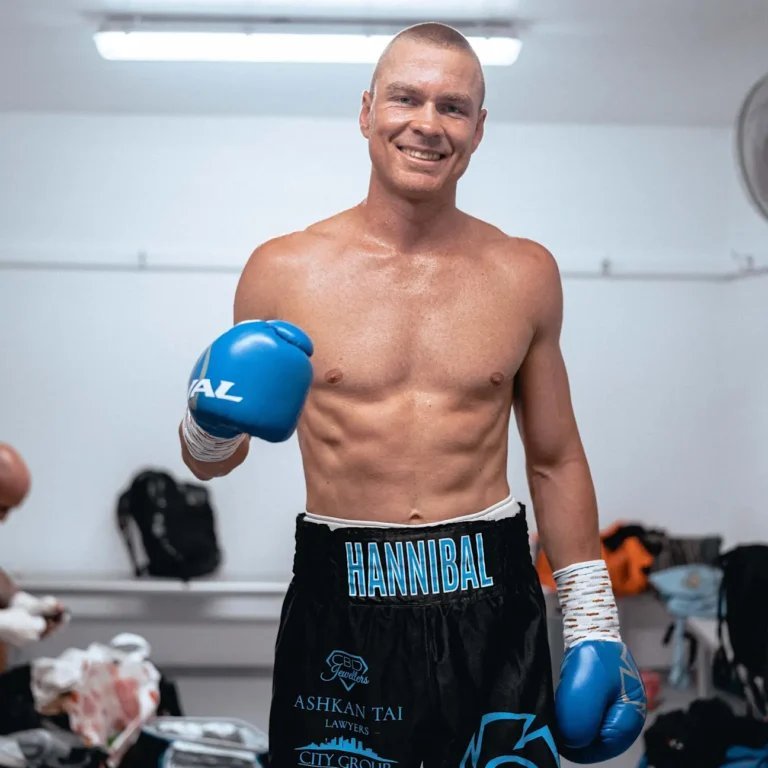
Frederiksen was no novice.
He had logged more than 100 jumps since falling in love with the sport, and the descent at Skydive Ramblers in Toogoolawah, in the Somerset region northwest of Brisbane, was meant to be routine.
For most of the jump, it was. His canopy opened cleanly and performed exactly as it should.
Then, close to the ground, he struck turbulence. Control was lost in an instant, and Frederiksen hit the ground hard.
Emergency crews rushed to the drop zone. He was flown by helicopter to the Royal Brisbane and Women’s Hospital suffering serious injuries to his chest, pelvis and abdomen.
Doctors fought to save him, but he died later that night.
Queensland Police Service officers are now compiling a report for the coroner, who will examine the circumstances surrounding the fatal landing.
On Thursday, the Australian Parachute Federation confirmed the death of one of its members. Chief executive Stephen Porter said the organisation was deeply saddened, sending its thoughts to Frederiksen’s loved ones and the wider skydiving community.
Mr Porter also delivered a sobering reminder: the sport carries inherent dangers, and while the federation works constantly to reduce them, those risks can never be completely erased.
It is a statement that will strike a chord with thousands of Australians who chase adrenaline every weekend, and with the families who wave them off.
Frederiksen’s own story was one of reinvention. After a professional boxing career that delivered 13 wins, five losses and two draws, he hung up his gloves only in March last year.
Rather than walk away from the sport that shaped him, he poured his experience into others.
He became a mentor to young fighters, cut hair as a barber, and built a following as a breath coach, teaching people how to harness their breathing to manage stress and performance.
Skydiving, it seemed, was another expression of the same restless drive. Those who knew him describe a man who lived by his principles and lifted up everyone around him.
That is why the news has hit the Australian boxing community so hard.
Nick Midgley, a former professional heavyweight, promoter and mentor to Frederiksen, shared an emotional tribute online, saying the world had lost a special man.
He wrote that he had honestly never heard a bad word said about his friend, that Frederiksen lived out his values in everything he did, and that he regarded him as a brother.
Mr Midgley said he was ‘absolutely crushed’, adding that he knew the loss would ripple through many other lives too.
Paul Vuko, whose son was mentored by Frederiksen, described him simply as ‘a true champion taken too early’. Former super featherweight world champion Will Tomlinson called the tragedy ‘horrible’.
A GoFundMe page has since been established to support Frederiksen’s family through the devastating weeks ahead.
Analysis: What This Means for Australia
Frederiksen’s death will inevitably reignite questions about safety in extreme sports across the country, a sector that has grown into a popular pastime and a valuable tourism drawcard in regional areas.
What makes this case so confronting is that, by early accounts, nothing failed mechanically. The parachute did its job.
An experienced jumper was in the air. And still, a sudden pocket of turbulence near the ground proved fatal.
That reality cuts to the heart of public safety debates. Regulation, training and equipment standards can lower the odds of disaster, but they cannot tame the weather in the final metres of a descent.
For small communities like Toogoolawah, drop zones bring visitors, jobs and spending. A fatality casts a long shadow, not only over the operators and staff who witnessed it, but over local first responders and residents.
The coronial process will be closely watched.
Coroners’ findings in adventure-sport deaths often shape future guidance on landing procedures, wind limits and training, and the outcome here may influence how jumpers and operators across Australia approach conditions close to the ground.
There is also a quieter social cost.
Frederiksen was a mentor, a coach and a role model to young men in boxing gyms, people who now face grief without the guiding figure they leaned on.
His loss is felt well beyond the sport that made his name.
Aviation safety observers say turbulence at low altitude is one of the most unforgiving hazards a parachutist can face, because there is so little height and time to recover.
Industry observers believe the tragedy will prompt renewed conversations within clubs about weather assessment and landing technique, even among highly experienced jumpers.
Those familiar with sports safety warn that experience can never fully guarantee protection, and that honesty about the risks is essential for anyone stepping out of a plane.
Combat sports insiders, meanwhile, point to the cruel irony that a man who absorbed punishment in the ring for years lost his life pursuing a passion away from it.
For now, the investigations and the debates can wait.
Across gyms, barber shops and drop zones, people are remembering a fighter who gave far more than he took, and who was gone far too soon.