
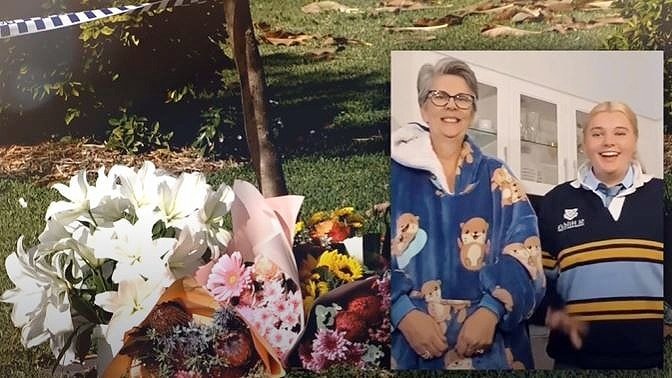
‘We Told You He Was Going to Murder Us’: Coroner Opens Inquest Into Floreat Double Killing That Exposed Police Failures and Rewrote WA’s Gun Laws
- A coronial inquest has opened into the May 2024 shooting deaths of Perth mother Jennifer Petelczyc and her 18-year-old daughter Gretl, killed in their own home by gunman Mark Bombara
- The coroner’s main focus will be the medical care Bombara received before the attack, and an expert neurological report on the killer has been ordered
- Bombara’s own daughter had warned police for weeks that her father was dangerous and that one of his 13 guns was missing, but nothing was done
- Eight WA Police officers were found to have failed in their duty, and the case triggered the toughest firearm laws in the country
WARNING: This story contains details that may distress some readers.
They had done everything right. They had run, they had spoken up, and they had told the authorities exactly what was coming.
It still was not enough.

More than two years after a heavily armed man walked into a quiet home in Perth’s leafy western suburbs and opened fire, Western Australia is being forced to face the question that has haunted the state since: how did so many warning signs lead to so little action?
A coronial inquest into the deaths of Jennifer Petelczyc, 59, and her daughter Gretl, 18, began today.
It is expected to run for five days and will look at failures in the medical system, in policing and in the gun licensing regime that let a dangerous man keep a private arsenal.
The killings happened in May 2024 at the family’s home on Berkeley Crescent in Floreat.
Mark James Bombara, 63, went to the house looking for his estranged wife and their daughter, Ariel. Both had fled the family home weeks earlier because they feared for their lives.
Jennifer Petelczyc was his estranged wife’s closest friend.
Bombara made threatening phone calls that sparked a major police response. By the time officers reached the property, Bombara and Jennifer were already dead.
He had turned the gun on himself after shooting both women.
Gretl was rushed to Royal Perth Hospital. She died a short time later.
At a pre-inquest hearing in June, the court heard that the coroner’s primary focus would be the medical treatment Bombara received in the period before the shooting.
An expert neurological report on the killer has been requested.
No details about his medical history, or about why that report was ordered, have been made public. That gap is likely to draw intense scrutiny once evidence is heard.
Police conduct, the state’s firearms framework and the role of domestic violence will also be examined.
For Ariel Bombara, the inquest is the latest chapter in a long fight for accountability.
In the weeks before the attack, she repeatedly warned police that her father had a history of family and domestic violence and posed a real and immediate threat.
She and her mother also told officers that one of his 13 firearms could not be accounted for. No action was taken.
In January 2025, an internal WA Police Force investigation found that eight officers had not performed their duty, and disciplinary action followed.
Commissioner Col Blanch said at the time that officers had not correctly assessed the risk, which meant powers available under the Restraining Orders Act and the Firearms Act were not used as they should have been.
Ariel’s response was scathing. She asked whether police simply did not believe the family, or whether they did not “give a sh**”.
She described the outcome as a “perfect storm” of officer apathy and compassion fatigue, combined with poor systems, outdated policies and inadequate training and support.
One recommendation from the police review was that a family violence coordinator be stationed at all times in the State Operations Command centre, so frontline officers can get expert advice in real time.
The pressure on those officers is enormous. Data from the Australian Bureau of Statistics shows WA Police respond to a family and domestic violence incident roughly every 20 minutes.
Bombara was a licensed gun owner. He legally held 13 weapons: 11 on a recreational licence and two handguns on a collector’s licence.
Under today’s rules, that would be impossible.
Within a week of the killings, the WA Parliament pledged to overhaul the state’s gun laws. The reforms took effect in March 2025 and are now regarded as the strictest in Australia.
Licensed firearm numbers in the state have since fallen by about a quarter.
Recreational licences have been abolished. Collector’s licences are much harder to get.
Owners face a cap of 10 guns and must pass a mental health check every five years.
The most significant change is the introduction of firearm disqualification orders. These allow police to immediately remove a person’s guns once a family or domestic violence report is made.
Crucially, officers no longer decide for themselves whether the risk threshold has been met.
Analysis: What This Means for Australia
The Floreat case shows how a public safety system can fail even when victims do everything asked of them. A family raised the alarm, provided specific information about a missing weapon, and was still left exposed.
For law enforcement nationally, the central lesson is about discretion. WA has decided that officer judgement, at least where guns and domestic violence meet, carries too much risk.
Other states will be watching closely to see whether removing that discretion saves lives.
There are also wider community consequences.
The reforms drew strong opposition from The Nationals and the WA Firearms Community Alliance, who argued the laws went too far, penalised law-abiding owners and did nothing about illegal guns.
A record-breaking 2024 parliamentary ePetition against the changes gathered more than 31,000 signatures.
Meanwhile, the national toll keeps rising. According to Australian Femicide Watch, 60 women and 28 children have been killed by violence across Australia so far this year.
The family violence crisis has not eased, despite pledges at every level of government.
The inquest’s focus on Bombara’s medical care also raises a difficult question: whether doctors and health services should play a more formal role in flagging people who may become dangerous and who have access to firearms.
Law enforcement insiders warn that new laws are only as strong as the officers enforcing them, and that heavy workloads and burnout remain serious risks across Australian police forces.
Domestic violence advocates say the case proves that victims’ warnings must be treated as evidence, not anecdote, and that systems must be designed so a single missed call cannot have fatal consequences.
Policy observers believe the coroner’s findings, particularly on the medical evidence, could shape reforms well beyond WA, including how health information is shared with firearm licensing authorities.
For the families of Jennifer and Gretl Petelczyc, no finding will undo what happened in that Floreat home. But over the next five days, the state will have to answer for the warnings it ignored.
If you or someone you know is affected by family or domestic violence, call 1800RESPECT on 1800 737 732. In an emergency, call 000.