
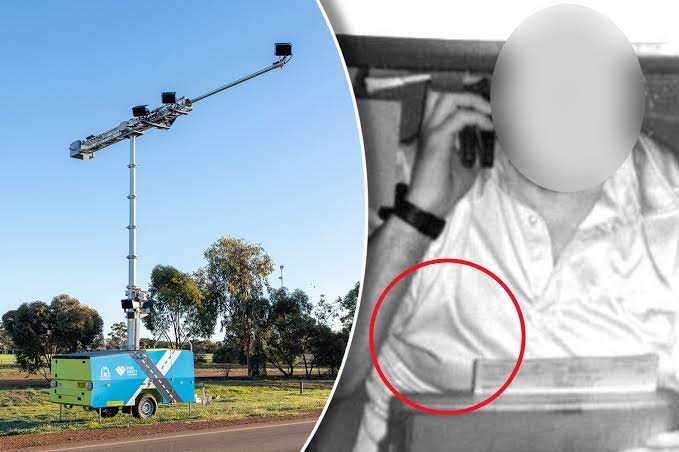
‘Big Brother Is Watching Your Hands’: Adelaide’s AI Phone Cameras Spread Again as $700 Fines Loom and a $1.1 Billion Revenue Bonanza Sparks Fury Among Motorists
- Two new AI-powered phone detection cameras are being installed on Payneham Road at Felixstow and North East Road at Valley View, and are expected to start operating within weeks
- Drivers caught touching a mobile phone face a $700 hit to the hip pocket and three demerit points
- State budget estimates show the camera program is forecast to raise about $1.1 billion over four years
- Camera infrastructure has already appeared at further sites, including Anzac Highway and Grange Road, ahead of any official announcement
One glance. One swipe.
One quick tap to skip a song at the lights.
For thousands of South Australian drivers, that split-second habit is about to become a far more expensive gamble, as the state’s network of artificial intelligence cameras quietly tightens its grip on Adelaide’s busiest roads.
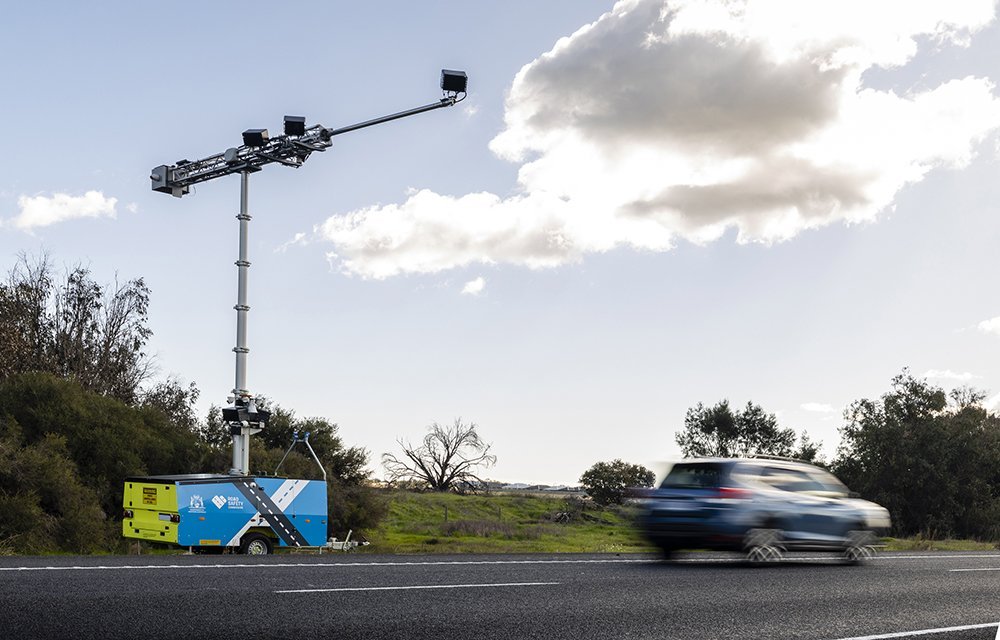
The lenses do not blink, they do not get tired and they do not accept excuses. And they are multiplying.
Two new mobile phone detection sites are being installed in Adelaide’s north-east, with authorities preparing to switch them on within weeks. The first is on Payneham Road at Felixstow, a heavily used commuter corridor feeding traffic towards the CBD.
The second sits on North East Road at Valley View, another key artery carrying tens of thousands of motorists to and from the suburbs.
Once operational, the pair will lift the number of active phone camera sites in metropolitan Adelaide from five to seven.
Before any penalty notices arrive in letterboxes, the new cameras must first pass a testing phase run by South Australia Police. Once that period ends, the fines begin.
And they are not small. A driver caught holding or touching a mobile phone behind the wheel is slapped with a $592 fine, plus a $108 Victims of Crime levy.
That brings the total penalty to a punishing $700, along with three demerit points.
For a young driver, a casual worker or a family already battling the cost of living crisis, that is a week’s rent, a month of groceries, or a significant step towards losing a licence altogether.
The rollout is not stopping at seven. Authorities have not formally confirmed where the next cameras will go, but the hardware is already appearing at multiple locations across the city.
It is understood one likely future site is on Anzac Highway at Camden Park, the main route linking the city to Glenelg. Another is believed to be on Grange Road at Welland in the inner west.
Should both come online, Adelaide could be home to nine phone camera locations by the end of the year, with further expansion expected to follow.
The technology itself is part of a broader national shift.
New South Wales became the first jurisdiction in the world to deploy dedicated mobile phone detection cameras in 2019, using AI software to scan images of drivers and flag those appearing to handle a device, with suspected offences then reviewed before fines are issued.
Other states soon followed, and South Australia has steadily joined the push.
The reason is simple. Distracted driving has become one of the defining road safety threats of the smartphone era.
Road safety authorities in South Australia say it remains a significant contributor to crashes and serious injuries on the state’s roads, and police have long acknowledged that catching offenders by traditional roadside patrols is near impossible at scale.
A phone hidden in a lap is invisible to a passing patrol car. It is not invisible to a high-resolution camera mounted above the road.
Yet the growing network has also become a lightning rod for public anger, particularly over the sheer scale of the money involved.
State budget estimates forecast the program will raise about $1.1 billion over four years, an eye-watering figure that has fuelled accusations the cameras are as much about filling government coffers as saving lives.
Analysis: What This Means for Australia
The quiet spread of AI enforcement in Adelaide is a window into where policing across the country is heading. Automated surveillance is no longer limited to speed and red-light cameras.
Machines are now being trusted to judge what drivers are doing with their hands inside their own cars.
For law enforcement, the appeal is obvious. Cameras can monitor busy roads around the clock without diverting officers from other duties, freeing up stretched resources for crime and emergency response.
It also creates a powerful deterrent: if drivers believe they could be caught anywhere, behaviour is likely to change everywhere.
For communities, the stakes are deeply personal. Every crash caused by a distracted driver leaves behind grieving families, injured pedestrians and emergency workers forced to deal with the aftermath.
If the cameras genuinely reduce that toll, supporters argue the cost to offenders is a fair price.
But the economic and social consequences cannot be ignored. A forecast $1.1 billion haul is not a rounding error.
It represents an enormous transfer of money from motorists to the state, and critics warn that the burden falls hardest on lower-income households and workers who rely on driving for their livelihoods.
There are also wider questions about privacy and public trust. As AI cameras become embedded in everyday life, Australians are being asked to accept an unprecedented level of monitoring on public roads.
How that data is stored, used and reviewed will become an increasingly important issue for governments nationwide.
Perhaps most telling is the lack of transparency around future sites. Motorists are discovering new camera infrastructure before any official confirmation, which some argue undermines the very deterrent effect authorities say they want.
Road safety analysts say the evidence from other jurisdictions suggests phone detection cameras can shift driver behaviour, but warn that any benefit relies on public confidence that the system is fair and accurate.
Law enforcement insiders warn that distracted driving is chronically under-reported in crash data, meaning the true scale of the danger is likely far greater than official figures suggest.
Many believe automated detection is the only realistic way to tackle the problem.
Motoring industry observers believe the revenue figures will continue to dominate the debate unless the government clearly shows how the money is being reinvested into road safety, infrastructure and victim support.
Civil liberties commentators, meanwhile, say the expansion should prompt a broader public conversation about how far Australians are prepared to let AI surveillance reach into daily life.
What is not in doubt is the direction of travel. More cameras are coming, more roads will be watched, and the message to South Australian drivers could not be clearer.
Put the phone down, or pay $700 for the privilege of picking it up.