
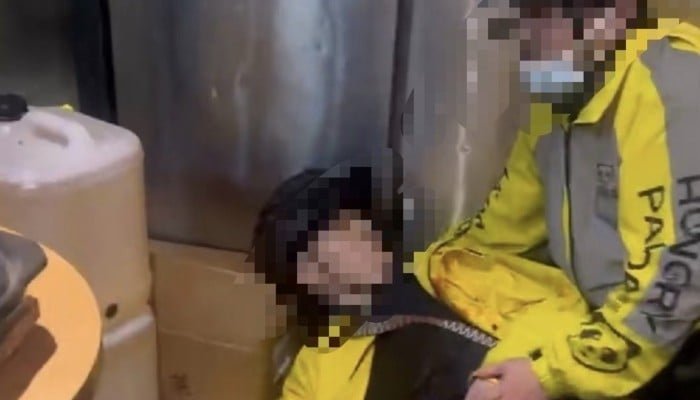
‘He Will Never See His Family Again’: Horrifying Footage of Melbourne Delivery Rider’s Final Moments Floods Chinese Social Media as Viral ‘Survival Guides’ Warn Visitors to Stay Away
- Feng Jianming, a 47-year-old Chinese-Australian delivery rider, was allegedly stabbed to death in the Melbourne CBD after confronting a man he saw interfering with his bike
- Graphic videos of him dying in his helmet on A’Beckett Street are being watched by vast audiences across China, where users now describe Melbourne as unsafe
- Viral clips on Rednote urge international students to keep up to 10 metres away from anyone behaving erratically and to “run” rather than argue
- Protest signs at a city vigil accuse Hungry Panda of contributing to his death, claiming riders are docked pay when orders go missing
He was still wearing his bike helmet when he fell.
Slumped on the ground outside a Melbourne restaurant, blood spreading from wounds to his chest, Feng Jianming spent his last moments on a city street he had worked countless times before.
Now those moments are playing on loop for millions of strangers half a world away.
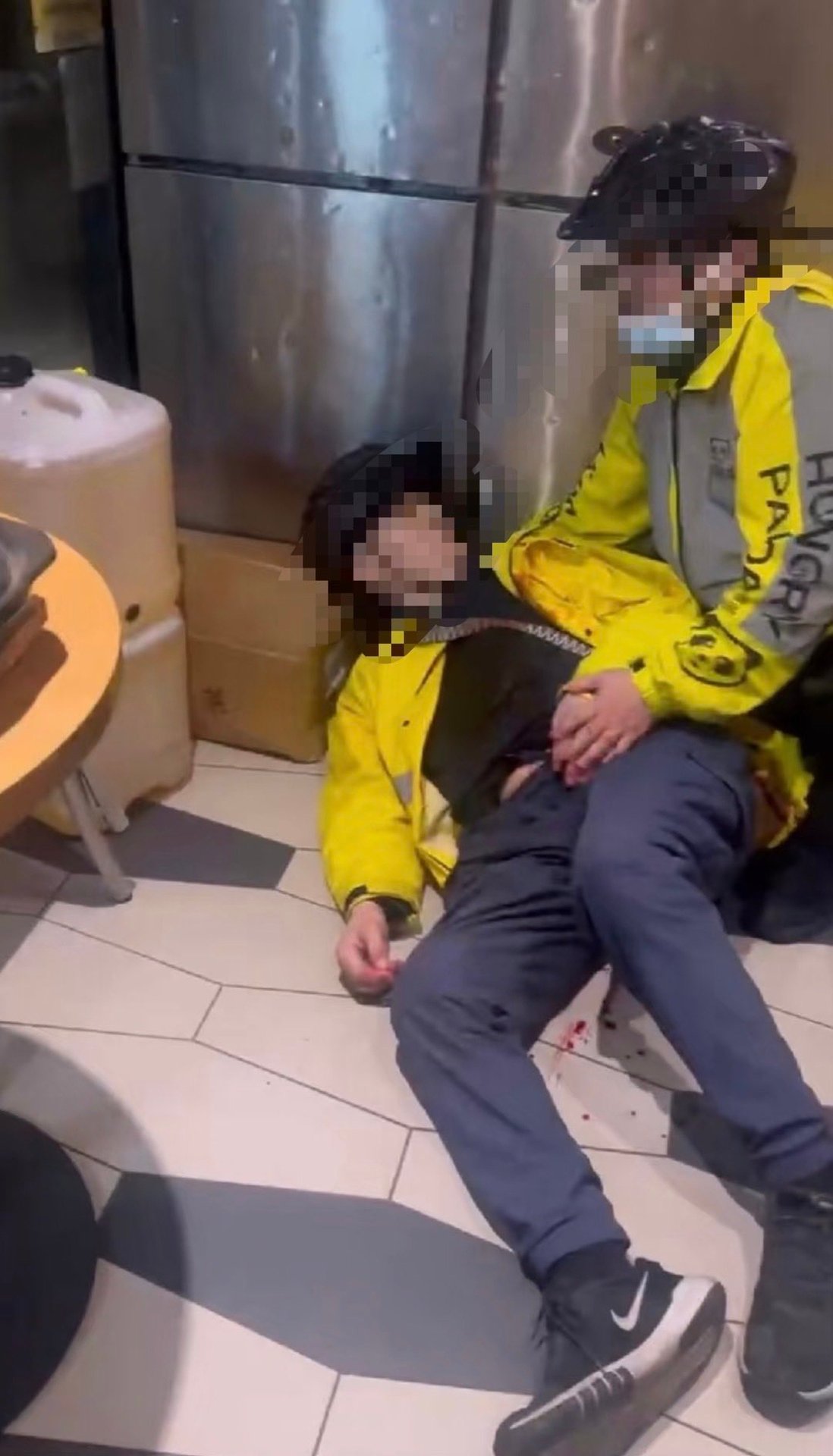
Search the word “Melbourne” on Chinese social media and the feed fills almost instantly with footage of the father-aged delivery rider’s death. For a city that has spent decades selling itself to Asia as safe, liveable and welcoming, the images could hardly be more damaging.
The killing unfolded on a Friday night outside ChongQing Chicken Pot on A’Beckett Street, in the heart of the CBD.
Mr Feng, 47, allegedly spotted a man tampering with his delivery bike and moved to confront him. A struggle broke out.
Within moments, the rider had suffered fatal stab wounds. A second delivery rider was also hurt and taken to hospital.
Bystanders filmed the confrontation on their phones. That footage has since travelled across the globe.
Victoria Police arrested a 51-year-old Footscray man, who has been charged with murder. Users online described the arrest itself as dramatic.
In the days since, mourners have built a sprawling vigil outside the State Library of Victoria on Swanston Street, one of the busiest pedestrian strips in the country.
The reaction overseas has been swift and brutal.
On Rednote, known in China as Xiaohongshu or Little Red Book, hundreds of videos have appeared warning viewers about conditions in Australia’s second-largest city.
One young woman, who had flown home to China only a week earlier, said the stabbing happened roughly 100 metres from where she had been living.
She described feeling shock, then grief, then fury. Mr Feng, she noted, was about the same age as her own father, a hard-working man who would now never return to his family.
Her verdict was blunt: Melbourne’s safety had slipped far further than people realised, and distances that once felt comfortable could no longer be trusted.
She urged Chinese students and expatriates to give anyone acting abnormally a berth of five to 10 metres, avoid arguments, catch taxis at night, stick to busy areas and call 000 when necessary.
No car, no meal and no amount of money, she said, was worth a life.
Another creator posted what she labelled a “survival guide for Chinese in Australia”. She told viewers that while Australia was not as dangerous as Europe or the United States, it lagged far behind China on safety.
Her advice was stark: avoid eye contact, never start conversations with people who seem unstable, steer clear of dark alleys, and flee immediately from anyone who appears agitated.
Several clips also featured images of rough sleepers and drug-affected people on Melbourne streets. Many resurfaced footage of Lauren Darul, the woman accused of stabbing Wan Lai in the chest in broad daylight in the CBD in October 2025.
Ms Darul was charged with intentionally causing injury and remains behind bars awaiting trial after being refused bail.
The death has also dragged Hungry Panda, the London-based delivery platform, into the spotlight.
The company has faced claims that its riders are effectively pushed to defend orders from theft because they risk being fined when food disappears. At the vigil, one sign reworked the firm’s cheerful panda mascot into a snarling beast looming over a rider’s silhouette.
Its Chinese text demanded the company be held responsible, alleging it was the only platform docking pay for lost or spilled orders.
In a statement, Hungry Panda said it was mourning the loss and extended condolences to the rider’s family, friends and fellow couriers, as well as to the injured rider.
It revealed Mr Feng had previously had four or five e-bikes stolen, which it said illustrated the wider dangers riders face.
The company insisted no rider should ever feel forced to put themselves at risk to protect equipment or food, and said the tragedy underlined the need for stronger protections.
It is understood to be in talks with the City of Melbourne, the Victorian Government and police about improving rider safety.
Analysis: What This Means for Australia
This is no longer just a local crime story. It is a reputational crisis playing out in real time, in a language most Australian officials are not monitoring.
Chinese students, tourists and migrants have long been central to Melbourne’s economy, filling university lecture halls, apartment towers and restaurants. When peer-to-peer videos tell them the city is unsafe, they carry a credibility no government campaign can match.
The long-term threat to international education and tourism is real.
For law enforcement, the case shines a harsh light on public order in the CBD after dark, and on the overlapping pressures of homelessness, mental health and drug use that residents have complained about for years.
It also raises uncomfortable questions about Victoria’s broader crime debate, and whether the city centre is adequately policed at night.
Then there is the gig economy. Thousands of delivery riders, many of them migrants, work alone at night on bikes that are prime targets for thieves.
If financial penalties push them to defend property with their bodies, the system itself becomes a safety hazard.
Community observers warn the viral advice, however well-meant, may also deepen fear and stigma towards vulnerable people sleeping rough, potentially fracturing social cohesion in the city centre.
Security analysts say Melbourne’s international standing depends heavily on perceptions of street safety, and that graphic footage spreading unchecked on overseas platforms can shift migration and study decisions faster than any statistic.
Law enforcement insiders warn that bike theft is often treated as low-level crime, yet incidents like this show how quickly a property dispute can escalate into lethal violence.
Industry observers believe delivery platforms will face mounting pressure from regulators and unions to scrap penalties for lost orders and invest in rider protection, from secure parking to emergency support.
Gig economy advocates argue the simplest message, echoed even by Hungry Panda, must become enforceable policy rather than a slogan: no order is worth a life.
For the family of Feng Jianming, those reforms will come too late. For the riders still out on Melbourne’s streets tonight, they cannot come soon enough.