
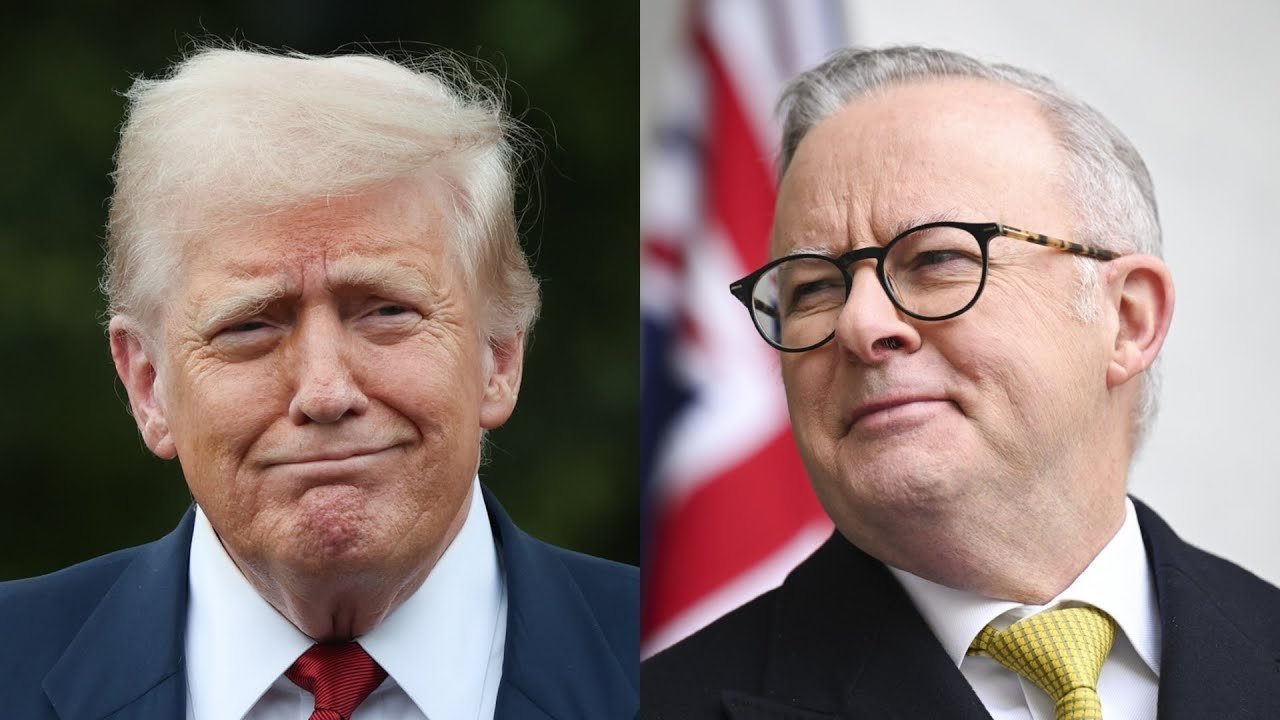
‘We’re Copping It’: Canavan Demands Albanese Spell Out Trump’s Endgame in Iran as Midterm Rout and Spiralling War Costs Hit Australian Households
- Nationals leader Matt Canavan has urged Anthony Albanese to press Washington for clear answers on what the US actually wants from its war with Iran.
- Donald Trump’s Republicans lost both houses of Congress and most state governorships in record midterm turnout, a defeat analysts link directly to war-driven cost-of-living pain.
- Cabinet minister Jason Clare concedes Australia “can’t stop” the conflict, even as families here absorb the economic fallout at the bowser and the checkout.
- The Prime Minister could meet Trump up to three times in a looming overseas summit blitz, putting enormous pressure on Canberra to deliver.
A war Australia did not start, cannot end and never voted for is reaching into the wallets of ordinary Australians.
Now, with American voters having delivered a brutal verdict on Donald Trump’s leadership, pressure is mounting in Canberra for the Albanese Government to stop watching from the sidelines and start asking hard questions of its most important ally.
The demand came on Sunday from an unlikely quarter.
Nationals leader Matt Canavan, a conservative firebrand rarely accused of being soft on Washington, said the time had come for the Prime Minister to find out exactly what the Trump administration hopes to achieve in Iran.
Appearing on ABC’s Insiders program, Senator Canavan said Australia plainly had a stake in seeing the fighting stop, particularly as the economic shockwaves feed into already stubborn inflation.
He acknowledged there had been a worthy goal in stopping Tehran from acquiring a nuclear weapon. But he argued that loose talk of regime change, along with backing for anti-government groups inside Iran, had clouded the joint US-Israeli campaign.
“When you have very unclear war aims, it often gets very, very messy,” he warned, describing it as the defining lesson of his generation and perhaps every generation before it.
The senator said Australia should act as a genuine friend to the United States by engaging directly, seeking clarity, and doing whatever was needed to bring the conflict to a close sooner rather than later.
His intervention lands just days after a political earthquake in the United States. In a record-breaking turnout, American voters handed Democrats control of both the House and the Senate, as well as a majority of state governorships.
Analysts have largely blamed surging living costs, made worse by the Iran conflict, for the Republican wipeout. Mr Trump has partly accepted that assessment, yet has insisted he would strike the Islamic Republic again if given the chance to relive the decision.
To understand why this moment matters, it is necessary to rewind to February.
That was when the United States and Israel launched coordinated strikes on Iran. The attacks killed dozens of senior figures in the regime, among them supreme leader Ali Khamenei.
Power passed to his son, Mojtaba Khamenei.
Mr Trump has repeatedly predicted a swift end to hostilities. That has not happened.
Instead, a string of peace negotiations have collapsed.
The fighting has bled across borders into neighbouring nations, testing America’s relationships with its Middle Eastern partners and squeezing global oil supplies in one of the world’s most critical energy corridors.
For a trading nation at the far end of global supply chains, that squeeze does not stay in the Gulf. It travels.
Analysis: What This Means for Australia
The most immediate impact is economic. Australia imports the overwhelming bulk of its refined fuel, leaving motorists, truckies, farmers and airlines exposed to every jolt in the oil market.
When crude prices climb, fuel prices follow, and freight costs ripple through to supermarket shelves.
That matters enormously for the Reserve Bank of Australia, which has spent years trying to wrestle inflation back into its target band. A sustained energy shock threatens to undo that work, complicating any hope of relief for mortgage holders already battered by the cost-of-living crisis.
Regional Australia, the heartland of Senator Canavan’s party, is especially vulnerable. Diesel powers agriculture and mining, and higher input costs squeeze margins for producers who cannot easily pass them on.
There are security dimensions too. Australia’s alliance with the United States underpins its defence posture, from intelligence sharing to the AUKUS submarine pact.
A widening Middle East war risks drawing American attention and military resources away from the Indo-Pacific, where Canberra’s core strategic interests lie.
And a weakened, distracted White House, now facing a hostile Congress, may find it harder to deliver on commitments made to allies.
Socially, the conflict carries particular weight for Australia’s Iranian, Jewish and broader Middle Eastern diaspora communities, many of whom have loved ones in harm’s way. Law enforcement agencies remain alert to the risk of overseas tensions spilling into domestic flashpoints.
The Government’s position, meanwhile, is one of frank helplessness.
Speaking on the Sunday Agenda program, Education Minister Jason Clare said the “obvious” message from the midterms was that most Americans wanted the war over, pointing to longstanding Republican voters who had turned away from the party.
The key question, he said, was whether the result would hasten the conflict’s end. From Australia’s perspective, he hoped it would.
“We didn’t start the war but we’re copping it, just like Americans are,” Mr Clare said. Unlike the United States, he added, Australia had no power to stop it.
He insisted ties between Canberra and Washington remained strong, running deeper than whoever happens to occupy the White House or the Lodge.
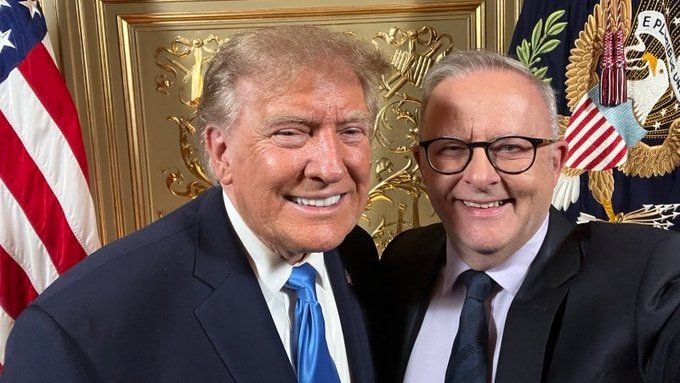
He also praised Mr Albanese’s ability to forge a solid working relationship with the President, noting the pair could meet as many as three times during the Prime Minister’s upcoming international summit schedule.
Those meetings now carry real stakes.
Security analysts say the midterm defeat may shift the calculus in Washington, with a Democrat-controlled Congress likely to scrutinise war funding and push for a negotiated exit.
That could open a window for allies such as Australia to quietly advocate for de-escalation.
Foreign policy observers believe Senator Canavan’s comments signal a notable shift on the Coalition side, where unconditional support for US military action has long been the default.
A conservative leader openly questioning American war aims suggests cost-of-living anxiety is now trumping traditional alliance loyalty in the minds of voters.
Economists warn that every additional month of conflict in the Gulf adds to the risk of persistent inflation, with official figures from the Australian Bureau of Statistics likely to show the energy component remaining a stubborn driver of price rises.
Defence insiders caution, however, that Australia’s leverage is limited. Canberra can ask questions and offer counsel, but it cannot dictate terms to a superpower at war.
For now, Australians are left in an uncomfortable position: paying the price for a conflict thousands of kilometres away, while their leaders admit they are powerless to end it.
Whether Mr Albanese uses his face-to-face meetings with Mr Trump to press for the clarity Senator Canavan is demanding may determine how long that price keeps rising.