
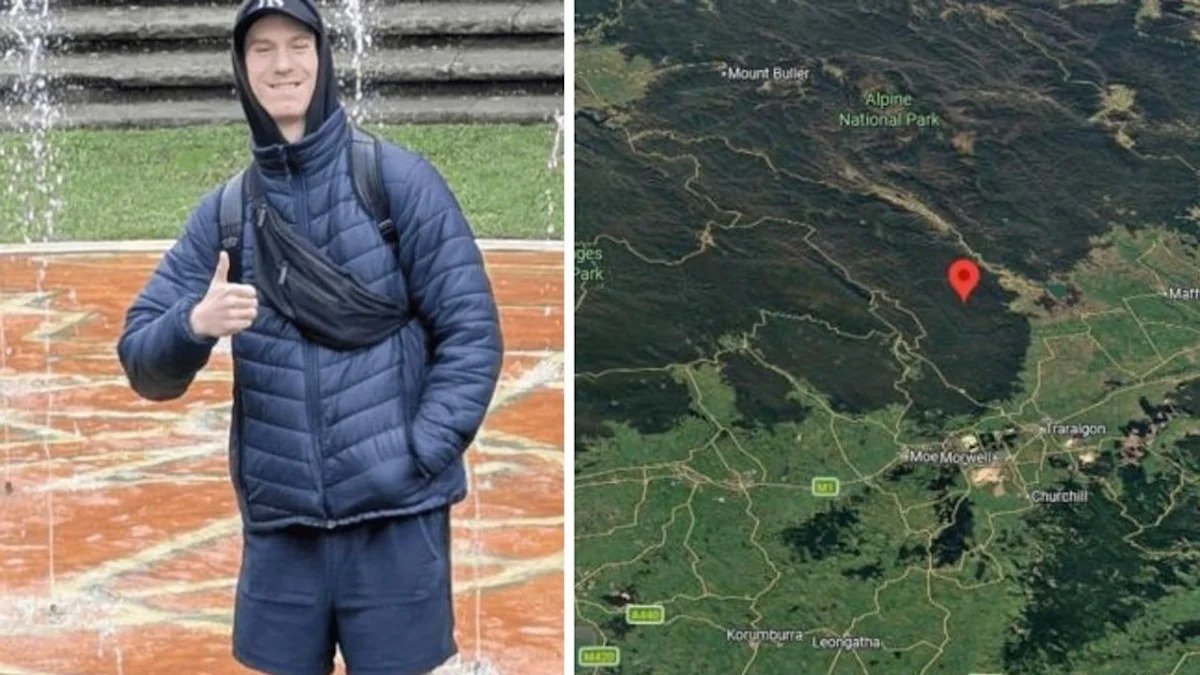
Desperate Race Against Time in Gippsland Bushland as Teenager ‘Will’ Vanishes After Short Walk From Campsite Wearing Only Shorts and Work Boots
- A teenage boy known to his mates as Will disappeared on Friday after stepping away from his campsite at Walhalla East in Victoria’s rugged Gippsland ranges, and he has not been seen since.
- His camping companion scoured the surrounding bush when he failed to come back but found no sign of him, sparking a major police operation.
- Police and family are growing increasingly anxious because Will was wearing only shorts and work boots as wild weather swept across the region over the weekend.
- Specialist units including the Dog Squad, Mounted Branch and Search and Rescue Squad have joined the hunt, and police are urging anyone with information to come forward.
It was supposed to be a walk of only a few minutes.
A teenager wandered from one corner of a remote bush camp to another on Friday, a stroll so short that nobody thought twice about it. He never came back.
Now, as cold and wet weather settles over Victoria’s eastern high country, a family is enduring every parent’s worst nightmare, and one of the state’s largest search operations of the year is battling dense forest, steep gullies and plunging temperatures to bring him home.

The missing boy, named by police only as William, or Will to those closest to him, had been camping with another teenager at Walhalla East in the heart of Gippsland’s mountain country.
At some point on Friday, Will headed off towards a different section of the campsite near the junction of Stoney Creek Road and T2 Track. The distance was minimal.
The terrain, however, is anything but forgiving.
When Will did not return shortly afterwards, his companion went looking for him. He searched the surrounding area but could find no trace of his friend, and the alarm was raised.
Victoria Police have since combed the bushland themselves, and so far they have also come up empty-handed.
Investigators say their working theory is that Will became disoriented and lost his bearings in the surrounding landscape. There is no suggestion of foul play.
But what has deepened the alarm is what he was wearing when he vanished. Will was dressed in just a pair of shorts and work boots, with no jacket, no thermal layers and no protection from the elements.
His family and police say their concern has grown by the hour as inclement weather lashed the region throughout the weekend.
A command post has been established in the small town of Cowwarr to coordinate the operation.
Local officers from surrounding stations have been drafted in, backed by the Public Order Response Team, the Dog Squad, the Mounted Branch and the elite Search and Rescue Squad.
Volunteers from the Victoria State Emergency Service are also supporting the effort on the ground.
To understand why this search is so fraught, you need to understand the country Will is lost in.
Walhalla and its surrounds sit in the foothills of the Victorian Alps, a region once overrun by gold prospectors and now prized by campers, four-wheel drivers and bushwalkers for its isolation and untouched beauty.
That same isolation is what makes it so dangerous.
The area is a maze of narrow tracks, thick eucalypt forest, steep ridgelines and deep creek valleys. Mobile phone coverage is patchy at best.
Landmarks can look identical, and a single wrong turn can quickly lead a person deeper into the bush rather than out of it.
Spring in the Gippsland high country is notoriously unpredictable. Warm afternoons can give way to bitterly cold nights, and rain fronts can sweep in with little warning, sending temperatures tumbling.
For someone without proper clothing, exposure becomes a serious risk within a matter of hours.
Victoria has a long and painful history of bush search operations in its alpine and forested regions, some ending in joyful reunions and others in heartbreak.
Each one has reinforced a grim truth: the first few days are critical.
Analysis: What This Means for Australia
Will’s disappearance is a stark reminder of how quickly a routine outdoor adventure can turn into a life-or-death emergency, and it raises urgent questions about public safety in Australia’s vast wilderness areas.
Millions of Australians head bush every year. Camping and off-grid recreation have surged in popularity, particularly among young people seeking affordable getaways amid the cost of living crisis.
Yet many venture into remote country without communication devices, adequate clothing or a clear plan should something go wrong.
For law enforcement, operations like this one place enormous strain on resources.
Deploying mounted officers, dog handlers, specialist rescuers and public order units to a single remote location requires significant manpower, often pulling officers away from regional stations that already operate with lean staffing.
The heavy reliance on volunteer organisations such as the SES also highlights the critical role these unpaid Australians play in emergency services. Without them, large-scale wilderness searches would be far harder to sustain.
For small communities like Cowwarr and Walhalla, the impact is deeply personal. Local residents often know the terrain better than anyone, and in tight-knit country towns, a missing child becomes everyone’s concern.
There are wider policy implications too.
The case is likely to reignite debate over whether more should be done to encourage campers to carry personal locator beacons, and whether mobile coverage in popular recreational areas should be expanded as a matter of regional infrastructure.
Search and rescue specialists say the decision to deploy so many specialist units so quickly reflects how seriously police are treating the threat posed by the weather.
Law enforcement insiders warn that disorientation in dense bushland is far more common than many people realise, and that panic can drive a lost person to keep moving, sometimes away from the very searchers trying to reach them.
Outdoor safety experts believe the combination of minimal clothing and wet, cold conditions is among the most dangerous scenarios rescuers face, as it can rapidly sap a person’s strength and judgement.
Bushcraft observers note that work boots may at least give Will sturdy footing over rough ground, and that young people can show remarkable resilience when lost in the wild.
Many searches across Australia have ended with survivors found days later, cold and exhausted but alive.
Emergency management analysts say advice for anyone lost in the bush remains consistent: stay put where possible, seek shelter from wind and rain, and try to make yourself visible to searchers.
For now, the focus remains firmly on finding Will. Search crews will continue to push through the rugged terrain around Stoney Creek Road and T2 Track as his family waits anxiously for news.
Victoria Police are appealing to anyone who may have seen Will, or who has information that could assist the search, to contact Crime Stoppers Victoria or their nearest police station immediately.