
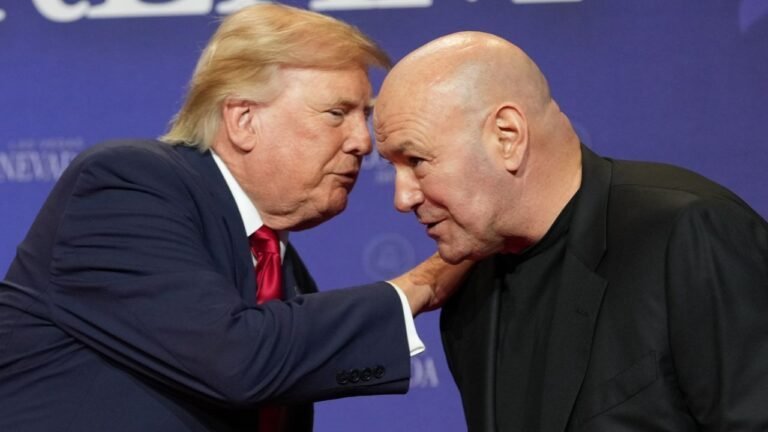
‘A Violent Fighter and Warrior’: Trump Offers UFC Boss Dana White the White House Press Secretary Job as Midterm Rout Sparks West Wing Chaos and Fresh Alarm in Canberra
- Donald Trump has publicly offered the White House’s most visible communications job to UFC chief Dana White, calling him a “violent Fighter and Warrior”.
- White posted an AI-generated image of himself at the briefing room podium, but CNN later reported, citing a source, that he had turned the offer down.
- Two of the fighters Trump nominated as White’s “assistants” come from Russia’s Dagestan region, raising eyebrows among security watchers.
- The bizarre episode comes days after Republicans lost control of both houses of Congress, and a day after Trump replaced his chief of staff.
The most powerful podium in the world has been empty for weeks. Now the man in the Oval Office wants to hand it to a cage-fighting promoter.
For Australia, which relies on Washington for its security more than on any other capital, this is not a sideshow. It is a warning sign.
The question being asked quietly in Canberra is simple: who, exactly, is speaking for America right now?
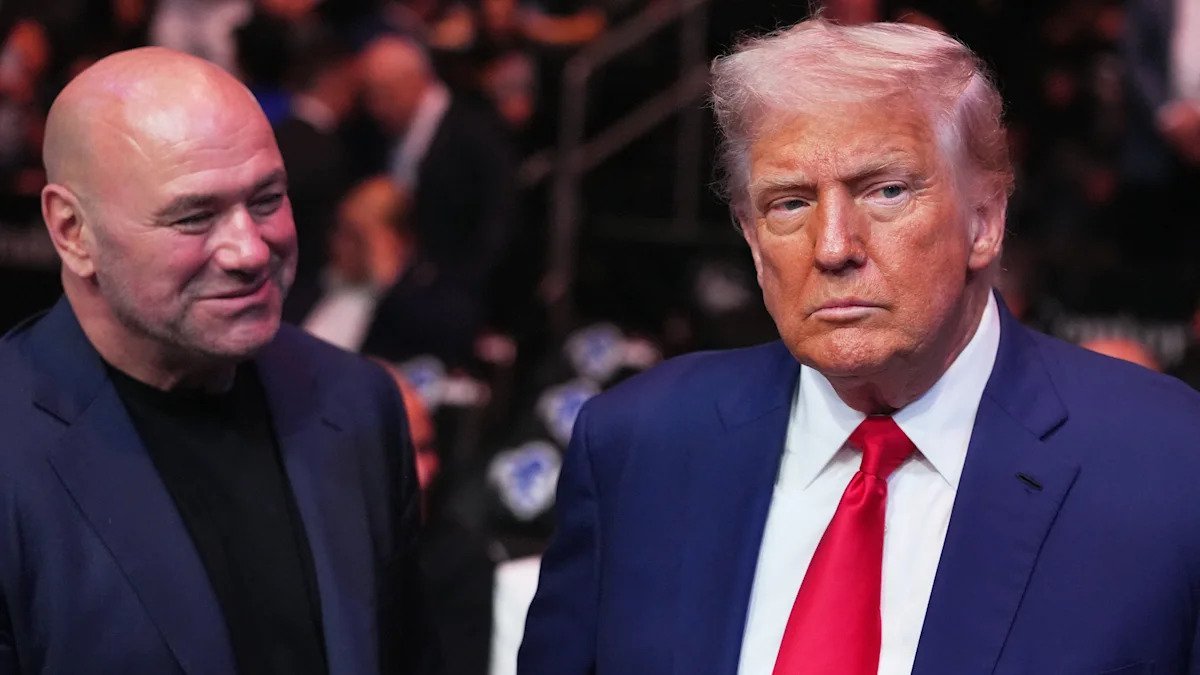
Ultimate Fighting Championship chief executive Dana White is the latest name to be thrust into the revolving door of Donald Trump’s White House, after the President used his Truth Social platform to announce that White had been offered the role of press secretary.
In typically theatrical language, Trump described his long-time friend as “the Great Dana White, a violent Fighter and Warrior”.
White responded on Instagram with an AI-generated image showing him behind the famous press briefing room lectern, captioned: “On to the next chapter.”
It looked like acceptance. It may not have been.
CNN later reported, citing a source familiar with the matter, that White had declined.
White has since told a press conference after a boxing event in London that he would sit down with Trump at the White House on Monday.
Trump went further still, urging White to bring a squad of UFC fighters with him to serve as “assistants”. He claimed America needed them to defend against what he called the “Lunatic Left”.
Of the six current or former UFC champions Trump named, two hail from Dagestan, a Russian republic in the North Caucasus: Islam Makhachev and Khabib Nurmagomedov.
The vacancy itself is extraordinary. The press secretary’s chair has been empty since October 16, when Katie Zacharia walked away after less than a week in the job.
The timing is no accident.
The White House is reeling from Tuesday’s midterm elections, in which Democrats delivered a crushing blow, flipping seats Republicans had held for decades and seizing control of both the House of Representatives and the Senate.
A day before the White offer, Trump announced that chief of staff Susie Wiles would be replaced by her deputy, Stephen Miller. Two of the most important jobs in the West Wing have now been shaken up within a single week.
The bond between Trump and White stretches back more than two decades. In the early 2000s, when the UFC was still fighting for mainstream legitimacy, Trump’s Taj Mahal casino played host to its events.
That relationship has deepened ever since. White took the stage at the Republican National Conventions in 2016, 2020 and 2024, becoming one of the most recognisable faces of Trump’s cultural coalition.
In June, the partnership reached its spectacular peak. UFC Freedom 250 was staged on the South Lawn of the White House as part of America’s 250th anniversary celebrations, coinciding with Trump’s 80th birthday.
A colossal 600-tonne steel arch, nicknamed The Claw, was erected on the historic lawn. The broadcast opened with Trump and White striding out of the White House and through the crowd together.
White later called it “a one-of-one” experience.
It was not without controversy.
Although the White House said the UFC footed the bill, federal lawsuits were lodged in an attempt to stop the event, arguing that staging a private sporting contest on public land needed the approval of Congress.
A federal judge threw the challenge out.
Analysis: What This Means for Australia
On the surface, a fight promoter being offered a podium is political theatre. But the White House press secretary is not a ceremonial role.
It is the daily voice of US policy to allies, adversaries and markets alike.
Australia’s defence posture, from AUKUS submarine commitments to intelligence sharing through Five Eyes, depends heavily on clear and predictable signals from Washington. When that messaging machine is unstaffed or in turmoil, diplomats in Canberra are left reading tea leaves on social media.
The loss of both chambers of Congress compounds the uncertainty. A divided Washington could stall defence funding, trade deals and major alliance projects, with obvious knock-on effects for Australian industry and the Australian economy.
Then there is the Dagestan question.
At a time when Russia remains under sweeping Western sanctions over its war in Ukraine, a US President floating Russian-born athletes as White House “assistants” sends a confusing message to allies who have stood firm against Moscow, including Australia.
For ordinary Australians, the consequences may feel distant, but they are real. Currency movements, tariff threats and shifts in foreign policy are all shaped by how stable the US administration appears to be.
Security analysts say the greatest risk is not any single appointment, but the cumulative impression of an administration in disarray after a historic electoral defeat. Allies, they argue, plan around consistency, and the past week has offered precious little of it.
Diplomatic observers believe Canberra will be watching the composition of Trump’s inner circle closely, particularly with Stephen Miller now installed as chief of staff, given his reputation as one of the administration’s most hardline figures.
Defence industry insiders warn that a Democrat-controlled Congress could bring fresh scrutiny to major programs, including spending tied to Pacific security, a scenario that would demand nimble engagement from the Department of Foreign Affairs and Trade and Australia’s embassy in Washington.
Media watchers, meanwhile, say the offer to White underlines how far Trump has moved the press secretary role away from traditional communications professionals and towards loyal personalities with a combative public brand.
Whether White ultimately steps behind that podium or stays in the octagon, the episode has already delivered its message. The White House is under pressure, its leadership is reshuffling at speed, and Australia, as one of America’s closest partners, cannot afford to look away.
All eyes now turn to Monday’s meeting in Washington, and to whether the next voice of the United States will come from a cage-fighting empire.