
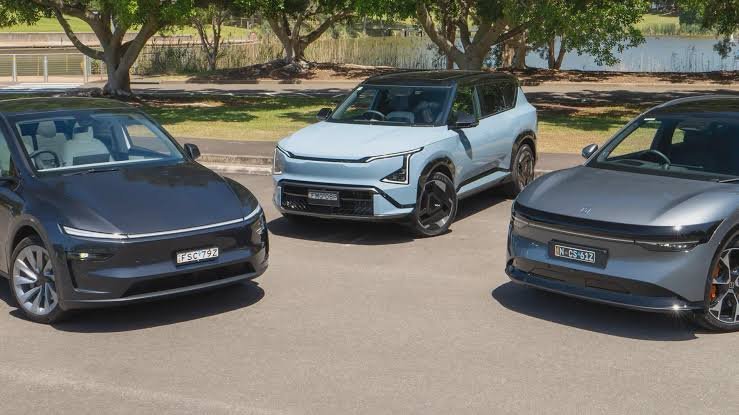
Australians Turn Their Backs on the Bowser: Electric Car Sales Nearly Triple as Iran War Fuel Shock Exposes the Nation’s Dangerous Dependence on Imported Oil
- Almost one in four new cars sold across Australia in October was fully electric, up from roughly one in 14 just twelve months earlier
- Tesla deliveries exploded by 342 per cent year-on-year as motorists fled petrol prices driven up by the war in Iran
- Chinese manufacturer BYD has climbed to become the country’s second most popular car brand, leapfrogging Kia, Ford and Mazda
- Even a ceasefire and a halved fuel excise failed to stop the stampede, raising urgent questions about how exposed Australia remains to a foreign oil crisis
For decades, Australians have treated the weekly trip to the servo as an unavoidable fact of life.
Not anymore.
A war thousands of kilometres away has done what years of government incentives, climate campaigns and glossy advertising could not.
It has frightened ordinary motorists into abandoning petrol and diesel in record numbers, and in doing so it has laid bare an uncomfortable truth about how vulnerable this country is when foreign oil supplies are thrown into chaos.
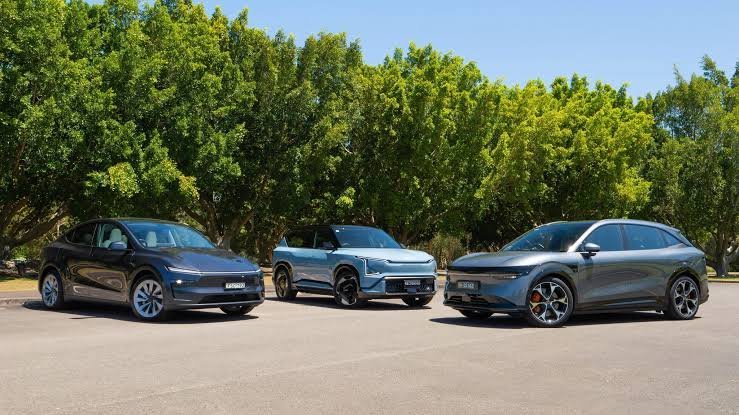
Fresh data released by the Federal Chamber of Automotive Industries shows battery electric vehicles accounted for 23.1 per cent of all new cars purchased in October.
Twelve months ago, that figure sat at just 7.3 per cent.
The surge was not confined to inner-city suburbs in Sydney and Melbourne.
Every single state and territory recorded growth, suggesting the shift is now reaching regional towns and outer-suburban families who have borne the brunt of soaring petrol prices.
Tesla alone delivered 4,050 vehicles during the month, an increase of 342 per cent on the same period last year.
Meanwhile, sales of traditional petrol and diesel models are sliding.
NRMA Head of Media Peter Khoury described the figures as stark, telling 7NEWS.com.au that a near-tripling of market share in a single year was genuinely remarkable.
He said motorists had simply grown tired of being at the mercy of wildly swinging oil prices.
The transition away from combustion engines has been creeping along for the better part of a decade. What changed this year was the war in Iran.
The conflict sent shockwaves through global energy markets, disrupting supply and driving fuel costs sharply higher at precisely the moment households were already battling a punishing cost of living squeeze.
Yet the most telling detail in the numbers is what happened when relief finally arrived.
In July, a 60-day ceasefire pushed oil prices down. At the same time, the federal government slashed the fuel excise in half.
For a period, Australians were paying less at the pump than they had been before the fighting even began.
Electric vehicle sales kept climbing regardless.
According to Mr Khoury, that pattern held consistently throughout the entire period.
He said it was unlikely Australians would rush back to petrol or diesel cars even if the war were declared over tomorrow, given the range and variety of electric models now on offer.
Other forces are also at work. Charging infrastructure has expanded considerably, sticker prices for electric models have been falling, and the vehicles themselves are becoming more efficient with each generation.
Crucially, Australians tend to hold onto a car for around ten years.
Every electric vehicle bought today is a decade-long exit from the fuel market, locking in the trend long after headlines about the Middle East have faded.
The October results follow third-quarter light vehicle figures which showed combined sales of electric and hybrid cars had already overtaken petrol and diesel vehicles. Toyota remains the nation’s best-selling brand, but Chinese electric giant BYD has surged into second place, pushing past household names Kia, Ford and Mazda.
Analysis: What This Means for Australia
Behind the sales charts lies a far more serious story about national resilience.
Australia relies overwhelmingly on imported refined fuel, and concerns about the country’s thin stockpiles have been raised repeatedly over the years, including in relation to obligations under the International Energy Agency.
The Iran conflict has turned what was once an abstract policy debate into a lived experience at the bowser.
From a national security perspective, every car that no longer needs imported petrol marginally reduces the country’s exposure to a foreign supply shock. Defence and energy planners have long warned that a prolonged disruption to shipping routes could leave the nation dangerously short of fuel within weeks.
But the shift creates new dependencies of its own.
BYD’s rapid rise means a growing share of Australia’s private vehicle fleet is being manufactured in China, a country with which Canberra has had a turbulent diplomatic and trade relationship.
Questions over connected vehicle software, data collection and long-term parts supply are likely to intensify.
The economic fallout cuts both ways. Fuel excise has traditionally been a significant source of federal revenue used to fund roads.
As fewer motorists fill up, and with the excise already temporarily halved, governments face mounting pressure to find replacement income, potentially through road-user charges that would hit electric car owners directly.
For communities, the pressure points are equally real. Service stations, mechanics specialising in combustion engines and regional fuel distributors face shrinking demand.
At the same time, electricity networks must cope with millions of additional batteries plugging in overnight, placing fresh strain on an energy grid already in transition.
There is also a fairness question.
Families who cannot afford a new vehicle, or who live where charging remains patchy, risk being left behind, still exposed to every spike in global oil prices while wealthier neighbours escape.
Industry observers believe the October numbers represent a genuine tipping point rather than a temporary panic purchase, pointing to the fact that sales held up even when fuel briefly became cheaper.
Energy security analysts say the crisis has achieved something policymakers struggled to deliver for years, but warn that swapping reliance on Middle Eastern oil for reliance on Chinese manufacturing is not a complete solution to Australia’s strategic vulnerabilities.
Motoring sector insiders warn that the next pinch point will be infrastructure.
They argue charging networks, particularly along regional highways, must keep pace with demand or the momentum could stall and frustrate the very drivers now making the switch.
Economists, meanwhile, caution that the federal budget will soon have to confront the steady erosion of fuel excise revenue, and that any new tax on electric vehicles will need careful design to avoid punishing early adopters.
What is clear is that the Iran war has permanently changed how millions of Australians think about the car in their driveway.
The bowser, it seems, has lost its grip.