
‘End of an Era’: Elon Musk Pulls the Plug on Tesla’s Doomed Cybertruck After Sales Collapse, Betting Everything on Driverless Robotaxis as His Empire Bleeds $180 Billion in a Single Brutal Week
- Tesla will wind down Cybertruck production by mid-2027 after sales fell far short of Elon Musk’s bold forecast of 250,000 vehicles a year
- US sales of the stainless-steel pickup almost halved last year, falling to just over 20,000, and the vehicle has been hit with 11 safety recalls
- The retreat caps a disastrous week in which Musk’s near half-billion-dollar political spending spree largely failed and his companies shed more than $180 billion in value
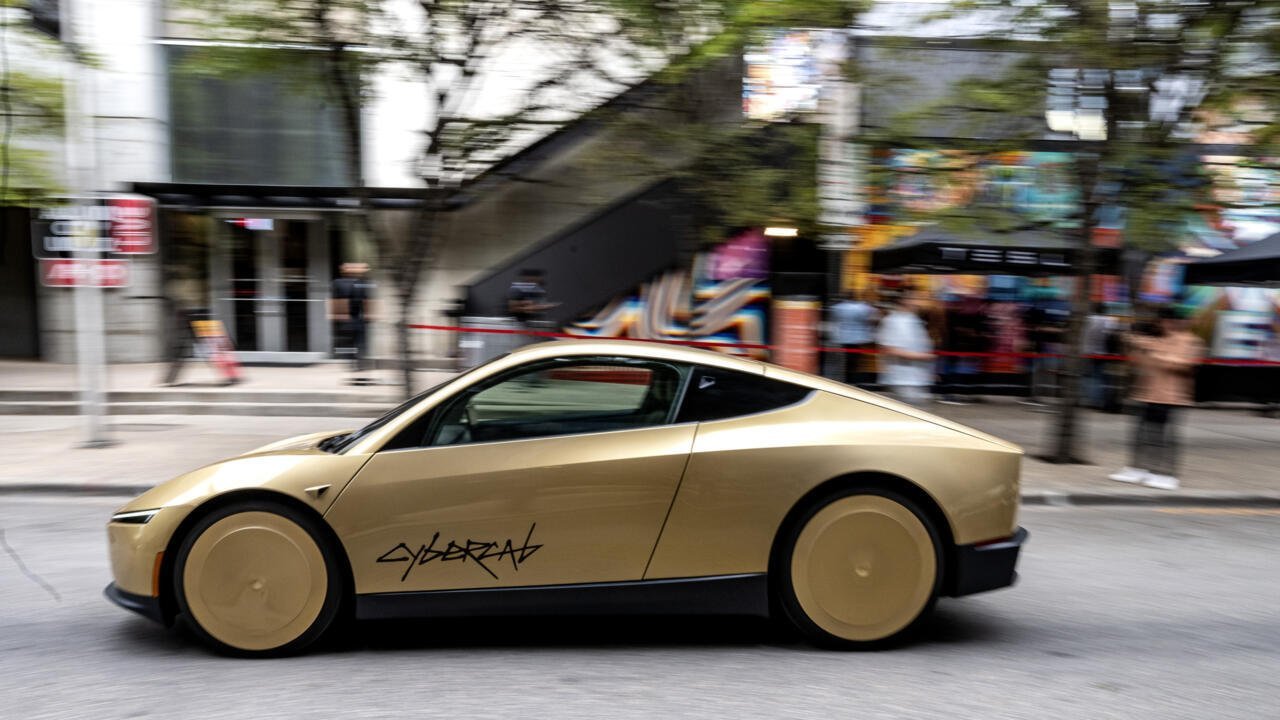
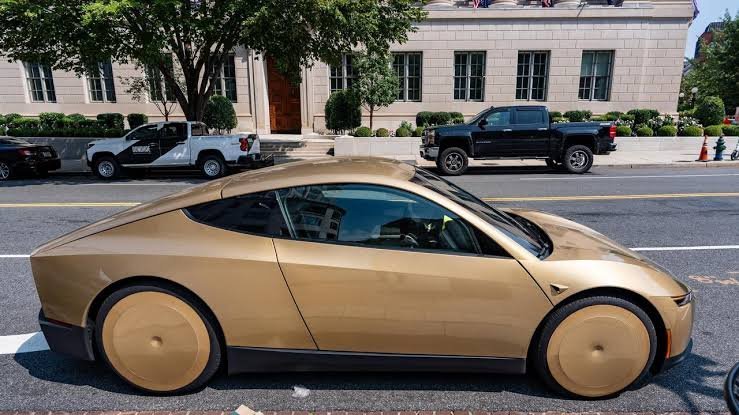
- Tesla is now betting on the steering-wheel-free Cybercab, which is still under scrutiny from US safety regulators
It was meant to be the vehicle that dragged the humble pickup into the future. Instead it has become one of the most expensive public humiliations in modern motoring.
Elon Musk has confirmed that the Cybertruck, the angular, bullet-styled machine he once hailed as Tesla’s crowning achievement, will be wound down within months. Fans call it a design icon.
Critics call it a cautionary tale.
And the timing could hardly be worse for the world’s richest man.
Musk revealed that production of the Cybertruck will be scaled back at Tesla’s sprawling Austin, Texas plant by the middle of 2027.
Replying to a user on his social media platform X, he described the truck as the ‘best vehicle Tesla has ever made’ and called the decision the ‘end of an era’.
The billionaire framed the move as a strategic pivot rather than a surrender.
Freeing up capacity, he said, would allow Tesla to build more Cybercabs, the two-seat robotic taxis now at the centre of his autonomous driving ambitions.
It remains unclear whether Cybertruck manufacturing will shift elsewhere or end entirely. However, the Austin facility is the only Tesla plant known to have the specialised equipment needed to make the truck’s distinctive heavy-gauge components.
The numbers behind the decision are stark.
According to Kelley Blue Book, Tesla sold just 20,237 Cybertrucks in the United States last year, a plunge of 48 per cent from the 38,965 it moved in 2024.
That is less than a tenth of the 250,000 annual sales Musk predicted when production began in 2023.
Even those figures were propped up from within the Musk empire.
SpaceX’s initial public offering filing revealed the rocket company bought Cybertrucks worth $131 million at list price from Tesla in 2025, making it one of the model’s biggest customers.
The Cybertruck was troubled from the day it was unveiled in 2019. Pickup loyalists ridiculed its wedge-shaped silhouette, while safety specialists warned it would struggle to win approval in major overseas markets.
Then came the infamous launch-night blunder. Attempting to prove the windows were shatterproof, Musk had metal balls hurled at the glass.
Two panes cracked spectacularly in front of a global audience.
When deliveries began in late 2023, Musk pitched the truck as a direct threat to General Motors and Ford, declaring that the future would finally look like the future.
The reality proved far less glamorous.
The National Highway Traffic Safety Administration records 11 recalls for the Cybertruck since its release. Some required owners to return vehicles for physical repairs; others were patched remotely through software updates.
The collapse comes amid a punishing stretch for Musk personally.
His record political outlay of nearly half a billion dollars delivered little in the US midterm elections, with most Republican candidates he supported losing their contests.
Across his companies, market capitalisation was on course to fall by more than $180 billion in a single week.
Analysis: What This Means for Australia
For Australian motorists, the Cybertruck was always more spectacle than showroom reality. But its demise carries real lessons for this country.
The same pedestrian-safety concerns that kept the truck out of Europe resonate strongly here.
Australia’s vehicle standards and the Australasian New Car Assessment Program place growing emphasis on how vehicles protect people outside the cabin, and a razor-edged stainless-steel body raises obvious questions for crowded suburban streets and school zones.
Former Aston Martin chief executive Andy Palmer put it bluntly, warning that any market with crash rules accounting for pedestrian impact was effectively off-limits to the truck.
There is also an economic message.
Tesla’s shift away from mainstream electric cars comes as Chinese manufacturers aggressively expand their reach, a trend already reshaping Australia’s electric vehicle market and putting pressure on prices, dealers and buyers.
More pressing is the robotaxi question.
If Tesla’s Cybercab, a vehicle with no steering wheel, pedals or mirrors, becomes its flagship, Australian regulators will eventually face hard decisions about driverless cars on local roads, including liability, insurance, road safety and the potential disruption to thousands of rideshare and taxi drivers whose livelihoods depend on the steering wheel.
Security analysts also note that fleets of connected autonomous vehicles raise questions about data collection and cyber vulnerability, issues that sit squarely within Australia’s broader national security debate over foreign-controlled technology.
Industry observers believe the Cybercab is a long way from filling the hole the Cybertruck leaves behind. Production only began earlier this year, and while Tesla lists installed capacity above 125,000 units, the program remains small.
According to Texas’s Department of Motor Vehicles, about 570 of the more than 1,200 Tesla robotaxis operating in the state are Cybercabs, with most of the remainder being Model Y vehicles.
Paid rides in a limited Cybercab fleet began in Austin only in September, after years of missed self-driving deadlines.
Regulatory clouds are also gathering.
The NHTSA opened an audit in September examining whether Tesla properly self-certified the Cybercab as compliant with federal motor vehicle safety standards, questions the company has yet to answer.
Automotive analyst Felipe Munoz has argued that labelling the Cybertruck a failure ignores the wider picture, pointing out that electric pickups from Ford and other makers have also flopped with American buyers.
Still, he noted, its uncompromising design shut it out of markets such as Europe, where EV demand is far stronger.
Palmer was less forgiving, saying it made little sense to keep a vehicle alive when it was missing its targets, and that any rational car executive would reach the same conclusion.
Inside Tesla, the message is one of continuity. Cybertruck lead engineer Wes Morrill described the truck as an extraordinary technology development platform whose legacy would live on through the Cybercab.
Law enforcement and transport insiders warn, however, that the next chapter carries even higher stakes. A pickup that failed to sell is an embarrassment.
A driverless taxi that fails on public roads is something else entirely.
For now, the world’s most polarising truck is heading for the history books, and Musk’s gamble on robots is just beginning.