
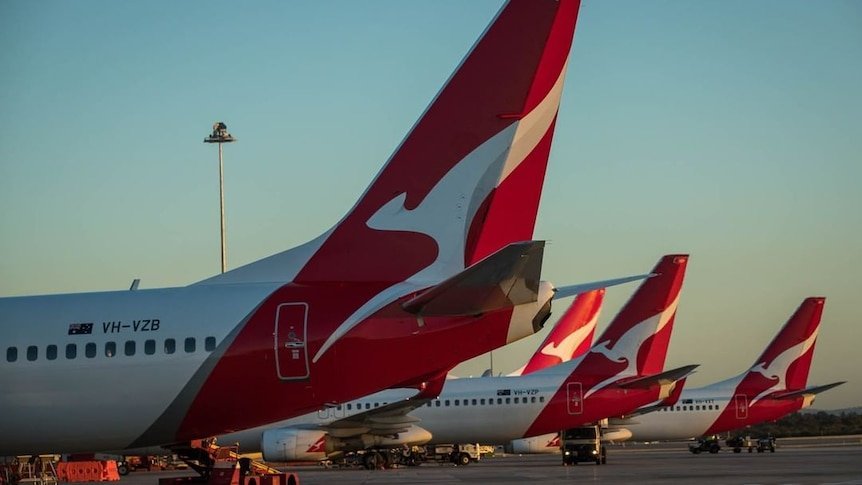
‘Zero Tolerance’: Chaos on the Tarmac as Qantas Passenger Allegedly Shoves Cabin Manager in the Chest Before Perth to Melbourne Flight Takes Off, Forcing Cancellation of Two Services
- A 57-year-old man is accused of pushing a Qantas cabin manager with both hands to the chest after being asked to give up his exit row seat
- A fellow passenger stepped in to help crew restrain the man before Australian Federal Police officers marched him off the aircraft
- The Perth to Melbourne service and its return flight were scrapped, leaving travellers scrambling for seats on alternative services
- The incident has renewed alarm over abuse of frontline aviation workers, with Qantas declaring “zero tolerance” for threatening behaviour
It should have been a routine trip across the country.
Instead, passengers aboard a Qantas jet at Perth Airport found themselves watching a frightening confrontation in the aisle, one that ended with a man restrained by cabin crew and a stranger, police boarding the aircraft, and two flights wiped from the schedule before the plane had even left the ground.
Now a 57-year-old man is set to face a magistrate, accused of laying hands on the very crew member responsible for keeping everyone on board safe.
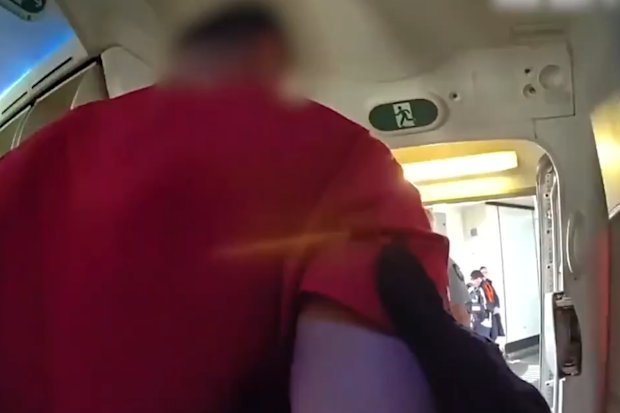
The alleged assault unfolded on Friday as the aircraft prepared to depart for Melbourne.
According to the Australian Federal Police, the man had been allocated a seat in the exit row, a position that carries specific responsibilities in an emergency.
Police allege that before take-off he grew aggressive towards airline staff.
After he left his seat to visit the toilet, crew assessed that he was no longer suitable to sit in the exit row and, on his return, asked him to move.
That request, it is alleged, triggered a sudden escalation.
The AFP claims the man tried to pull his bag from an overhead locker before shoving the cabin manager in the chest with both hands.
A passenger, described as a Good Samaritan, rushed to help crew members restrain him. He was then escorted from the aircraft, where AFP officers were waiting to arrest him.
He was charged with one count of common assault and was due to appear before Perth Magistrates Court on Saturday. The allegations have not been tested in court.
The fallout spread well beyond one row of seats. Qantas cancelled the scheduled service to Melbourne along with the return flight, rebooking affected customers onto other services.
“The safety of our customers and our crew is our number one priority,” a Qantas spokesperson said, adding that the airline has “zero tolerance for disruptive or threatening behaviour on our flights.”
To understand why crew acted as they did, it helps to understand what the exit row actually is. Those seats are not simply a reward for passengers wanting extra legroom.
Anyone sitting there may be called upon to open a heavy emergency door and help others evacuate within seconds if disaster strikes.
Airlines therefore require exit row occupants to be willing, able and calm. Crew have both the authority and the obligation to move anyone they judge unfit for the role, whether because of behaviour, intoxication or physical limitations.
It is a safety decision, not a customer service one.
Disruptive passengers have become a persistent headache for the aviation industry in Australia and abroad.
Crew unions and airlines have repeatedly spoken out about verbal abuse, intimidation and physical attacks on staff, with flight attendants increasingly describing confrontations as part of their working lives.
Incidents of this kind have in the past resulted in diverted flights, emergency landings and lengthy airline bans.
Australian carriers have the power to refuse to carry passengers whose behaviour endangers others, and the AFP maintains a dedicated presence at major airports to respond to offences on aircraft and in terminals.
Analysis: What This Means for Australia
At first glance, a single alleged shove might seem a minor matter. It is not.
An aircraft cabin is a confined, pressurised environment where the cabin manager is the senior safety authority on board after the flight deck. Any physical attack on that person undermines the chain of command that keeps hundreds of lives secure.
Had this confrontation erupted mid-flight rather than on the ground, the consequences could have been far more serious.
From a national security standpoint, aviation remains among the most tightly protected sectors in the country. Every disruption on board absorbs police resources, ties up airport operations and tests the readiness of frontline responders.
In this case the system appeared to work as designed, with crew de-escalating, a passenger assisting and the AFP making a swift arrest.
But it also exposed a gap. The protection of crew depended in part on the courage of a member of the public willing to step forward.
That is hardly a reliable safety net.
For the community, the impact is tangible. Families, workers and holidaymakers on two separate flights had their plans thrown into disarray.
Domestic travel between Perth and the east coast is a lifeline for many Western Australians, including fly-in fly-out workers and those visiting relatives thousands of kilometres away.
The economic ripple effect is real too.
Cancelled services carry costs for airlines in rebooking, crew scheduling and aircraft rotation, costs that ultimately filter into the cost of airfares paid by everyday Australians.
Perhaps most significantly, the episode feeds into a broader conversation about workplace safety for those employed in customer-facing roles, from nurses and retail staff to transport workers.
Aviation security analysts say the decision to cancel the flight, rather than simply remove the passenger and depart, likely reflected the need to reassess crew wellbeing and ensure the cabin team was fit to operate safely after a physical confrontation.
Law enforcement insiders warn that assaults on aircraft are treated seriously because of the unique risks involved, and that prompt reporting by airlines allows police to intervene before situations spiral.
Industry observers believe carriers will continue to take a hard line, with public statements of “zero tolerance” serving both as reassurance to crew and as a warning to passengers that aggressive behaviour can lead to arrest, prosecution and potential bans from flying.
Workplace advocates argue that cabin crew should never have to rely on bystanders for protection, and have long called for stronger deterrents and clearer messaging to travellers about the consequences of abusing staff.
For now, the man at the centre of the allegations will have his day in court, where the evidence will be examined. The flight he was booked on never made it to Melbourne.
And for the crew who turned up to work on Friday expecting an ordinary shift, the episode is a stark reminder of the risks they shoulder every time the cabin doors close.