
‘Felt Like a Car Hit My House’: Terrified Sydney Residents Jolted From Their Beds as Shallow Earthquake Rumbles Beneath the City’s South-West Growth Belt
- A magnitude 3.5 earthquake struck near Appin, south of Campbelltown, shortly after 6am on Sunday, shaking homes across Sydney’s south-west.
- The quake was unusually shallow, originating just 2km below the surface, which helps explain why so many people felt it so sharply.
- Almost 250 people lodged reports with Geoscience Australia within hours as frightened locals compared the jolt to a truck crashing into their homes.
- The tremor hit a region earmarked for massive housing growth, raising fresh questions about how prepared Australian communities are for seismic events.
It came without warning, in the grey half-light of a quiet Sunday morning.
One moment, families across Sydney’s south-west were asleep.
The next, walls were shuddering, windows were rattling and bewildered residents were stumbling out of bed convinced that something enormous had just slammed into their homes.
It was not a car. It was not a truck.
It was the ground itself.
A magnitude 3.5 earthquake rippled out from beneath the semi-rural fringe of Australia’s largest city just after 6am, sending a jolt of fear through communities that rarely give a second thought to what lies beneath their feet.
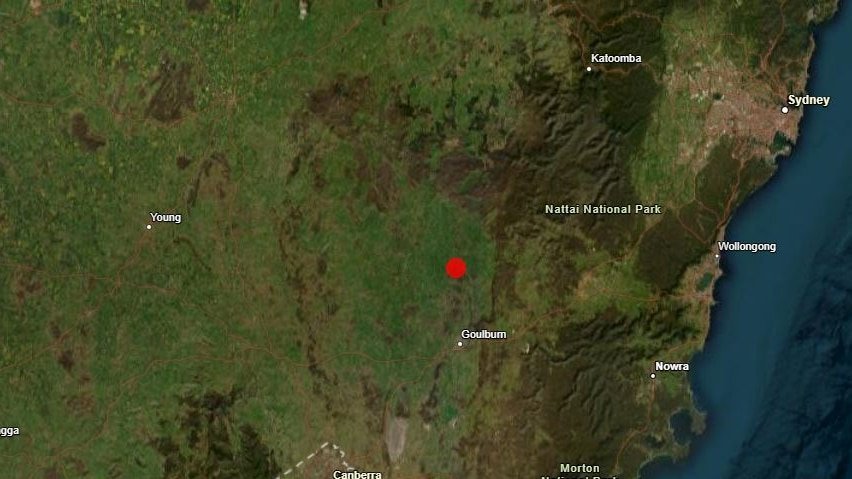
The epicentre was located near Appin, a township south of Campbelltown, close to the rugged expanse of Nattai National Park.
According to Geoscience Australia, the national agency responsible for monitoring seismic activity, the quake originated at a depth of just 2km, a strikingly shallow point of origin.
Within hours, close to 250 people had submitted so-called ‘felt reports’ to the agency, describing what they experienced as the tremor passed through.
Social media quickly lit up with accounts from shaken locals.
A resident of Douglas Park, a small community nestled between Appin and Picton, described the sensation as being like a car had smashed into their house.
Another local said they genuinely believed a truck had ploughed into their home, adding that the entire building shook.
In Wilton, further south, one resident said the quake had woken their household and left them panicked, struggling to understand what was happening.
The common thread was unmistakable: a sudden, violent bang followed by shaking, so abrupt that few people’s first instinct was to think ‘earthquake’.
That reaction speaks volumes about how Australians perceive seismic risk.
Many still believe the country is largely immune to earthquakes, sitting comfortably in the middle of the Indo-Australian Plate, far from the violent plate boundaries that devastate nations such as New Zealand, Indonesia and Japan.
But that sense of safety is misplaced. Australia records hundreds of earthquakes every year.
The overwhelming majority are too small to notice, yet the stresses building within the ancient continental crust are real, and they occasionally release with alarming force.
The most sobering reminder remains the 1989 Newcastle earthquake.
That magnitude 5.6 event killed 13 people, injured more than 160 and caused billions of dollars in damage, making it one of the costliest natural disasters in the nation’s history at the time.
More recently, in September 2021, a magnitude 5.9 quake near Mansfield in regional Victoria sent bricks and rubble tumbling onto Melbourne streets, including on Chapel Street, and was felt as far away as Sydney and Adelaide.
Sunday’s tremor was far smaller. But its shallow depth is precisely why it was felt so intensely by those living nearby.
Seismic energy released close to the surface has less rock to travel through and dissipate in, meaning residents experience a sharper, more concentrated jolt, exactly the ‘impact’ sensation so many described.
Analysis: What This Means for Australia
No damage or injuries had been reported in the immediate aftermath, and a quake of this size is generally considered minor. Yet the location of this event should give planners and policymakers serious pause.
Appin and Wilton sit within one of Sydney’s most aggressively expanding growth corridors.
Tens of thousands of new homes are planned for the Greater Macarthur region as governments scramble to respond to the housing crisis and push the city’s footprint ever further south-west.
That means a rapidly increasing population is moving into an area that has just demonstrated it is not seismically silent.
For community safety, the question is whether new estates, schools and critical infrastructure are being built with genuine earthquake resilience in mind, or whether Australia’s long-held assumption of seismic stability is quietly shaping construction decisions.
The region also hosts significant infrastructure, including major transport links and long-established coal mining operations across the broader Illawarra and Macarthur districts. Any future seismic event of greater magnitude could test the resilience of roads, rail lines, utilities and older housing stock built well before modern standards.
There is a human dimension too. The panic described by residents, many of whom assumed a vehicle had crashed into their home, highlights a striking gap in public awareness.
Australians are drilled on bushfire plans and flood warnings, yet few households have any idea what to do when the ground starts to move.
Emergency agencies such as the NSW State Emergency Service advise people caught indoors during an earthquake to drop, cover and hold on, sheltering under sturdy furniture and staying away from windows.
It is basic advice, but awareness remains patchy in a country where significant quakes feel like a distant, foreign threat.
Economically, even moderate quakes in densely populated areas can carry heavy costs.
Insurance industry observers have long pointed to Newcastle as evidence that a single event in the wrong location can trigger damage bills that ripple through household budgets and the broader insurance premiums market for years.
Seismology observers say small earthquakes like Sunday’s are a routine part of Australia’s geological life, and that a magnitude 3.5 event is no cause for alarm on its own.
However, they stress that every recorded tremor adds valuable data to the national picture, helping scientists better understand where stress is accumulating within the crust and where risk may be underestimated.
Emergency management experts warn that complacency is the real danger. They argue that because damaging earthquakes are rare in Australia, preparedness tends to slip down the priority list, both for households and for governments.
Urban planning observers believe the timing of this tremor, striking right in the heart of a booming development zone, should prompt a closer look at building codes and land-use planning in fast-growing outer suburbs.
Disaster resilience specialists say the flood of ‘felt reports’ is itself encouraging, showing residents are willing to engage with authorities and contribute to scientific understanding when something unusual happens.
For now, the residents of Appin, Douglas Park and Wilton can breathe a sigh of relief. Their homes are still standing, their families are safe and the shaking has stopped.
But for many, Sunday’s rude awakening will linger as a reminder that the solid ground beneath Sydney is not quite as still as they once believed.