
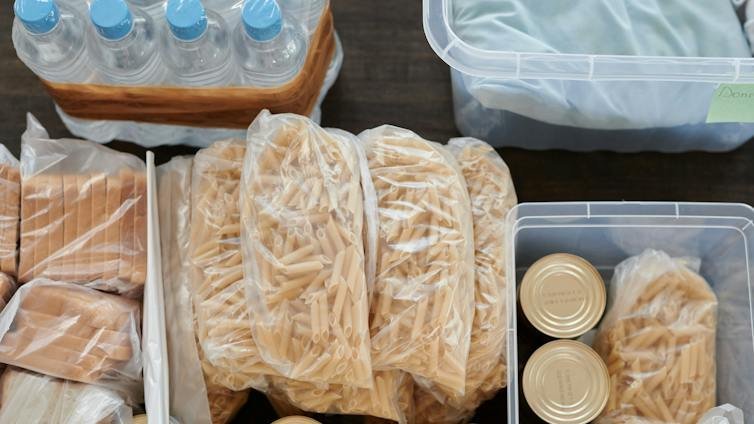
‘Get Ready Now’: Australians Told to Build Emergency Stockpiles as Global Leaders Brace for Disaster, Cyber Chaos and Killer Heatwaves
- Governments across Europe and Asia are already telling citizens to stockpile essentials, but Australia has yet to issue a similar call.
- The Australian Red Cross warns that cyber attacks and failing infrastructure now sit alongside bushfires and floods as threats to households.
- City dwellers are not safe: brutal heatwaves could trap families indoors for days without food, medicine or a way to cool down.
- Experts say a single packed ‘grab bag’ could decide whether a family copes or panics when disaster strikes.
The power cuts out. The phone network drops.
The thermometer climbs past 45 degrees, and the supermarket shelves are already empty.
For millions of Australians, that scenario sounds like fiction. Emergency experts say it is closer than most people think.
Australians are being urged to stop waiting for a government order and start building their own emergency stockpiles now, while overseas governments are already preparing their populations for the worst.
The warning comes from the Australian Red Cross, whose National Resilience Director, Nicola Cray, told Channel Seven’s Sunrise that preparing for emergencies can no longer be treated as an occasional chore.
Ms Cray said the threats facing households had widened sharply. Fire, flood and storm remain the familiar enemies.
Cyber attacks and damaged infrastructure, which can cut off power, communications and supply chains without warning, now join them.
She said Australia was experiencing more extreme and more frequent weather events, and that every household needed to understand the specific hazards facing its own community.
That means knowing local emergency arrangements, working out in advance where you would go if told to evacuate, and identifying trustworthy news sources before a crisis hits.
The centrepiece of her advice is the ‘grab bag’, a pre-packed kit that can be seized at a moment’s notice.
It should hold passports, birth certificates and insurance papers, the documents that become impossible to replace once a home has burned or flooded. It should also hold everything a family would need to survive a night away, or longer.
Medication, Ms Cray stressed, is the single most important item. Torches, battery packs and a first aid kit follow close behind.
Parents are urged to think about children’s needs too. Fiddle toys and playing cards can help keep young ones calm through the long, anxious hours spent in evacuation centres.
The push for preparedness is not happening in isolation.
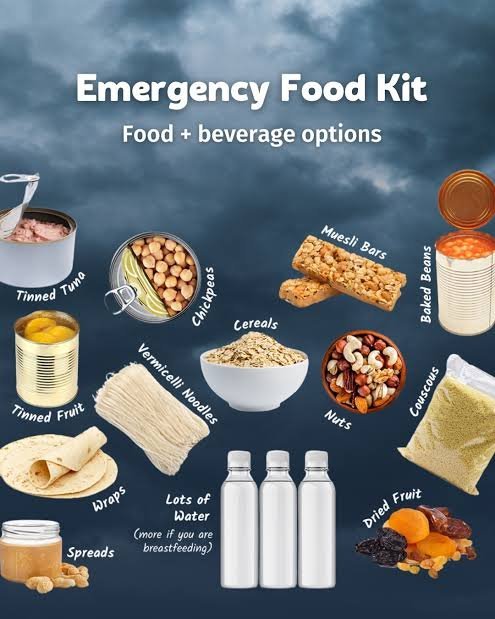
Across Europe and Asia, governments have moved in recent years to tell ordinary citizens to keep stocks of food, water and essentials at home.
Several European nations have revived Cold War-style civil defence messaging, distributing guidance on how households should ride out crises ranging from blackouts to armed conflict.
The European Union has also encouraged residents to be ready to sustain themselves for at least 72 hours.
The shift reflects a sober reassessment of risk. Pandemic-era supply shortages, war in Europe, escalating cyber warfare and record-breaking temperatures have shattered assumptions that modern systems will simply keep running.
Australia has had its own brutal lessons.
The Black Summer bushfires of 2019-20 cut off entire towns, and the catastrophic 2022 floods swamped Lismore and swathes of New South Wales and Queensland.
The nationwide Optus outage in November 2023 showed how quickly a single technical failure can leave people unable to make calls or pay for goods.
Despite this, Canberra has not issued a formal call for households to stockpile.
Analysis: What This Means for Australia
The gap between Australia’s messaging and that of its allies raises uncomfortable questions about national resilience.
From a national security perspective, the threat picture has changed.
The Australian Signals Directorate has repeatedly warned that critical infrastructure, including energy grids, water systems and telecommunications, is a prime target for state-sponsored and criminal hackers.
A successful attack could knock out services for days, and households with no supplies would be among the first to feel it.
For law enforcement and emergency services, preparedness is a force multiplier. Every family that can shelter safely for 72 hours is one fewer call for help when crews are stretched to breaking point.
In a mass-casualty event, that capacity can save lives.
The community impact is perhaps most striking in the cities. Ms Cray warned that urban residents, who often assume disasters happen ‘out bush’, face a growing danger from extreme heat.
She urged city dwellers to ask hard questions. Could you stay indoors for several days during a heatwave?
Do you have groceries? Are your prescriptions filled?
Do you have ice packs? Can your home stay cool, and if not, where would you go?
Heatwaves kill more Australians than any other natural hazard, and the Bureau of Meteorology has documented a clear rise in extremely hot days. The elderly, the chronically ill and people living in poorly insulated rental housing are especially vulnerable.
There are economic and social consequences, too. Panic buying, as seen during the early months of COVID-19, strips shelves bare and leaves the most vulnerable without essentials.
Gradual, planned stockpiling spreads demand over time and helps avoid that chaos. With cost of living pressures still squeezing household budgets, experts suggest building a kit slowly rather than in one expensive shop.
Emergency management observers say the Red Cross message amounts to a quiet challenge to authorities. If Europe and Asia consider household readiness a pillar of national defence, Australia’s approach looks relaxed by comparison.
Security analysts say resilience starts at the kitchen table, not in Parliament House.
They argue that a population able to look after itself in the first days of a crisis is far harder to destabilise, whether the trigger is a cyclone or a cyber strike.
Law enforcement insiders warn that in large-scale emergencies, police, firefighters and paramedics simply cannot reach everyone at once. In the critical first hours, families are often on their own.
Disaster planners believe the psychological benefit is just as important as the physical one. Ms Cray said working through these questions ahead of time gives families a plan, and a plan means less panic when the moment comes.
Community resilience advocates also point to resources from the National Emergency Management Agency and state emergency services, which publish hazard maps and checklists tailored to local risks.
The message from the experts is blunt. Disasters do not send warnings weeks in advance, and the next one may not look like the last.
Australians can wait for an official order to stockpile, or they can pack the grab bag tonight. When the lights go out, it may be the most important thing they ever do.