
‘My Thumb Was Pulled Out of Its Socket’: Sydney Hospitals Become Frontline Battlegrounds as Nurse Suffers Broken Wrist in Alleged Ward Attack, Forcing Government to Rush 129 Extra Guards Into Emergency Departments
- Two nurses, aged 34 and 57, needed medical treatment after an alleged attack by a patient at Concord Hospital, with one left nursing a broken wrist
- Police were not told about the alleged assault until three hours after it happened
- A veteran guard says as few as four officers can be on duty at a 650-bed hospital, and he has the torn tendons to prove how dangerous the job is
- The NSW Government will hire 129 new guards for 27 hospitals but has not yet decided whether to give them stronger powers
They signed up to save lives. Instead, nurses across New South Wales are increasingly walking into shifts wondering whether they will leave with broken bones.
That fear came true on Tuesday at Concord Hospital in Sydney’s inner west, where two women caring for patients were allegedly set upon by the very person they were there to help.
Within a day, the State Government was scrambling to respond.
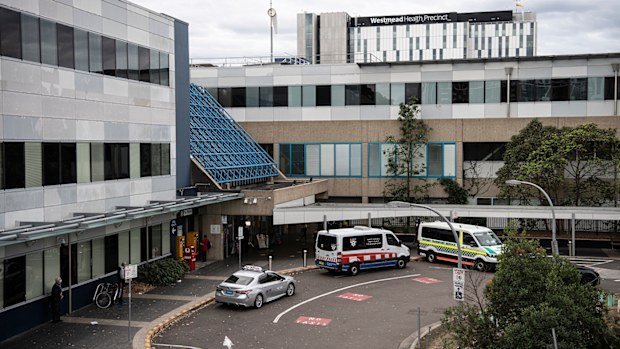
On Wednesday, Health Minister Ryan Park confirmed that 129 additional full-time security officers would be recruited and spread across 27 public hospitals statewide. It is a significant commitment, but for the people already working inside those emergency departments, it comes after years of bruises, bites and close calls.
According to NSW Police, the alleged attacker was a 44-year-old female patient. The two nurses she allegedly assaulted were aged 34 and 57.
Staff managed to restrain the woman before she was sedated.
Officers, however, were not contacted until roughly three hours later, a delay that is likely to raise uncomfortable questions about how violent incidents are reported inside the health system.
Both nurses required treatment. Mr Park revealed one had suffered a fractured wrist, stressing it was far from trivial and had been serious enough to need care.
The patient remains in hospital and police say inquiries are continuing.
For Bruce Rowling, a security officer at Royal North Shore Hospital, none of this is surprising.
He says he has been hurt on duty more times than he can easily count. The worst occasion came when a male patient reacted badly after a doctor told him he was being transferred to a different hospital.
Mr Rowling pinned the man down while staff prepared to sedate him. During the struggle, his thumb was wrenched clean out of its socket, tearing the tendons.
It is the kind of injury that would make headlines in a pub brawl. In a hospital corridor, it is often just another shift.
The numbers explain why. Mr Rowling says a large hospital of around 650 beds will typically have about four guards on duty at any given moment.
The informal benchmark in the industry, he explains, is one guard per 100 people.
But once the thousands of visitors, doctors, nurses, cleaners and administrative staff moving through a major hospital are added to the patient count, that ratio becomes a fantasy.
So why is this boiling over now?
Mr Park points squarely at the changing face of drug use in Australia.
Two decades ago, he notes, heroin dominated the scene, and it affected the body in a very different way from the drugs flooding emergency departments today.
Chief among them is methamphetamine.
The minister conceded patients affected by the drug can present staff and guards with genuinely frightening situations that demand more manpower, and said NSW Health was working closely with NSW Police Force on how such patients are handled once they arrive.
Then there is organised crime. Mr Rowling says Sydney’s ongoing gangland violence has spilled into hospital wards.
When victims of underworld violence are admitted, their associates often follow, and rival camps do not always keep the peace in the waiting room.
When police lack the resources to stand watch over such patients, he says, hospital guards are left to pick up the slack.
The busiest emergency departments, including Westmead, Prince of Wales and Royal North Shore, record the highest number of violent incidents.
Analysis: What This Means for Australia
This is not just a story about one hospital in Sydney. It is a warning about the fragility of the public services Australians take for granted.
Emergency departments are the one place in the country that cannot turn anyone away. That makes them a pressure valve for every social problem the nation has failed to solve, from addiction and mental illness to organised crime.
When that valve is overwhelmed, the consequences ripple outwards. Injured nurses take leave.
Exhausted staff quit. Rosters thin out, wait times blow out, and ordinary families sitting in waiting rooms with sick children end up paying the price.
The workforce implications are stark. Australia’s nursing shortage is already well documented, and every assault makes it harder to persuade experienced clinicians to stay on the frontline.
There is a legal dilemma too. Mr Rowling points out that despite their training, guards hold no more authority than any member of the public.
They can order a troublemaker to leave, but that option evaporates when the aggressor is a critically ill patient who cannot simply be thrown onto the street.
Mr Park says the Government has not made up its mind on expanding those powers, acknowledging that doing so brings its own complications. Civil liberties, patient rights and the risk of excessive force will all weigh heavily in that debate.
Health Services Union secretary Gerard Hayes believes the extra staff will shift hospitals from reacting to violence towards stopping it before it starts, which he described as the single most important change.
He went further, describing a hospital as a miniature version of the wider community, and warning that the community itself is under mounting strain and growing more anxious.
Security analysts say that observation should alarm policymakers well beyond the health portfolio.
If hospitals mirror society, the rising violence inside them reflects stresses linked to the cost of living crisis, stretched mental health services and an entrenched methamphetamine problem.
Law enforcement insiders warn that hospitals cannot be expected to absorb the fallout of criminal feuds without proper backup, and that the reliance on guards to babysit patients connected to violent crime is a gap that will eventually be exploited.
Industry observers believe 129 new hires is a meaningful start, but caution that spread across 27 sites it amounts to fewer than five extra officers per hospital on average, before shift rotations are taken into account.
Workplace safety advocates are also likely to scrutinise the three-hour delay in alerting police over the Concord incident, arguing that prompt reporting is essential if offenders are to face consequences and if SafeWork NSW is to understand the true scale of the problem.
For now, the message from the frontline is blunt. The people who care for Australians at their most vulnerable deserve to go home in one piece.
Whether 129 new guards can deliver that promise remains to be seen.