
US President Donald Trump’s Health Under Scrutiny: A Deep Dive into the Latest Medical Report
- Donald Trump’s doctor declares the US President “fully fit” to carry out his duties despite gaining 6kg in the past year
- Trump’s medical report reveals a range of health concerns, including a high BMI, swollen legs, and bruising on his hands
- Experts raise questions about the President’s lifestyle and diet, despite his claims of being in “excellent health”
- What does this mean for Australia? We examine the implications of a potentially unhealthy US President on global politics and diplomacy
US President Donald Trump has been given a clean bill of health by his doctor, Sean Barbabella, after a comprehensive medical examination at Walter Reed National Military Medical Center.
However, a closer look at the report reveals a range of health concerns that have sparked debate among experts and raised questions about the President’s lifestyle and diet.
The report, which was released on Friday, states that Trump is “demonstrating strong cardiac, pulmonary, neurological, and overall physical function”. However, it also notes that the President has gained 6kg in the past year, bringing his weight to 108kg.
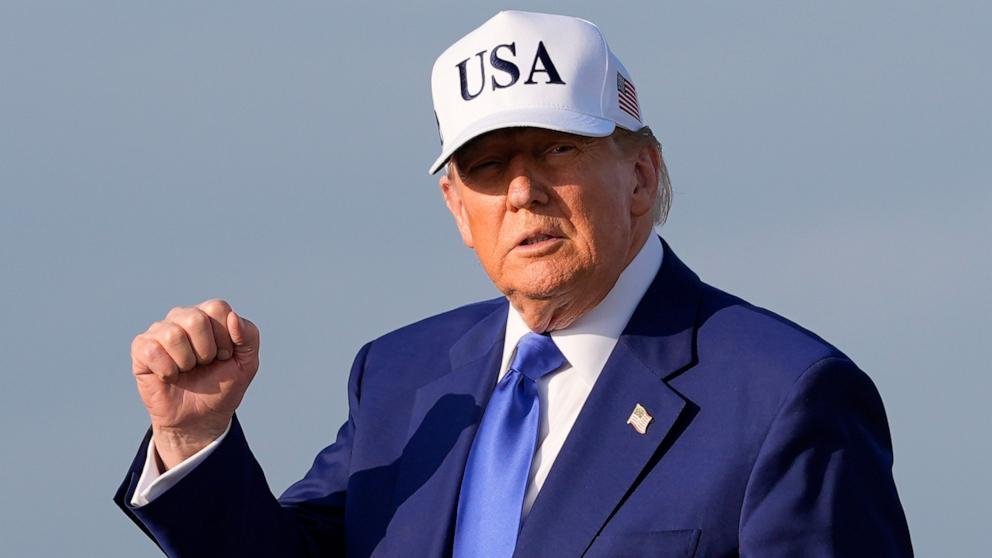
This has resulted in a body mass index (BMI) of 29.7, which is just shy of the 30 mark that is considered obese.
Trump’s resting heart rate was 73 beats per minute, which is slightly below the normal range for men over 70. His blood pressure was 105/71mmHg, which is considered healthy for someone under the age of 39.
However, experts have pointed out that this is not necessarily a cause for celebration, given the President’s age and medical history.
The report also notes that Trump has scarring on his right ear consistent with a prior gunshot injury, as well as swelling on his lower leg.
However, the doctor found no abnormalities in his eyes, head, nose, throat, neck, lungs, abdomen, and urinary system.
Trump’s cognitive function was assessed using the Montreal Cognitive Assessment (MoCA), in which he scored a perfect 30 out of 30. However, some experts have questioned the validity of this test, given the President’s well-documented history of boastful claims and questionable decision-making.
Analysis: What This Means for Australia
The health of the US President has significant implications for global politics and diplomacy. As one of the world’s most powerful leaders, Trump’s fitness to serve is of utmost importance.
If his health were to deteriorate, it could have far-reaching consequences for international relations and global stability.
For Australia, a potentially unhealthy US President could mean increased uncertainty and unpredictability in our diplomatic relationships. As a key ally of the US, Australia relies on a stable and secure partnership to underpin our national security and economic interests.
Law enforcement insiders warn that a compromised US President could also have implications for global security, particularly in the context of counter-terrorism and cybersecurity. “A healthy and alert President is crucial for making swift and informed decisions in times of crisis,” said one expert.
Industry observers believe that Trump’s health concerns could also have economic implications for Australia.
“A US President in poor health could lead to market volatility and instability, which could have a ripple effect on the global economy,” said one analyst.
Ultimately, the health of the US President is a matter of public interest and concern. As the world watches with bated breath, one thing is clear: the stakes are high, and the implications are far-reaching.
US politics health crisis American Heart Organization