
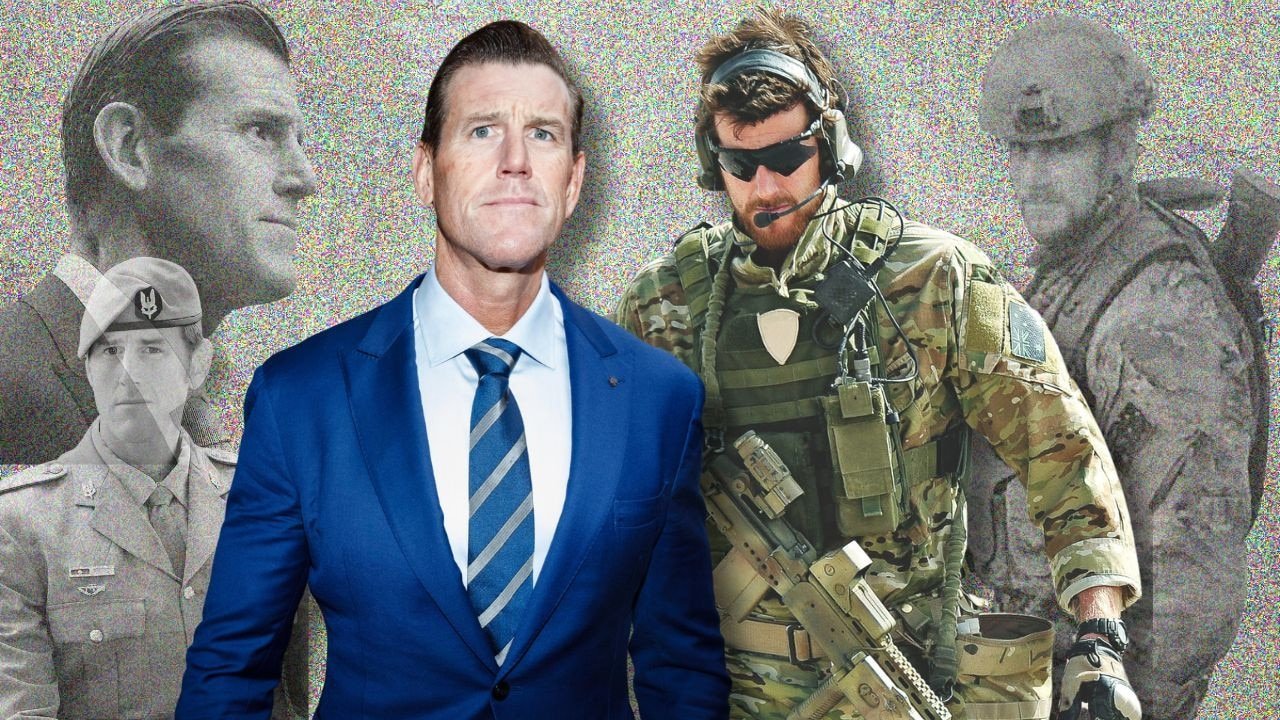
‘I Haven’t Done the Wrong Thing’: Ben Roberts-Smith Breaks His Silence and Reclaims His SAS Call Sign for a Business Venture While Facing Five War Crimes Murder Charges and Years-Long Wait for Trial
- Australia’s most decorated living soldier, now 47, faces five counts of war crimes murder over alleged killings of unarmed Afghan detainees, and he could wait five to seven years on bail before his trial begins.
- The Victoria Cross recipient has relaunched his old military radio call sign as a commercial brand, EPIC 1 TWO, saying the media made millions from his name while employers abandoned him.
- He has revealed that the pressure once drove him to “absolute rock bottom”, to the point of planning his own death, before his partner refused to let him walk away.
- Roberts-Smith denies every allegation, insisting each engagement was lawful and that no civilians died.
He was once the face of Australian valour, a towering SAS corporal whose Victoria Cross made him a national symbol of courage under fire.
Today, Ben Roberts-Smith is fighting a different kind of war.
It is being waged in courtrooms and newsrooms rather than in Afghanistan’s Uruzgan province, and its outcome could reshape how Australia reckons with the conduct of its most elite soldiers.
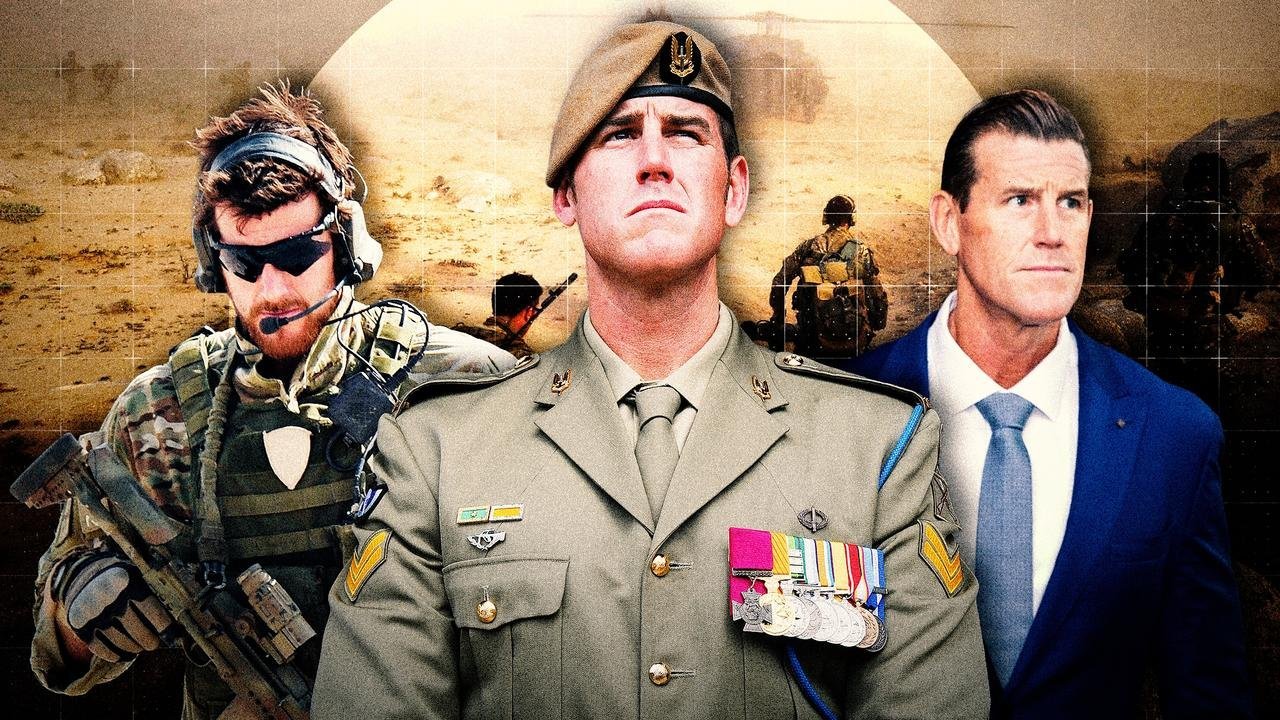
His body tells part of the story. The heavy, muscle-bound frame that defined him in uniform has thinned.
In its place is a leaner, more weathered physique shaped by years of relentless legal pressure.
He no longer lifts heavy weights. Swimming laps and high-volume cardio have replaced the punishing strength regimes and Brazilian Jiu-Jitsu sessions that filled his downtime at SAS camps.
He describes the routine not as military preparation but as a mental release, a way of clearing his head and getting through each day under strict bail conditions and electronic monitoring.
The stakes could hardly be higher.
After a joint investigation by the Australian Federal Police and the Office of the Special Investigator, the Commonwealth Director of Public Prosecutions has charged the 47-year-old with five counts of war crimes murder.
Prosecutors allege that during SAS deployments to Afghanistan between 2009 and 2012, he killed, or ordered the killing of, five unarmed Afghan detainees. If convicted, he faces the prospect of life in prison.
Roberts-Smith is legally barred from discussing the specifics until he faces court. He maintains, however, that every engagement was legitimate, that the people involved were Taliban members or associates, and that no civilians were killed.
The charges have not been tested at trial, and he is entitled to the presumption of innocence.
Speaking to news.com.au in his first sit-down interview in years, Roberts-Smith has now done what he long avoided. He has stepped back into public view.
He is launching EPIC 1 TWO, a commercial brand built on his old military radio call sign. He frames it as a matter of financial survival.
After a decade of avoiding the media, he said, he watched outlets, authors and documentary makers earn millions from his story. Meanwhile, organisations willing to back him came under pressure to cut ties, and corporate employment dried up.
He says he simply has to find a way to support his family.
The reaction has been swift and divided. Commentators, legal experts and newsrooms across the country have weighed in on his motives and his timing.
The criminal charges did not come out of nowhere.
They follow years of scrutiny of Australian special forces conduct in Afghanistan, including the landmark Brereton inquiry, whose 2020 report found credible information about the alleged unlawful killing of 39 Afghan civilians and prisoners.
Roberts-Smith’s own name became entangled in that reckoning through the defamation trial he launched against Nine newspapers.
In 2023 the Federal Court found, on the civil standard of the balance of probabilities, that the newspapers had established the substantial truth of key murder allegations.
His subsequent appeals failed.
That legal distinction matters enormously. A civil finding is not a criminal conviction.
In a criminal trial, prosecutors must prove guilt beyond reasonable doubt, a far higher bar.
The personal toll has been devastating.
Roberts-Smith revealed that at his lowest point he planned to end his life, believing it would spare his family the fallout and the presumption of guilt hanging over them.
He tried to end his relationship with partner Sarah Matulin to protect her.
She refused.
In her first interview alongside him, Matulin said she told him that unless he had stopped loving her, there was no reason to separate, and that life not turning out as planned was not good enough grounds.
The couple met after his defamation proceedings had already begun. She said she never knew the celebrity soldier of gala dinners and public adulation.
He said he loved that she had no idea who he was.
At home in Brisbane, she describes a playful, goofy man who laughs with his twin teenage daughters, a side the public rarely sees behind his hardened exterior.
He also spoke of the nine nights he spent in Silverwater prison, where, within hours of arriving, he was doing push-ups on the floor of a suicide cell.
Analysis: What This Means for Australia
This case is about far more than one man.
It is a test of whether Australia can hold its own forces to account under international law, and of how the nation is seen by its allies and by the world.
For national security, the implications run deep.
Australia’s credibility as a defender of the rules-based order depends on showing that alleged war crimes are investigated and prosecuted at home rather than quietly buried.
The projected five-to-seven-year wait for trial raises serious questions of its own. Justice delayed weighs on the accused, on the families of Afghan victims seeking answers, and on veterans living under a cloud of collective suspicion.
Within the Australian Defence Force, morale and recruitment remain sensitive issues. Many serving and former personnel feel the shadow of the Afghanistan inquiries keenly, whatever their own records.
There is a social dimension too. Roberts-Smith’s commercial push will polarise a public already split between those who see a persecuted hero and those who see accountability finally catching up.
Legal observers say the extended timeline reflects the extraordinary complexity of prosecuting alleged battlefield crimes committed thousands of kilometres away, more than a decade ago, with witnesses scattered across continents.
Defence analysts warn that the outcome will be watched closely by allied militaries and human rights bodies alike, and could set a precedent for future investigations by the Office of the Special Investigator.
Media law commentators believe his decision to monetise his call sign while awaiting trial is legally permissible but carries reputational risk. Any public comment that strays near the allegations could complicate proceedings.
Veterans’ advocates, meanwhile, point to his admission of suicidal planning as a stark reminder of the mental health crisis among former service personnel, whatever the outcome of the case.
For now, Roberts-Smith insists he will not be driven into hiding. He says he gets up each morning because he believes he did nothing wrong, and that he gave everything he had to the job.
He would not, he says, change a thing.
A jury may one day decide whether that belief holds.
If you or someone you know needs support, contact Lifeline on 13 11 14.