
Elon Musk’s $1.4 Trillion Empire: The Staggering Reality of the World’s First Trillionaire
- Elon Musk’s net worth has surpassed $1 trillion, making him the world’s first trillionaire, with a fortune that dwarfs the combined wealth of the next three richest men.
- Musk’s wealth is equivalent to the GDP of Taiwan, Belgium, and Ireland, and could fund the entire Australian budget with room to spare.
- The tech titan’s fortune has sparked concerns about wealth inequality, with more than half of Australians believing billionaires are creating an unfair society.
- Musk’s trillion-dollar empire raises questions about the value of his companies and the impact of his wealth on the global economy.
Imagine a single person having more money than the entire economy of a small country. It’s a staggering reality that has become a harsh truth with the rise of Elon Musk, the world’s first trillionaire.
With a net worth of over $1.4 trillion, Musk’s empire has surpassed the combined wealth of the next three richest men, including Google co-founders Larry Page and Sergey Brin, and Amazon’s Jeff Bezos.
Musk’s fortune is not just a number; it’s a symbol of the unprecedented wealth inequality that has sparked concerns globally.
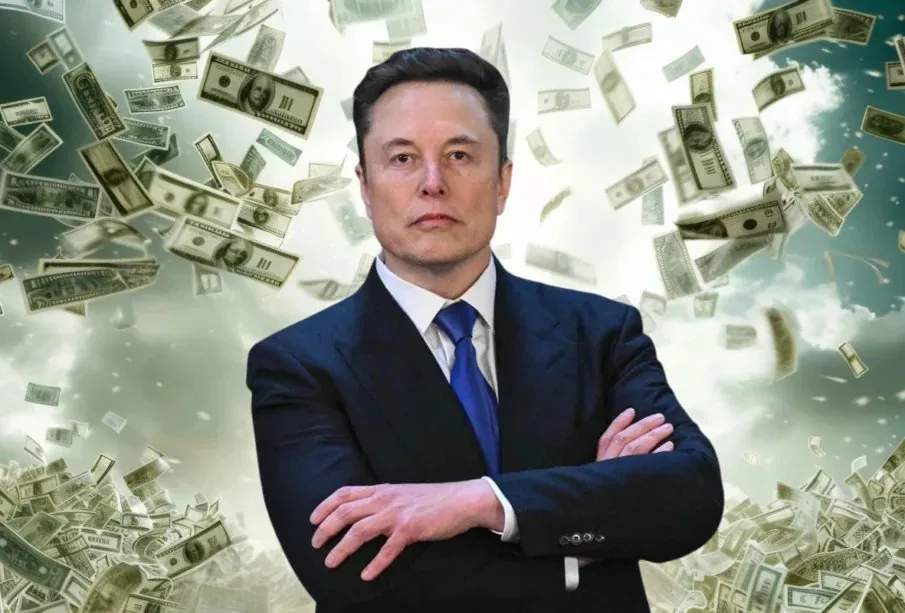
In Australia, more than half of the population believes that billionaires are creating an unfair society, with 62% thinking that they are not doing enough with their fortune to better society.
The concentration of wealth has raised questions about the tax system and the responsibility of the ultra-rich to contribute to society.
So, how did Musk’s wealth grow to such astronomical levels? The answer lies in the success of his companies, including SpaceX, Tesla, and Neuralink.
The recent float of SpaceX on the Nasdaq exchange has been a major contributor to his wealth, making it the biggest initial public offering in history.
However, the valuation of his companies has also raised eyebrows, with some questioning whether the figures are inflated.
Historically, the accumulation of vast wealth has been a recurring theme, from ancient empires to modern-day billionaires.
However, the current era has been dubbed the “second Gilded Age,” with the rise of tech giants and the concentration of wealth in the hands of a few individuals.
Economic historian Cameron Gordon notes that the real-world output of these billionaires is more abstract than that of industrialists like John D. Rockefeller, making it challenging to determine the actual value of their fortunes.
Analysis: What This Means for Australia
The implications of Musk’s trillion-dollar empire on Australia are multifaceted. On one hand, his wealth could fund the entire Australian budget, with room to spare.
On the other hand, the concentration of wealth raises concerns about inequality and the responsibility of the ultra-rich to contribute to society.
As the Australian National University School of Politics head Nicholas Biddle notes, “The vast majority do not see this concentration of wealth as being good either for society or good for the economy.”
Security analysts say that the rise of trillionaires like Musk highlights the need for a re-evaluation of the tax system and the regulation of large corporations.
“The cycle of wealth concentration is perpetuating inequality, and it’s essential that we address this issue to ensure a more equitable society,” says one analyst.
As Musk’s empire continues to grow, it’s clear that his trillion-dollar fortune will have far-reaching implications for Australia and the world. Whether he chooses to use his wealth to address global challenges like hunger and climate change remains to be seen.
One thing is certain, however – the world will be watching as Musk’s empire continues to shape the global economy.