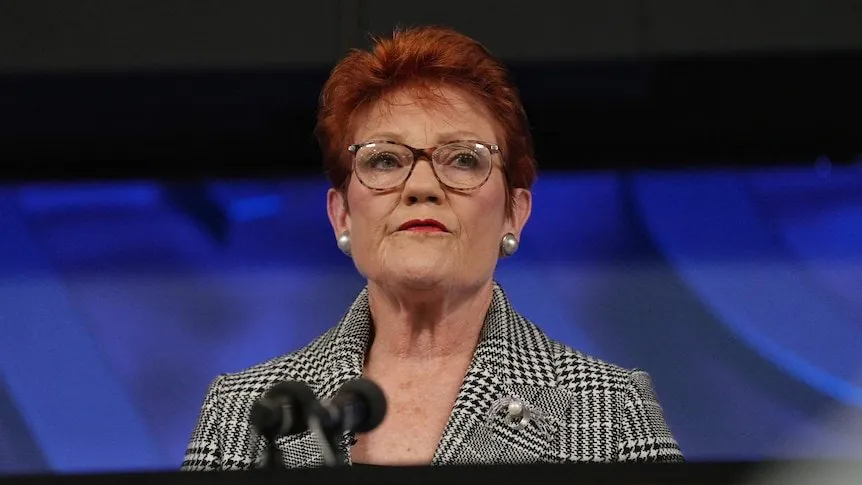
Australian Soccer Star Slams Pauline Hanson’s Multiculturalism Comments as ‘Upsetting’ and ‘Wrong’
- Socceroos winger Nestory Irankunda reveals teammates were upset by One Nation leader’s comments during World Cup
- Irankunda, a refugee from Burundi, says Hanson’s words were ‘hard to avoid’ and ‘put us in the wrong category’
- Senator Hanson claims Socceroos represent her vision of a monocultural Australia, sparking outrage among players
- Irankunda joins teammate Awer Mabil in speaking out against Hanson’s comments, saying they don’t reflect Australia’s multicultural society
As the Socceroos took to the field at the World Cup in North America, a firestorm was brewing back home.
One Nation leader Pauline Hanson’s comments on multiculturalism had sparked outrage among the team, with star winger Nestory Irankunda revealing that many of his teammates were deeply upset by her words.
Irankunda, who was born in a refugee camp in Tanzania to Burundian parents, told 702 ABC Sydney that Hanson’s comments were “hard to avoid” and “put us in the wrong category”.
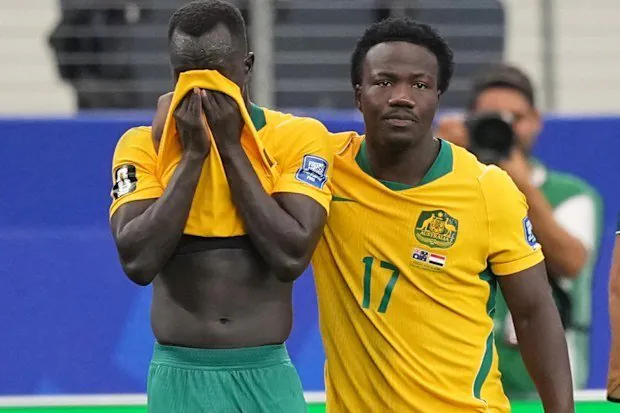
The 17-year-old, who has just signed with Portuguese side Sporting CP for a reported $26 million, said he tried to stay off social media during the tournament, but couldn’t escape the senator’s comments.
Hanson’s speech at the National Press Club in June called for an end to Australia’s decades-old policy of multiculturalism, sparking widespread condemnation.

The senator later claimed that the Socceroos represented her vision of a monocultural Australia, saying that players from different backgrounds and cultures were all “wearing the green and gold and representing one nation under one flag”.
But Irankunda and his teammate Awer Mabil have both spoken out against Hanson’s comments, saying they don’t reflect the reality of Australia’s multicultural society.
Mabil, who addressed the issue when he returned from the tournament in July, declared that the team was not distracted by the controversy and that it was “all bullshit” to suggest Australia was not a multicultural society.
As Australia grapples with the implications of Hanson’s comments, experts warn that her rhetoric could have serious consequences for the country’s social cohesion and national security.
“Comments like Hanson’s can be incredibly damaging, particularly for young people from diverse backgrounds,” says Dr. Anne Aly, a counter-terrorism expert and federal MP.
“They can create a sense of exclusion and marginalization, which can be exploited by extremist groups.”
Analysis: What This Means for Australia
Hanson’s comments have sparked a heated debate about multiculturalism and national identity in Australia. But what do they really mean for the country?
Security analysts say that Hanson’s rhetoric could have serious implications for national security, as it can create divisions and tensions within communities. “Comments like Hanson’s can be used as a recruitment tool by extremist groups, who prey on feelings of exclusion and marginalization,” says one analyst.
Law enforcement insiders warn that Hanson’s comments could also have implications for community safety, as they can create an “us versus them” mentality. “When you start to divide people along cultural and ethnic lines, you create an environment in which tensions can escalate,” says one senior police officer.
Industry observers believe that Hanson’s comments could also have economic consequences, as they can damage Australia’s reputation as a welcoming and inclusive society. “Australia’s multiculturalism is one of its greatest strengths, and comments like Hanson’s can undermine that,” says one business leader.
As the debate rages on, one thing is clear: Hanson’s comments have sparked a national conversation about what it means to be Australian. But as Irankunda and Mabil’s comments show, the reality of Australia’s multicultural society is far more complex and nuanced than Hanson’s simplistic rhetoric.