Migration Mayhem: One Nation’s Shocking Rise to Power as Labor’s Policy Overhaul Stalls
- Prime Minister Anthony Albanese confirms migration policy overhaul is not on the agenda for national cabinet, despite growing concerns from voters
- One Nation’s popularity surges as Labor’s delays spark fears of a population explosion and job shortages
- Exclusive polling reveals immigration is the top concern for One Nation supporters, with 91% saying the country is heading in the wrong direction
- Opposition Leader Angus Taylor vows to slash migration numbers, citing housing shortages as a key indicator of the country’s capacity to cope
The Australian government’s migration policy overhaul has hit a roadblock, with Prime Minister Anthony Albanese revealing it’s not on the agenda for the national cabinet meeting in Perth.
The delay has sparked fears of a population explosion and job shortages, with One Nation capitalizing on the uncertainty to surge in popularity.
The government had promised to unveil changes to its migration settings in a speech by the home affairs minister at the National Press Club earlier in August.
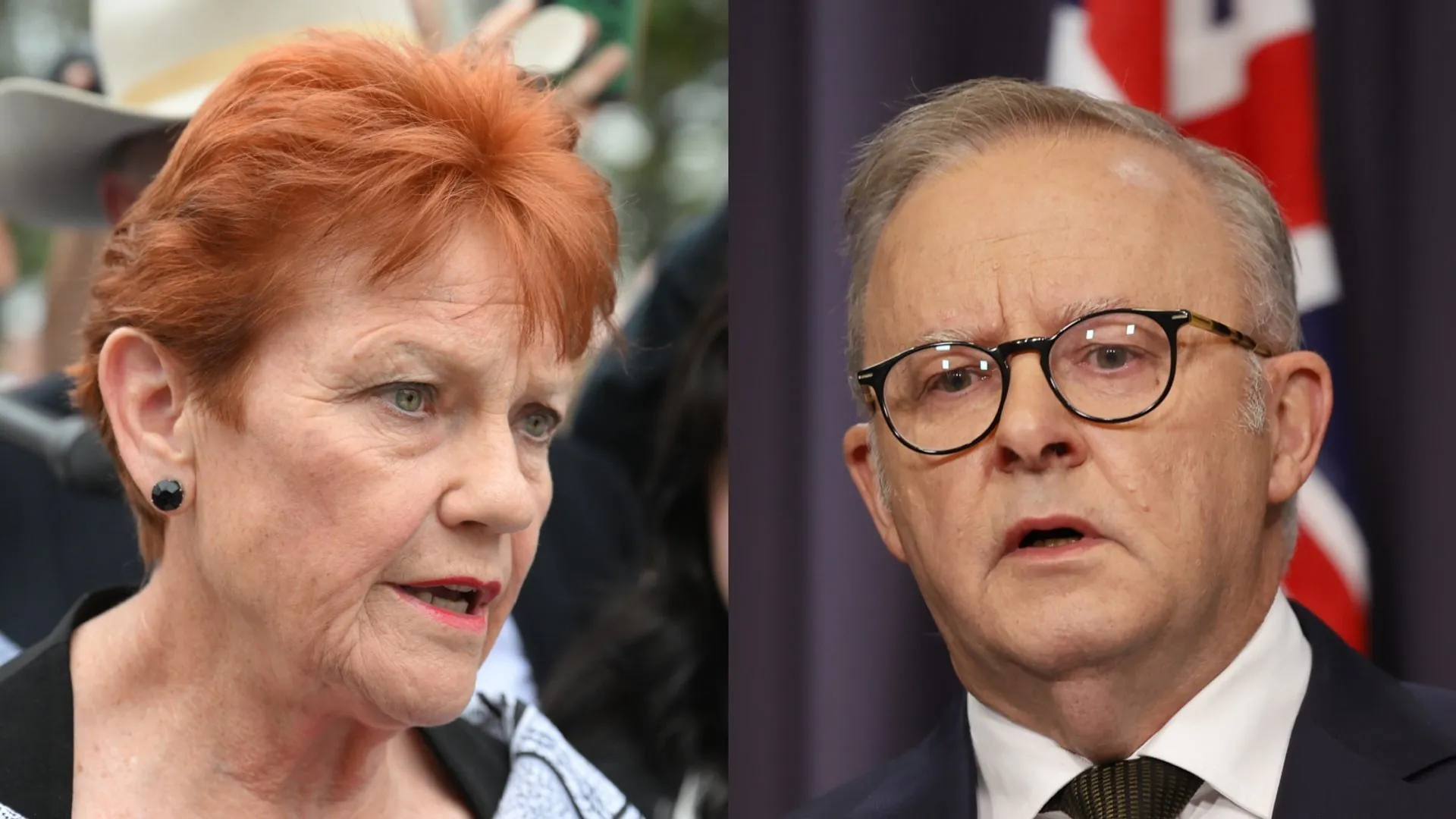
However, the address was cancelled at the eleventh hour due to internal division within the cabinet. The prime minister has since confirmed that the policy is still in the works, but refused to provide a timeline for its release.
Meanwhile, One Nation’s migration policy is gaining traction, with the party’s leader, Senator Pauline Hanson, committing to a target of 130,000 people per year.



However, One Nation MP David Farley sparked controversy by claiming the party’s figures would include an extra 100,000 people annually, on top of the 130,000 already committed to.
The comments prompted an intervention from Senator Hanson on social media, stating the party remained committed to the original target.
The incident has highlighted the confusion and division within One Nation on migration policy, with Prime Minister Albanese seizing on the opportunity to attack the party’s coherence.
‘One Nation on Sunday pointed out the hypocrisy when they said 130,000 plus an additional more than 100,000 because you need essential workers in aged care, in agriculture, in all of these areas as well,’ he said.
However, Labor MP Dan Repacholi has conceded that concerns from the One Nation MP about migrants working in regional communities not being impacted by migration policy changes are valid.
‘David Farley’s right, we do need to make sure that we’re looking after people in rural and regional Australia,’ he told Nine’s Today program.
As the debate rages on, the Australian people are left wondering how to balance the need for skilled migrants with growing concerns about population and jobs.
The Utting Research poll has revealed that immigration is the top concern for One Nation supporters, with 91% saying the country is heading in the wrong direction.
The poll also found that 39% of those who switched allegiances to One Nation cited immigration as the main reason for their decision.
Analysis: What This Means for Australia
The delay in the government’s migration policy overhaul has significant implications for Australia’s national security, law enforcement, and community safety.
The lack of clarity on migration numbers and the confusion within One Nation on the issue raises concerns about the country’s ability to manage its borders and ensure the integrity of its immigration system.
Security analysts say that the government’s failure to provide a clear and coherent migration policy is a major concern, particularly in light of the rising popularity of One Nation.
‘The government needs to get its act together on migration policy and provide a clear direction for the country,’ said one analyst. ‘The uncertainty and confusion are creating a vacuum that is being filled by extremist parties like One Nation.’
Law enforcement insiders warn that the delay in the migration policy overhaul is also having a significant impact on the country’s ability to manage its borders and prevent the entry of potential security threats.
‘The government’s failure to provide a clear migration policy is making it difficult for us to do our job effectively,’ said one insider. ‘We need a clear direction on who is coming into the country and why.’
Industry observers believe that the delay in the migration policy overhaul is also having a significant impact on the country’s economy, particularly in the construction and agriculture sectors.
‘The uncertainty around migration numbers is making it difficult for businesses to plan for the future,’ said one observer. ‘We need a clear direction on migration policy to ensure that we can attract the skilled workers we need to grow the economy.’
In conclusion, the delay in the government’s migration policy overhaul has significant implications for Australia’s national security, law enforcement, and community safety.
The government needs to provide a clear and coherent migration policy to address the concerns of the Australian people and ensure the integrity of the country’s immigration system.