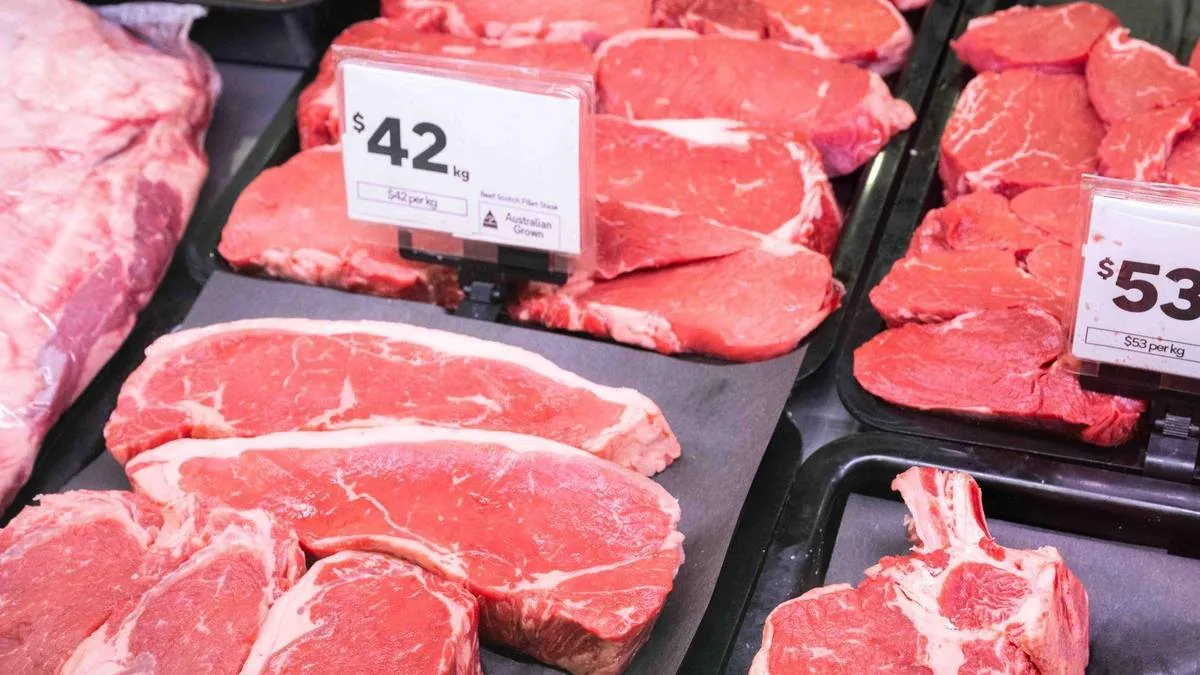
Woolworths Abandons Tasmanian Beef: The Devastating Blow to Local Farmers as Supermarket Giant Cites Soaring Costs
- Tasmanian beef cattle farmers dealt a crushing blow as Woolworths confirms it will no longer sell local beef in its stores from 2027
- Rising production and shipping costs across Bass Strait cited as reason for supermarket giant’s decision
- Tasmanian farmers say loss of contract with Woolworths is a “kick in the guts” and will have far-reaching consequences for the industry
- Woolworths to continue buying Tasmanian beef until end of 2026, but local farmers fear for their future
In a devastating blow to Tasmanian beef cattle farmers, supermarket giant Woolworths has confirmed it will no longer sell local beef in its stores from 2027.
The decision, which has been attributed to rising production and shipping costs across Bass Strait, has left farmers reeling and fearing for their future.
Woolworths has been a major buyer of Tasmanian beef, with a contract that has provided security for local farmers in an increasingly volatile market.
However, the supermarket giant has cited the high cost of shipping cattle across the Bass Strait and processing them on the mainland as the reason for its decision.
Tasmanian farmer Jerrod Nichols, who has supplied 40 cattle a fortnight to Woolworths over the past two years, said the loss of the contract was a “kick in the guts” for local producers.



“Having the security of a Woolworths contract has been paramount in investing in the industry amid a fluctuating market,” Mr Nichols said. “But I’m not surprised by the decision.
The model was probably unsustainable, with the high cost of shipping and processing on the mainland.” Mr Nichols said he would need to explore alternative options, including locking in a fixed number with other processors, to ensure the future of his farm.
The decision by Woolworths is the latest blow to Tasmanian farmers, who are already struggling with the cost-of-living crisis.
Chair of TasFarmers’ Livestock Council and Red Meat & Wool Committee George Shea said farmers were under pressure to be proactive in marketing their stock and looking for their best options.
“Unfortunately, we don’t have the same number of options as they do on the mainland,” Mr Shea said. “You just have to make the best of what you can.”
Woolworths has said it will work with affected farmers to support them through the transition period, but the decision has sparked concerns about the future of the Tasmanian beef industry.
The supermarket giant’s exit from the local market will leave a significant gap, with fellow supermarket giant Coles already not buying Tasmanian beef. Coles does, however, buy Tasmanian lamb, which it says supports local farmers and brings high-quality lamb to customers across the east coast.
Analysis: What This Means for Australia
The decision by Woolworths to abandon Tasmanian beef has significant implications for the Australian beef industry as a whole. With Tasmanian farmers already struggling to compete with mainland producers, the loss of a major buyer like Woolworths will only exacerbate the problem.
The decision also highlights the challenges faced by rural industries in Australia, where the cost of transportation and logistics can be prohibitively expensive.
Security analysts say the decision by Woolworths is a wake-up call for the Australian government to address the issue of rural transportation costs.
“The fact that Woolworths is citing high shipping costs as the reason for its decision is a clear indication that something needs to be done to support rural industries,” said one analyst.
“The government needs to look at ways to reduce the cost of transportation and logistics for rural producers, or risk seeing more industries like Tasmanian beef struggle to compete.”
Law enforcement insiders warn that the decision by Woolworths could also have implications for food security in Australia. “If we’re not supporting local producers, we’re relying on imported goods, which can be a risk to our food security,” said one insider.
“We need to be supporting local industries and ensuring that we have a robust and sustainable food system in place.”