Australia On High Alert As Mysterious Plague Outbreak In Russia Sparks Fears Of Global Pandemic And Biological Warfare
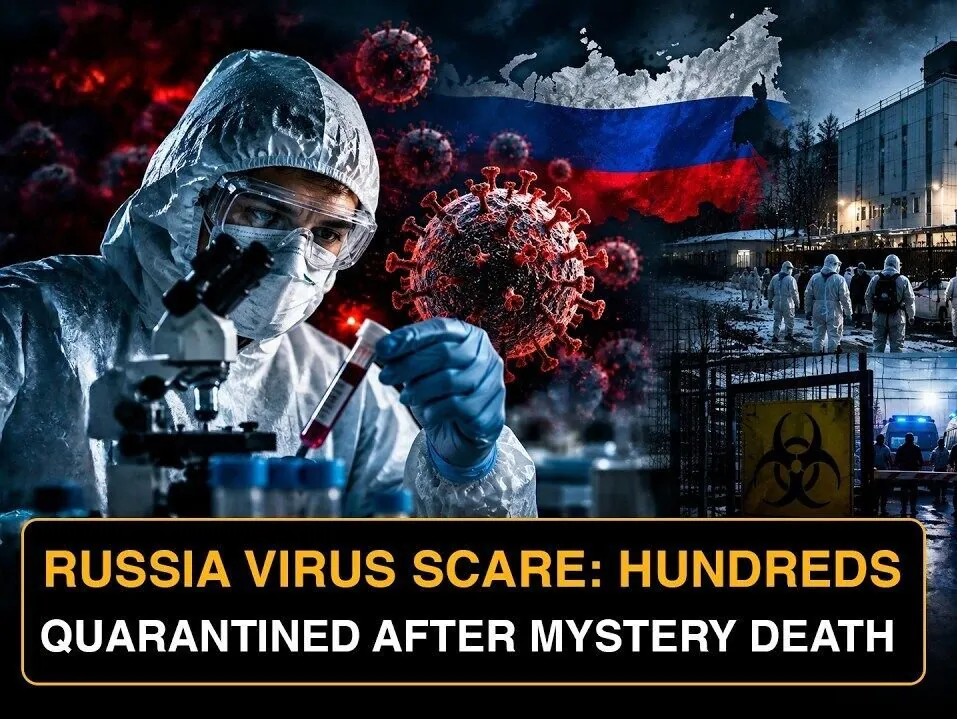
- A suspected plague outbreak in Russia has left two people dead and over 200 quarantined, sparking fears of a potential lab leak and biological warfare
- The Kremlin is keeping details of the outbreak shrouded in secrecy, fuelling concerns about the true extent of the crisis and the risk of it spreading to other countries
- Australia is closely monitoring the situation, with the federal government insisting there is no elevated risk to the public, but experts warn that the country’s preparations for a potential outbreak may be put to the test
- The World Health Organisation has confirmed that antibiotics can treat the plague, but the lack of transparency from Russian authorities has raised concerns about the effectiveness of the global response to the crisis
The news of a suspected plague outbreak in Russia has sent shockwaves around the world, with Australia keeping a close eye on the situation as it unfolds.
The federal government has insisted that there is no elevated risk to the public, but the lack of transparency from Russian authorities has raised concerns about the true extent of the crisis.
With over 200 people quarantined and two reported deaths, the situation is being closely monitored by health experts and government officials around the world.

The outbreak is believed to have originated at a lab in Siberia, where a worker studying the plague suddenly died.
The Kremlin has denied that the lab was involved in biological warfare, but the lack of information about the outbreak has fuelled concerns about the potential for a lab leak.




The Australian Centre for Disease Control is working closely with international counterparts to gather more information about the outbreak and assess the risk to the public.
As Deputy Prime Minister Richard Marles noted, “We don’t yet have the full picture of this event,” and the lack of verifiable information has made it difficult to determine the true extent of the crisis.
The plague is a highly infectious and deadly disease that can be spread through the air, making it a significant threat to public health. Australia’s last case of plague was over a century ago, but the country still prepares for the possibility of an outbreak.
The Health Department lists the plague as a biological weapons risk, and an attack or natural outbreak would trigger a National Health Response. This would involve hospitalising and isolating suspected cases, monitoring close contacts, and providing preventative antibiotics.
The government also maintains secret medical stockpiles in preparation for a potential outbreak, with locations and contents kept under wraps.
According to Dr Maria Van Kerkhove, WHO Pandemic Management Director, “There are antibiotics that can treat against this, so if anyone does have an infection with plague, it can be treated.” However, the lack of transparency from Russian authorities has raised concerns about the effectiveness of the global response to the crisis.
As the situation continues to unfold, it is clear that the international community will be watching closely to see how the outbreak is handled and what measures are taken to prevent its spread.
Security analysts say that the suspected plague outbreak in Russia has significant implications for national security, particularly in the context of biological warfare.
The lack of transparency from Russian authorities has raised concerns about the potential for a lab leak, and the fact that the lab was studying the plague has sparked fears about the possibility of a deliberate release.
Law enforcement insiders warn that the outbreak highlights the need for increased vigilance and cooperation between countries to prevent the spread of infectious diseases.
As one expert noted, “The plague is a highly infectious and deadly disease that can be spread through the air, making it a significant threat to public health and national security.”
Analysis: What This Means for Australia is a critical question that needs to be addressed.
The suspected plague outbreak in Russia has significant implications for Australia’s national security, public health, and economic stability.
The country’s preparations for a potential outbreak may be put to the test, and the lack of transparency from Russian authorities has raised concerns about the effectiveness of the global response to the crisis.
The Australian government needs to take a proactive approach to addressing the situation, including increasing surveillance and monitoring, providing clear and timely information to the public, and working closely with international counterparts to prevent the spread of the disease.
Industry observers believe that the suspected plague outbreak in Russia is a wake-up call for Australia to review its preparedness for a potential pandemic.
The country needs to ensure that it has adequate medical stockpiles, a robust public health system, and effective communication strategies in place to respond to a potential outbreak.
As one expert noted, “The plague is a highly infectious and deadly disease that can be spread through the air, making it a significant threat to public health and national security.” The Australian government needs to take a proactive approach to addressing the situation and ensuring that the country is prepared for any potential risks.
In the context of national security, the suspected plague outbreak in Russia has significant implications for Australia’s ability to respond to a potential pandemic.
The country needs to ensure that it has adequate measures in place to prevent the spread of infectious diseases, including increased surveillance and monitoring, as well as effective communication strategies.
The Australian government also needs to work closely with international counterparts to share information and coordinate a response to the crisis.
As World Health Organisation notes, “The plague is a highly infectious and deadly disease that can be spread through the air, making it a significant threat to public health and national security.”
In conclusion, the suspected plague outbreak in Russia is a significant concern for Australia, with implications for national security, public health, and economic stability.
The country needs to take a proactive approach to addressing the situation, including increasing surveillance and monitoring, providing clear and timely information to the public, and working closely with international counterparts to prevent the spread of the disease.
By taking a proactive approach, Australia can ensure that it is prepared for any potential risks and can respond effectively to a potential pandemic.