Police Under Fire: Explosive Hearings Expose Use Of Force At Sydney Protest As Watchdog Probes Allegations Of Brutality And Misconduct
- A young woman suffered convulsive seizures after being pepper sprayed by police during a protest at Sydney’s Town Hall, sparking outrage and calls for accountability
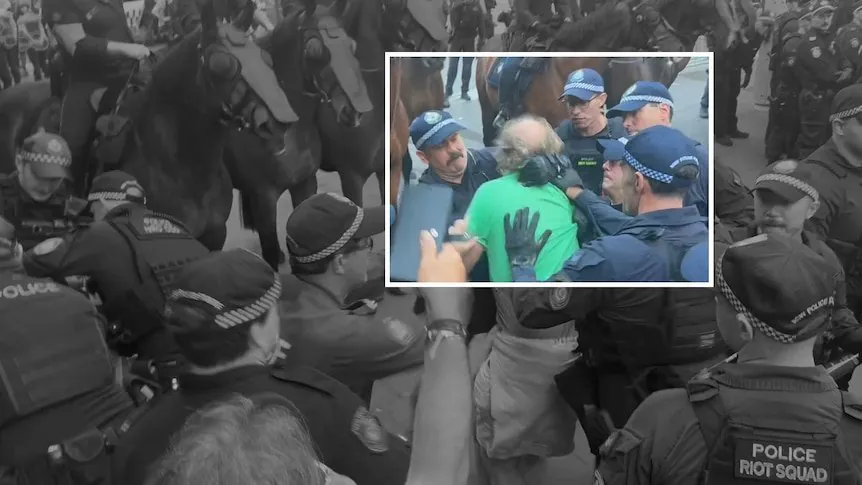
- An elderly couple was hit with multiple rounds of pepper spray, while a man in his late 60s was pushed into a police officer and struck in the face, highlighting the violent clashes between police and protesters
- The Law Enforcement Conduct Commission has compiled a register of 400 complaints and reviewed over 1,000 clips of footage as part of its inquiry into police actions, with hearings set to examine whether any officers committed misconduct
- Security analysts warn that the use of force by police at the protest has significant implications for national security, community trust, and the right to peaceful assembly in Australia
The streets of Sydney were ablaze with tension in February as thousands of protesters gathered at Town Hall to demonstrate against the visit of Israel’s President Isaac Herzog, but what unfolded was a dramatic and disturbing display of police force that has left the community reeling.
The protest, deemed unlawful by police, was met with a heavy-handed response, with officers using pepper spray and physical force to disperse the crowd, sparking allegations of brutality and misconduct.
At the heart of the controversy is the Law Enforcement Conduct Commission’s (LECC) inquiry into the police operation, which has compiled a staggering register of 400 complaints and reviewed over 1,000 clips of footage.
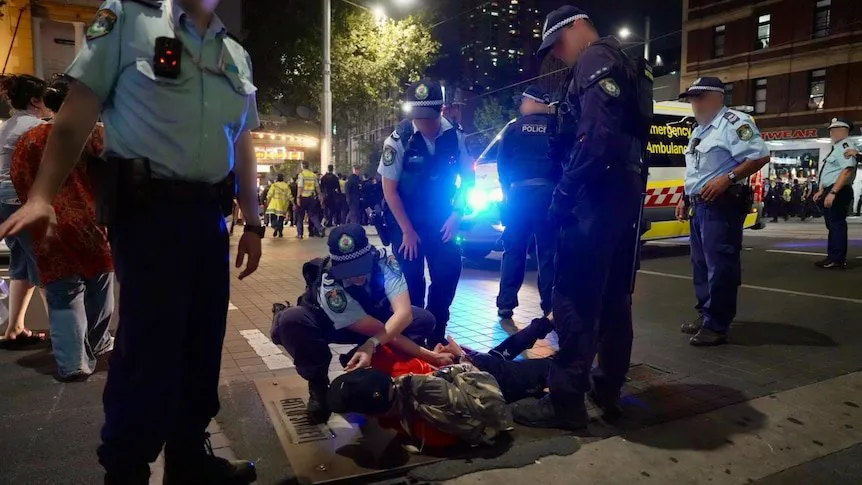
The watchdog’s investigation, dubbed Operation Makalu, has already uncovered shocking examples of police conduct, including the use of pepper spray on a young woman who suffered convulsive seizures, and the violent treatment of an elderly couple and a man in his late 60s.
The LECC’s senior counsel assisting, Kirsten Edwards, has emphasized that the hearings are neither a criminal trial nor a corruption hearing, but rather an exercise in identifying systemic issues and ensuring that peaceful protest can continue in New South Wales.


The events of February 9, 2026, are inextricably linked to the broader context of the Bondi Beach terror attack, which occurred just six weeks prior. The aftermath of that tragedy saw NSW Police granted additional powers, including the ability to restrict demonstrations in the CBD.
The Palestine Action Group’s (PAG) decision to proceed with the protest despite these restrictions sparked a chain of events that would ultimately lead to violent clashes between police and protesters.
The use of pepper spray, in particular, has come under scrutiny, with the LECC set to examine its deployment and the impact it had on the crowd.
As the hearings continue, the commission will delve into the complex web of factors that contributed to the chaotic scenes at Town Hall.
The PAG’s rejection of police offers to relocate the protest to Hyde Park, the declaration of a “major event” by Tourism Minister Steve Kamper, and the simultaneous vigil at Darling Harbour all played a role in shaping the events of that day.
The LECC’s investigation will also examine the theme of police restraint, with evidence suggesting that some officers demonstrated care towards the elderly and apologized to protesters for confusion.
However, this is juxtaposed with instances of police misconduct, including the use of pepper spray and physical force, which will be thoroughly scrutinized.
Analysis: What This Means for Australia is a critical question that must be addressed.
The implications of the police operation at Town Hall are far-reaching, with significant consequences for national security, community trust, and the right to peaceful assembly.
The use of force by police has sparked concerns about the erosion of civil liberties and the potential for further unrest.
Law enforcement insiders warn that the events of February 9, 2026, have created a tinderbox of tensions, with the potential for future protests to escalate into violence.
The LECC’s inquiry must provide a thorough examination of the police operation and its consequences, with a view to identifying systemic issues and implementing reforms to prevent similar incidents in the future.
Security analysts say that the police operation at Town Hall has significant implications for Australia’s national security landscape. The use of force by police has created a perception of heavy-handedness, which can exacerbate tensions between law enforcement and the community.
This, in turn, can create an environment conducive to radicalization and extremism.
Furthermore, the events of February 9, 2026, have highlighted the need for a nuanced approach to policing protests, one that balances the need to maintain public safety with the right to peaceful assembly.
The LECC’s inquiry must provide a roadmap for reform, one that prioritizes de-escalation techniques, community engagement, and the protection of human rights.
As the hearings continue, the community will be watching with bated breath, eager to see whether the LECC’s inquiry will provide the accountability and transparency that is so desperately needed.
The use of pepper spray, the treatment of protesters, and the police operation as a whole will be subject to intense scrutiny, with the potential for significant consequences for those found to have engaged in misconduct.
The people of Australia deserve nothing less than a thorough and impartial investigation, one that will shed light on the events of February 9, 2026, and provide a path forward for healing and reconciliation.
The LECC’s inquiry is a critical step in this process, and its findings will have far-reaching implications for the future of policing in Australia.
Industry observers believe that the LECC’s inquiry will have a profound impact on the way police interact with the community, particularly during protests.
The use of force, the deployment of pepper spray, and the treatment of protesters will all be subject to intense scrutiny, with the potential for significant reforms to emerge from the inquiry.
The community will be watching closely, eager to see whether the LECC’s findings will provide a blueprint for change, one that prioritizes de-escalation, community engagement, and the protection of human rights.
As the hearings continue, one thing is certain: the events of February 9, 2026, will have a lasting impact on the fabric of Australian society, and the LECC’s inquiry will play a critical role in shaping the future of policing in this country.
For more information on the LECC’s inquiry and the events of February 9, 2026, please visit the Law Enforcement Conduct Commission website or follow the NSW Police for updates.
The Australian Bureau of Statistics also provides valuable insights into the social and economic context of the protest, while the NSW Government website offers information on the government’s response to the events of February 9, 2026.