
Tragedy Unfolds At Notorious South Australian Level Crossing As Freight Train And Grain Truck Collide, Leaving Communities On Edge And Raising Serious Questions About Rail Safety
- A devastating collision between a freight train and a loaded grain truck at a notorious level crossing in South Australia has left three workers injured and sparked a frantic investigation into the cause of the crash.
- Locals had raised concerns about the safety of the level crossing 16 months prior to the accident, but their warnings appear to have fallen on deaf ears, leaving many to wonder if this tragedy could have been prevented.
- As the region gears up for a “once-in-a-lifetime” harvesting season, the accident has highlighted the urgent need for improved rail safety measures, including the installation of active level crossings with gates or flashing lights to alert road users of oncoming trains.
- The incident has also raised serious questions about the accountability of rail operators and authorities, with many calling for a thorough review of the country’s level crossing network and the implementation of more effective safety measures to prevent such accidents in the future.
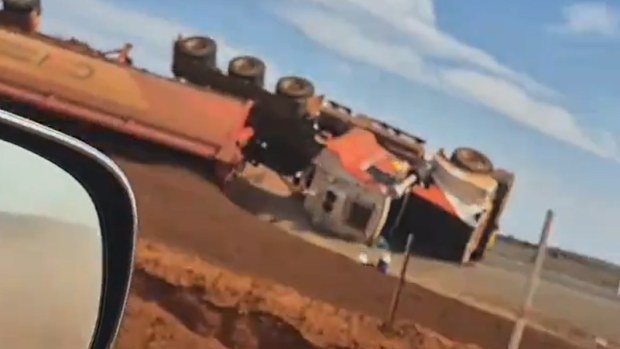
The small town of Ceduna on South Australia’s west coast was left reeling this week after a freight train and a loaded grain truck collided at a notorious level crossing on Goode Road, leaving a trail of destruction and debris in its wake.
The accident, which occurred at the start of a busy harvesting season, has sparked a frantic investigation into the cause of the crash, with police and SafeWork SA working to piece together what happened.
As investigators begin to unravel the circumstances surrounding the accident, it has emerged that locals had raised concerns about the safety of the level crossing as far back as 16 months ago.
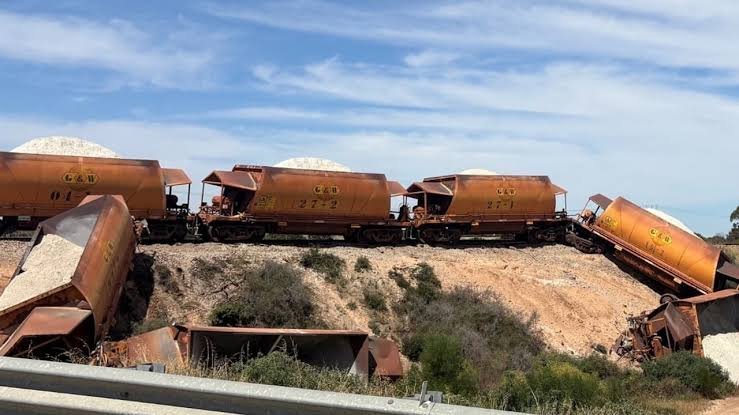
Local landowner Mario Nicholls, whose brother is a train driver and who knew the truck driver personally, had voiced his concerns about the placement of a stop sign at the incline of Goode Road, which he believed made it difficult for road users, including road trains, to adequately stop.
Despite these warnings, it appears that no action was taken to address the safety concerns, leaving many to wonder if this tragedy could have been prevented.
The accident has highlighted the urgent need for improved rail safety measures, particularly in regional areas where level crossings are often passive and rely on road users to stop or give way.
With over 23,500 railway level crossings across the country, and only one in five of those being active level crossings, the risk of accidents is very real.
As the region gears up for a “once-in-a-lifetime” harvesting season, with record rains leading to a bumper crop, the need for effective safety measures has never been more pressing.
According to the Australian Rail Transport Industry, the use of active level crossings with gates or flashing lights can significantly reduce the risk of accidents at level crossings.
However, the installation of such safety measures is often the responsibility of the relevant road authority, rather than the rail operator.
In this case, Aurizon, the rail operator, has stated that it takes its responsibilities for the safe operation and maintenance of the rail network seriously, but the company’s inability to comment on requests relating to traffic controls or signage enhancements has raised questions about accountability.
As the investigation into the accident continues, Analysis: What This Means for Australia is that the country’s rail safety record is under scrutiny.
With the transport industry playing a critical role in the country’s economy, the need for effective safety measures is paramount.
Security analysts say that the use of active level crossings and improved signage can significantly reduce the risk of accidents, while law enforcement insiders warn that the failure to address safety concerns can have devastating consequences.
Industry observers believe that the implementation of more effective safety measures, such as the use of technology to alert road users of oncoming trains, is long overdue.
Expert commentary suggests that the accident highlights the need for a more proactive approach to rail safety, with a focus on preventing accidents rather than simply responding to them.
As the region prepares for a busy harvesting season, the need for effective safety measures has never been more pressing.
With the Australian Transport Safety Bureau playing a critical role in investigating accidents and identifying safety risks, the onus is on all stakeholders, including rail operators, road authorities, and governments, to work together to improve rail safety and prevent such tragedies from occurring in the future.
In the wake of the accident, the District Council of Ceduna has passed a motion to discuss upgrades to the level crossing with Aurizon, including the installation of flashing lights or gates to alert road users of oncoming trains.
While this is a positive step, many believe that more needs to be done to address the systemic issues that contribute to level crossing accidents.
As the investigation into the accident continues, one thing is clear: the need for improved rail safety measures is urgent, and the consequences of inaction could be devastating.
The Australian Government has a critical role to play in ensuring that rail safety is prioritized, and that the necessary measures are put in place to prevent such accidents from occurring in the future.
This includes providing adequate funding for the installation of active level crossings and improved signage, as well as supporting research and development into new technologies that can help to reduce the risk of accidents.
By working together, we can create a safer, more efficient rail network that benefits everyone, from road users to rail operators, and helps to drive economic growth and development in regional areas.