
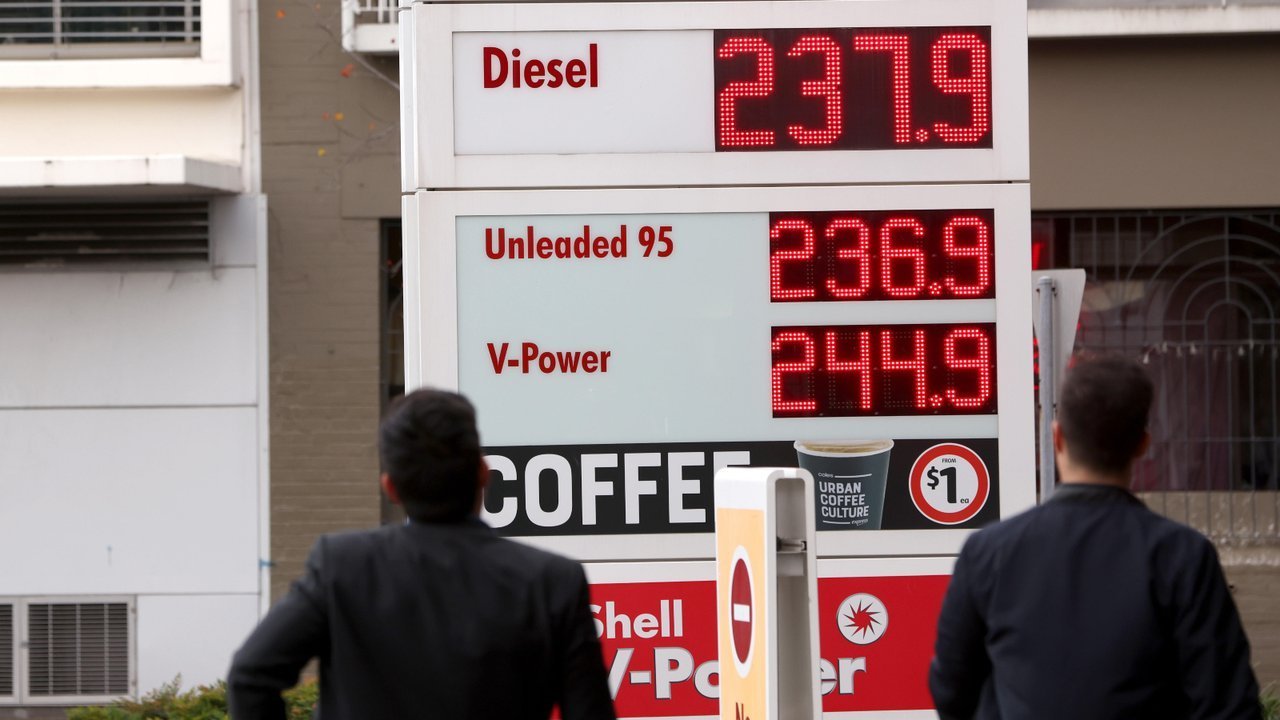
‘This Goes Way Beyond 2030’: Energy Expert’s Chilling Warning That Australian Drivers Face Years of Punishing Fuel Prices as Middle East War Fallout Exposes the Nation’s Fragile Supply Lifeline
- Australians are still paying roughly 65 cents more per litre than before the US and Israel went to war with Iran in February, and an expert says relief may be years away.
- Diesel, the fuel behind trucking, farming and mining, is tipped to stay especially high because the war has knocked out a large share of global refining capacity.
- Even if peace came tomorrow, wrecked infrastructure and a global race to refill 400 million barrels of emergency stockpiles would keep prices elevated.
- The warning exposes how dependent Australia is on imported fuel, with security analysts questioning whether the nation is prepared for a prolonged crisis.
Fill up the tank, check the receipt and wince. For millions of Australians, that has become a weekly ritual since February.
Now a leading energy figure has warned that the pain at the bowser is not a passing spike. It may define the rest of the decade, and possibly longer.
The message for families already crushed by the cost of living crisis is stark. Do not expect cheap petrol to return any time soon.
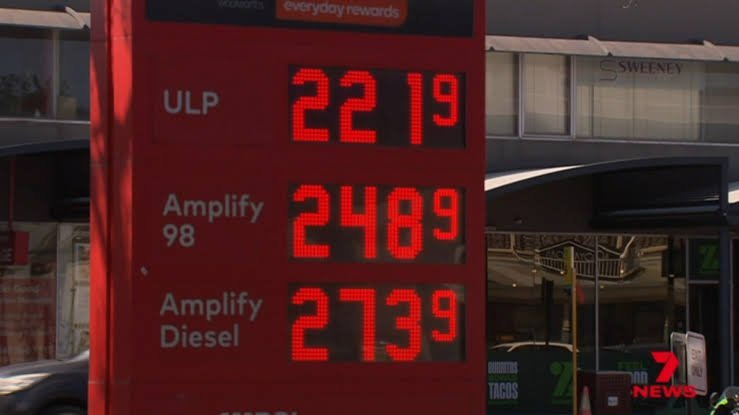
John Blackburn AO, a fellow at the Australian Institute of Energy, delivered the warning during an appearance on Channel Seven’s Sunrise program on Tuesday.
He pointed to forecasts from the International Energy Agency, which expects no meaningful easing in fuel prices through 2027. In his own assessment, Mr Blackburn went further, saying the problem would stretch well past 2030.
The numbers behind his concern are sobering. Australian pump prices remain about 65 cents a litre above where they sat in February, before American and Israeli forces went to war with Iran.
Global crude surged to a peak of US$117 a barrel in April as instability swept the region and inflationary pressure built across world markets.
Oil is moving again. Mr Blackburn estimated that somewhere between 60 and 80 per cent of pre-war volumes are now leaving the Middle East.
But crude is only half the story, and arguably the less important half.
Raw oil is useless to a motorist until it passes through a refinery and becomes petrol, diesel or jet fuel. That is where the real bottleneck lies.
According to Mr Blackburn, damage to Middle Eastern refining facilities, combined with the lingering disruption from Russia’s war in Ukraine, has removed roughly 60 per cent of the refined fuel trade that once flowed from those regions.
The result is simple and brutal. More crude on the market does not automatically mean more fuel in the tanker.
Diesel, he warned, will stay expensive because the world simply lacks the capacity to refine enough of it.
Several forces are colliding at once, and none of them resolve quickly.
First, there is the physical destruction. Mr Blackburn noted that infrastructure across multiple locations has been wrecked and must be rebuilt, a process measured in years rather than months.
Second, the oil market itself has been rewired. Refineries around the world adjusted to process different grades of crude when Middle Eastern supply dried up.
Reversing those changes is neither cheap nor fast.
Third, and perhaps most overlooked, is the stockpile problem. Governments released around 400 million barrels from emergency reserves to calm markets during the crisis.
Those reserves now need replenishing.
That means demand does not simply return to normal once the shooting stops. It climbs higher, as nations compete to refill their strategic tanks.
Higher demand, Mr Blackburn said, means higher prices.
Hanging over everything is the threat of fresh fighting. US President Donald Trump has threatened further military action, and the risk of renewed hostilities between Israel and Iran has kept traders nervous.
Mr Blackburn described the mood as one of extreme anxiety across global markets, warning that prices tend to stay high for as long as that uncertainty persists.
Analysis: What This Means for Australia
For Australia, this is far more than a story about expensive commutes. It is a story about national vulnerability.
The country now imports the vast majority of its liquid fuel. After a wave of closures over the past decade, only two oil refineries remain in operation, at Lytton in Brisbane and Geelong in Victoria.
That leaves the nation heavily exposed to exactly the kind of global refining shortage Mr Blackburn describes. When international refined product becomes scarce, Australia sits at the end of a very long supply chain.
Australia has also long struggled to meet its obligation as an IEA member to hold 90 days’ worth of net fuel imports in reserve. In a world where every nation is scrambling to rebuild stockpiles, that shortfall looks increasingly risky.
The diesel warning is particularly alarming. Diesel powers the trucks that stock supermarket shelves, the tractors and harvesters on farms, the machinery in mines and much of the defence force’s equipment.
Sustained high diesel costs ripple through the entire economy. Freight becomes dearer, groceries follow, and regional communities that depend on long-haul transport and agriculture feel it first and hardest.
That flows straight into inflation, complicating the job of the Reserve Bank of Australia and potentially affecting decisions on interest rates that matter to every mortgage holder.
For ordinary households, the arithmetic is grim. An extra 65 cents a litre adds roughly $40 to a single fill of a typical 60-litre tank.
Repeated week after week, year after year, that becomes a serious drain on stretched budgets.
Security analysts say the crisis should serve as a wake-up call about Australia’s fuel security.
Many have argued for years that relying on distant refineries and thin reserves leaves the country dangerously exposed in the event of conflict or major shipping disruption.
Industry observers believe the pressure will intensify calls for greater domestic storage, stronger government backing for the remaining refineries and faster investment in alternatives, including electric vehicles and locally produced fuels.
Economists warn that persistently high transport costs can quietly erode business margins, particularly for small operators in logistics, hospitality and agriculture, who often cannot pass every increase on to customers.
Consumer advocates are likely to keep a close watch on retail pricing, with the Australian Competition and Consumer Commission regularly monitoring whether pump prices fairly track movements in global costs.
Energy market watchers caution that forecasts can shift quickly if a lasting peace deal emerges. But even the most optimistic scenarios, they note, still involve years of rebuilding and restocking.
For now, Mr Blackburn’s verdict leaves little room for comfort.
In his view, sorting out the global fuel mess will take considerable time, and Australian drivers will be paying for it at the pump long after the headlines fade.