
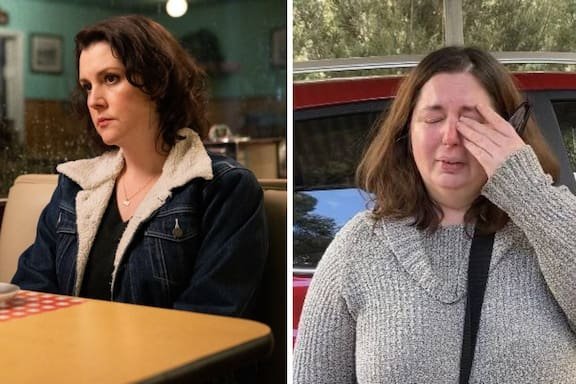
‘There’s More to Unearth’: Hollywood Star Melanie Lynskey to Play Mushroom Killer Erin Patterson in Explosive New Drama, Days Before Judges Decide Whether the Triple Murderer Gets a Retrial
- Emmy-nominated Yellowjackets star Melanie Lynskey will portray convicted triple murderer Erin Patterson in a six-part Paramount+ and Ten series
- The drama will cover the 97 days between the deadly beef Wellington lunch in Leongatha and Patterson’s arrest
- The announcement drew audible gasps from an industry audience and comes just two days before the Court of Appeal rules on whether Patterson deserves a new trial
- Three people died after eating the death cap-laced meal, and a fourth spent weeks fighting for his life in hospital
Three family members are dead. A fourth barely survived.
A quiet Gippsland town has been dragged into the global spotlight for more than two years.
Now the story is heading to the small screen.
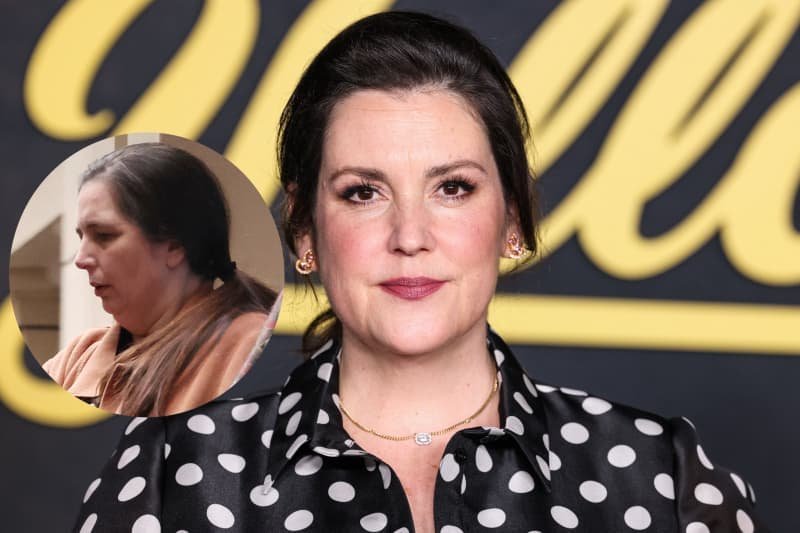
In a reveal that stunned a packed industry room, New Zealand actor Melanie Lynskey confirmed she will step into the role of Erin Patterson, the woman behind one of the most notorious poisonings in modern Australian history.
The timing could hardly be more charged. Within 48 hours of the announcement, Victoria’s highest court will decide whether Patterson should be tried again.
The six-episode limited series, titled Mushroom Murders: There’s More To Unearth, was unveiled at the Paramount+ and Ten upfronts, the annual showcase where networks pitch their upcoming slates to advertisers and media buyers.
When Lynskey broke the news from the stage, gasps rippled through the crowd.
The production will not attempt to retell the entire saga. Instead, it zeroes in on a tightly defined window: the 97 days from the fatal family lunch in July 2023 until police arrested Patterson.
Lynskey, best known for her Emmy-nominated performance in the survival thriller Yellowjackets, told the audience she was thrilled to take on the part.
She described the project as offering a compelling and distinctive perspective on events that dominated headlines around the world, adding that beneath those headlines there remained much still to unearth.
She will also serve as an executive producer.
Beverley McGarvey, President of Network Ten and Head of Streaming at Paramount Australia, labelled the series ambitious and said Lynskey’s talent would be central to the production, both in front of the camera and behind it.
The facts at the heart of the drama remain chilling.
At her home in Leongatha, in Victoria’s south-east, Patterson served a beef Wellington to her estranged husband’s relatives. The dish contained toxic death cap mushrooms.
Don and Gail Patterson, her parents-in-law, died. So did Gail’s sister, Heather Wilkinson.
Heather’s husband, Ian Wilkinson, was critically poisoned. He survived only after spending weeks in hospital.
A jury found Patterson guilty of three counts of murder and one count of attempted murder. In September 2025, she was sentenced to life behind bars, with a non-parole period of 33 years.
But the legal fight is far from over.
Patterson has taken her case to the Supreme Court of Victoria Court of Appeal, challenging both her conviction and her sentence on the grounds that she suffered a substantial miscarriage of justice.
Prosecutors are fighting on the opposite front. They argue the sentence was too lenient and that Patterson should never be eligible for release, pushing for life imprisonment without parole.
The appeal judges are due to deliver their ruling on Friday.
Few criminal cases in Australian history have generated the sheer volume of media the Patterson saga has spawned. Podcasts, books and earlier television projects have already raced to capitalise on public fascination with the investigation and the trial.
Part of the obsession lies in the intimacy of the crime. This was not a gangland hit or a random act of street violence.
It was a family meal in a country home, the kind of gathering millions of Australians attend every weekend.
That ordinariness made it terrifying, and it made it compulsive viewing.
The streaming wars have only fuelled the appetite. Platforms are locked in a fierce battle for subscribers, and true crime remains one of the most reliable drawcards in the business.
Analysis: What This Means for Australia
The series lands at the intersection of entertainment, justice and grief, and it raises uncomfortable questions for the nation.
First, there is the matter of the courts. While the program focuses on the period before Patterson’s arrest, its announcement comes as the legal process remains live.
Should the Court of Appeal order a retrial, any new jury would be drawn from a public already saturated with dramatised versions of the case. Australia’s contempt of court laws exist precisely to protect the fairness of criminal proceedings, and high-profile adaptations inevitably test those boundaries.
Second, there is the community cost. Leongatha is a small rural town.
Its residents have watched television crews, journalists and curious tourists descend on their streets since 2023. A glossy streaming drama is likely to reignite that attention, potentially for years.
Third, there are the survivors and the bereaved. Ian Wilkinson and the wider families lost loved ones in horrifying circumstances.
Every new retelling forces them to relive the worst chapter of their lives, often in public and on someone else’s terms.
There is also an economic dimension.
Australia’s screen industry stands to benefit from a locally rooted production with an international star attached, and the streaming industry has increasingly turned to homegrown crime stories to win global audiences.
Finally, the case has renewed national conversation about food safety and wild mushroom foraging, with health authorities repeatedly warning that death caps can be fatal even in small amounts.
Legal observers say the timing of the announcement will be watched closely.
Law enforcement insiders warn that major cases with ongoing appeals carry real risk when dramatisations reach the public before the courts have spoken for the final time.
Media analysts believe the show is almost guaranteed to be a commercial hit, pointing to the enormous global audience for previous Patterson-related content. They note that Australian true crime has become a lucrative export.
Victim advocates, however, caution that the appetite for such stories can overshadow the human beings at their centre. They argue producers carry a responsibility to portray the dead with dignity rather than reducing them to supporting characters in a killer’s story.
Industry observers say the decision to limit the narrative to the 97 days before the arrest may be a deliberate strategy, allowing the series to explore the investigation while steering clear of the courtroom battle still unfolding.
For now, all eyes turn to Friday.
Whether Patterson walks back into a courtroom for a fresh trial, or whether her sentence is made even harsher, the ruling will shape the next chapter of a story Australia simply cannot stop watching.
And somewhere in Gippsland, a family still grieving will be watching too.