
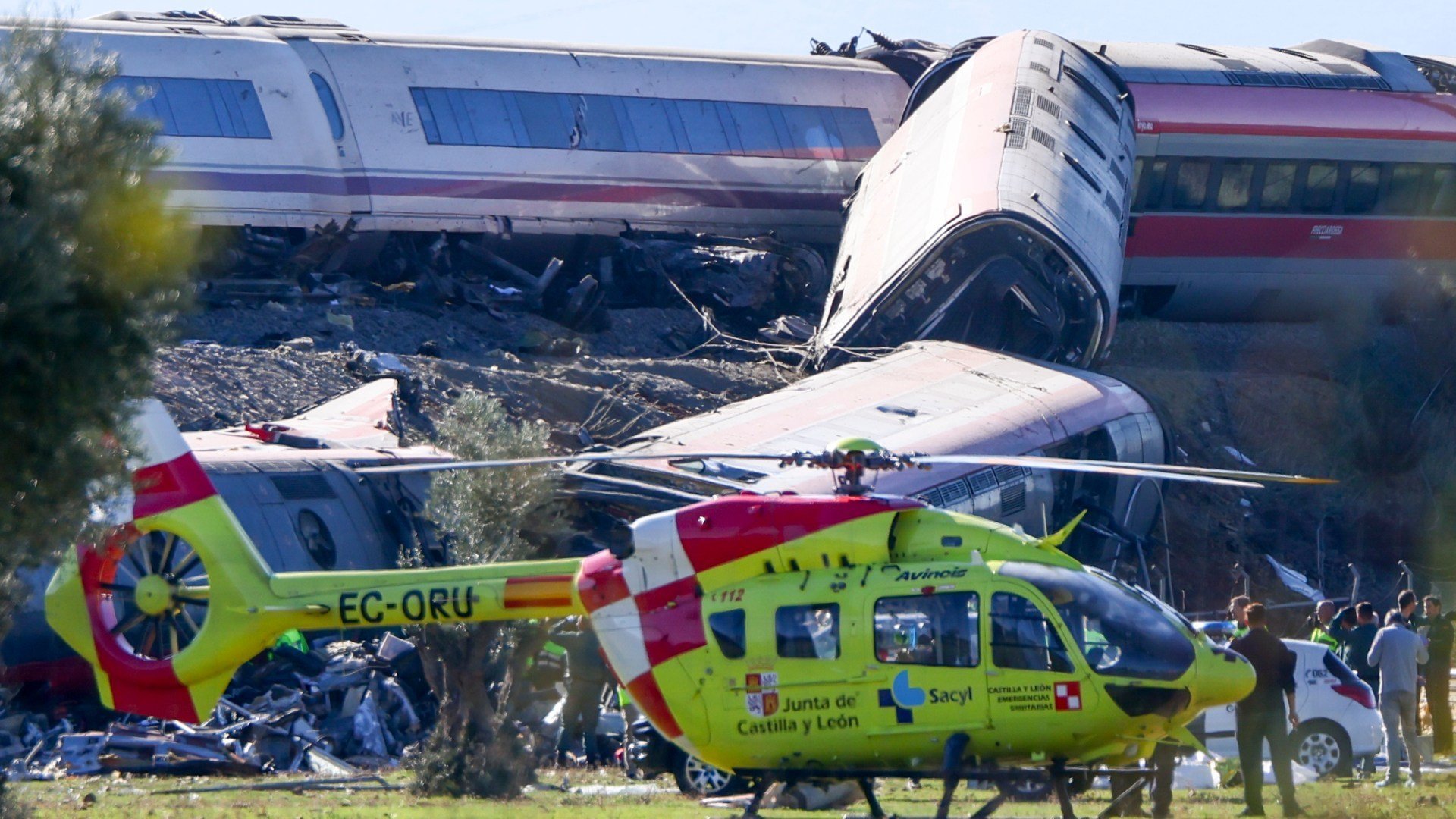
‘Everything Started Falling Apart’: 68 Killed as Bullet Train Is Ordered Past a Red Signal at Full Speed and Ploughs Into Stationary Carriage in Spain’s Worst Rail Horror in More Than a Decade
- A crowded high-speed train was waved back onto the line at full speed, despite an active stop signal, after a computer failure knocked out safety systems across 63km of track
- At least 68 passengers are dead and 58 more are in hospital after the state-run RENFE service smashed into the back of a stopped IRYO train south of Madrid
- A rescuer pulling survivors from the twisted wreckage described finding part of a severed leg as he tried to free a young woman
- The catastrophe raises urgent questions for Australia as Canberra pursues its own high-speed rail ambitions
It took just 23 minutes for a computer glitch to become a massacre.
At 8.30 on a Wednesday morning, the digital safety net protecting one of Europe’s most celebrated rail networks went dark.
By 8.53am, a packed bullet train had been sent hurtling back down the line, possibly at around 200km/h, straight into the tail of another train full of passengers that was sitting still on the tracks.
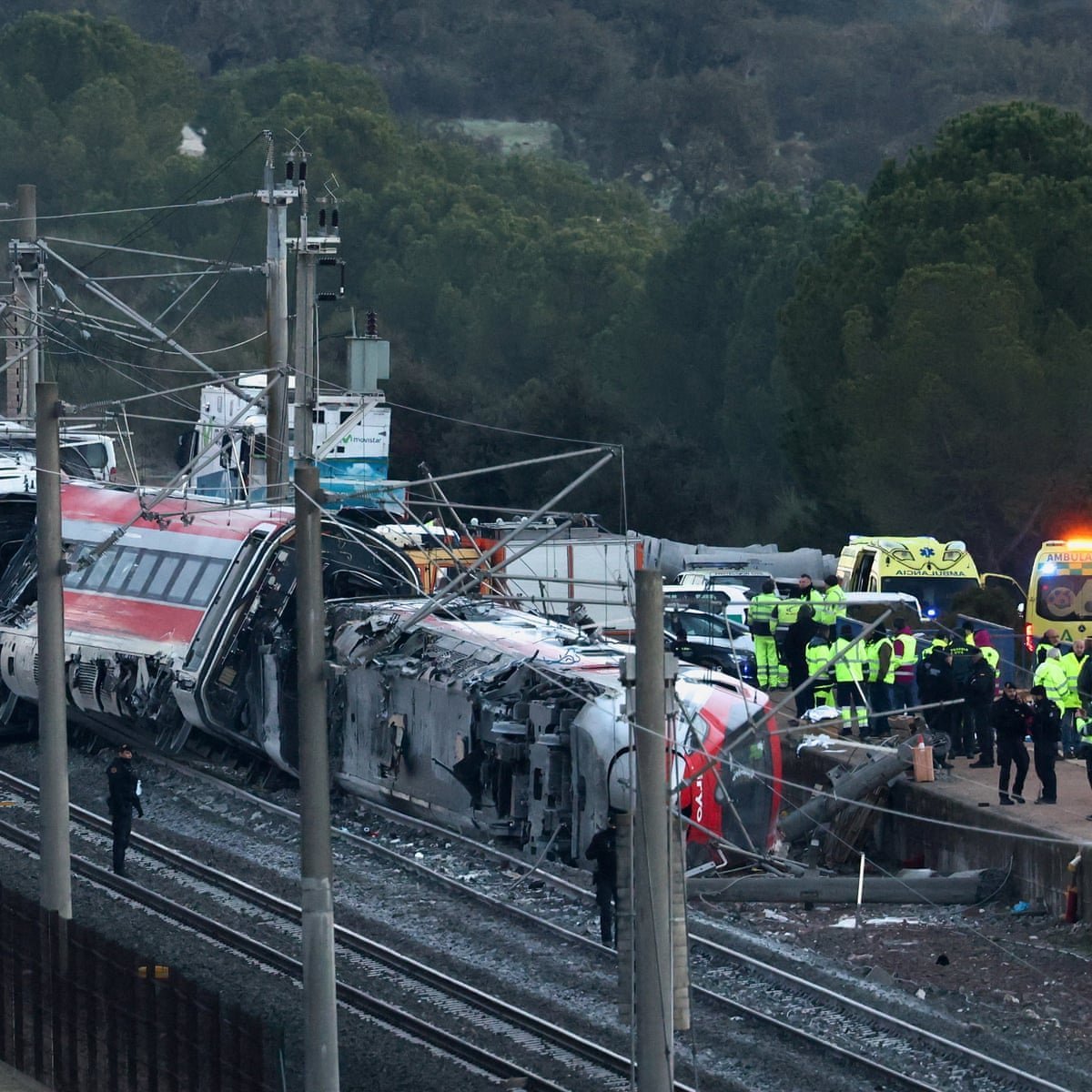
The result was carnage among the olive groves of central Spain. At least 68 people were killed.
Dozens more were left fighting for their lives.
The collision happened on a flat, open stretch of line between the small towns of Urda and Los Yébenes, in the province of Toledo. Both trains had left Madrid and were bound for Seville, carrying a combined 544 people.
There were 397 aboard the RENFE service and 147 on the privately operated IRYO train.
According to rail infrastructure operator ADIF, the RENFE train rounded a bend and slammed into the rear of the stationary IRYO train. The impact derailed the last two carriages of the IRYO service and the leading carriages of the RENFE train.
One front carriage was torn clean away. Twisted metal and shattered fittings were flung down a gravel embankment.
The regional government of Castilla-La Mancha confirmed the death toll, adding that 58 people were being treated in hospitals across the area.
Transport Minister Óscar Puente laid out a chilling timeline. A computer fault disabled the security system along a 63km section, bringing every train on that stretch to a halt.
Central command then instructed the RENFE driver to move off again, with no speed restriction, even though a stop signal remained active on the line.
Mr Puente described the order as ‘inexplicable’. The train should never have moved, he said, and at the very least should have been limited to a crawl.
He stressed the train drivers were not at fault, while insisting he was only stating facts rather than assigning blame.
For those on board, the horror was instantaneous. British tourist Samy Paul told The Associated Press the carriage simply disintegrated around him, with the first two cars destroyed and blood everywhere.
Fellow RENFE passenger Ignacio Relaño told broadcaster TVE the train had paused briefly, started again, then braked sharply moments before the impact.
Construction worker David Gómez, who was working nearby, sprinted toward the noise.
He told El País he and colleagues cut through fences and treated injured passengers with their own first-aid kits as people clawed their way out through windows.
While dragging a young woman free, he said, he came across part of a leg.
Ambulances and medical helicopters shuttled back and forth as a military emergency brigade joined firefighters and police. A sports pavilion in Urda was converted into a triage centre at the request of civil protection authorities.
Uninjured survivors were loaded onto buses. Health Minister Mónica García warned early that a high-speed impact meant the nation should brace for tragedy.
Spain has been here before. The disaster is the deadliest on European rails since the 2013 derailment near Santiago de Compostela, which killed 80 people.
More damningly, it comes only nine months after another fatal high-speed crash in the country’s south near Adamuz, involving trains from the very same two operators.
Prime Minister Pedro Sánchez, speaking from the wreckage, declared the entire country in mourning and announced three days of official grief.
He conceded it was unacceptable for a nation like Spain to endure two high-speed accidents in a single year, and promised tougher safety measures to restore public faith.
King Felipe VI also visited the site, with the royal family sending condolences to the bereaved and injured.
That faith is already cracking. In Madrid, hundreds of protesters, including far-right groups, massed outside the Ministry of Transport demanding the government resign.
Some hurled bottles and flares at officers, who responded with tear gas.
Analysis: What This Means for Australia
Back home, the Department of Foreign Affairs and Trade says it is not aware of any Australians caught up in the collision.
Education Minister Jason Clare said consular staff in Spain were ready to assist any affected families, describing the scenes as horrific and the country as shocked.
Travellers can monitor updates via Smartraveller.
But the deeper lesson for Australia is not consular. It is structural.
Canberra has spent years championing a fast rail future, with the High Speed Rail Authority examining a corridor between Sydney and Newcastle. Spain is routinely held up as a global benchmark for exactly this kind of network.
If its system can be undone by one software failure and one human command, Australian planners must ask whether their own designs build in enough redundancy.
The Toledo disaster exposes a dangerous gap: the moment automated protection fails, safety falls back on people in a control room.
Australia’s existing networks are steadily moving toward digital signalling, and the crash is a brutal reminder that technology upgrades are only as strong as the fallback procedures behind them.
The Office of the National Rail Safety Regulator and transport authorities will face renewed pressure over how manual overrides are authorised.
There are economic stakes too. Major infrastructure spending relies on public confidence.
A single catastrophic failure could stall investment for years, a risk Spanish leaders are now confronting in real time amid fury over public transport safety.
Rail safety analysts say the most alarming element is not the computer fault, which they regard as foreseeable, but the decision to release a train at full speed while a stop signal still showed.
Industry observers believe investigators will focus heavily on command-centre protocols and whether controllers were under pressure to clear delays quickly.
Transport insiders warn that complacency is the greatest threat facing modern networks, because decades of strong safety records can breed overconfidence in automated systems. Security analysts add that any system capable of being crippled by a single malfunction should also be stress-tested against deliberate cyber attacks.
For the families now identifying loved ones in Spain, those reviews will come too late. For Australia, they arrive just in time.